
Proteus syndrome
A very rare disorder of patchy, progressive overgrowth of bones, skin and fat, caused by a mutation present in only some of the body's cells.
What it is
A mosaic overgrowth disorder caused by an activating variant in AKT1 that arises after conception, so only part of the body carries it.
Who gets it
Very rare: fewer than one in a million people.
Causes
- Somatic (postzygotic) activating variant in AKT1, almost always p.Glu17Lys
- Not inherited: the variant is thought to be lethal if present in every cell
Pathophysiology
AKT1 is a kinase in the PI3K–AKT pathway that promotes cell growth and survival. The variant keeps it switched on, so the tissues that carry it overgrow; because only a mosaic of cells is affected, overgrowth is patchy and asymmetric and usually appears after the first months of life.
Symptoms and signs
- Asymmetric, progressive overgrowth of limbs, digits or skull, starting at about 6–18 months
- Cerebriform connective-tissue naevus, a thick furrowed lesion on the soles
- Epidermal naevi
- Areas of fat overgrowth or loss
- Vascular malformations
Diagnosis
- Clinical
- Clinical criteria: mosaic distribution, progressive course and sporadic occurrence, plus specific features such as the cerebriform naevus.
- Tests
- Finding the AKT1 variant in affected tissue (skin or overgrown tissue); blood is often negative because of mosaicism.
- Imaging
- X-rays and other imaging map bone overgrowth and vascular malformations.
Treatment
- Surgical
- Orthopaedic surgery to slow uneven growth and correct deformity.
- Follow-up
- Regular follow-up of overgrowth and awareness of the high risk of venous thrombosis, especially after surgery.
- Medical
- AKT inhibitors are being studied in clinical trials.
- Rehabilitation
- Physical therapy and psychological support.
Complications
- Deep vein thrombosis and pulmonary embolism, a leading cause of death
- Severe limb deformity and joint problems
- Certain tumours
Prognosis
Overgrowth progresses through childhood; life expectancy is reduced mainly by thrombosis.
Test yourself
Think of the answer, then tap the question to see it.
Why is Proteus syndrome never inherited?
It is caused by a mosaic AKT1 variant that arises after conception; the variant in every cell is thought to be lethal.
Why may a blood test fail to find the AKT1 variant?
The variant is present only in some tissues; testing affected skin or overgrown tissue is more sensitive.
What is the most important life-threatening complication?
Venous thrombosis and pulmonary embolism.
Educational information, not medical advice. For any symptom, see a health professional.
Sources: Proteus syndrome: MedlinePlus Genetics (MedlinePlus, US National Library of Medicine, 2026); AKT1 gene: MedlinePlus Genetics (MedlinePlus, US National Library of Medicine, 2026).
Spotted a mistake?We are always improving for the community. Tell us what is wrong and our team will review it.Report a mistake
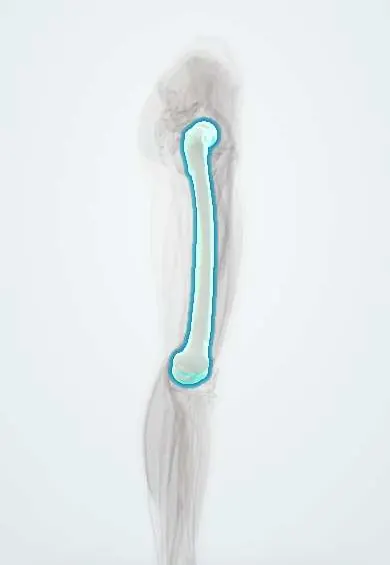
Representative model, for educational purposes only.