Digestive system · Head and neck
Upper left central incisor !
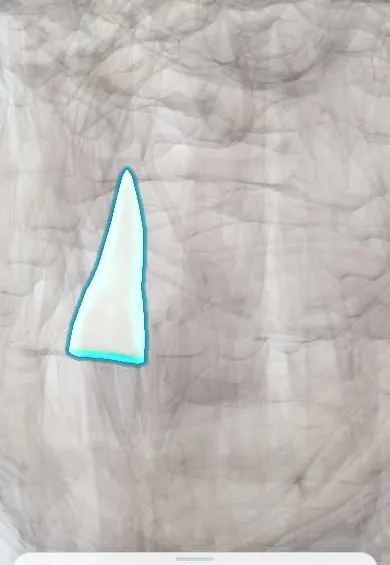
The upper left central incisor (tooth 21) is a flat front tooth beside the midline that cuts food; it is the tooth most often hurt in falls and blows.
Opens in the Durgical app, no sign-up needed.
What it is
A front tooth with a thin, straight cutting edge and one root.
What it does
Bites into and cuts food; shapes some speech sounds (f, v, th).
Key facts
- Joints with
- Alveolar socket of the maxilla (gomphosis held by the periodontal ligament); bites against the opposing teeth
- Landmarks
- FDI 21, upper left central incisor: 1 root; chisel-shaped crown for cutting; erupts at about 7–8 years; nerve: anterior superior alveolar nerve (V2)
Relations
- Medial
- The upper right central incisor; the upper labial frenum attaches to the gum between them, and the incisive papilla lies just behind
- Lateral
- The upper left lateral incisor
- Below
- Bites in front of the lower left central incisor and the lower left lateral incisor
How to find it
The broad front tooth just left of the midline (the patient's left); seen by lifting the upper lip, it meets the upper right central incisor at the frenum.
On imaging
Periapical films taken face-on show the root and apex; a mesiodens shows as an extra crown between or above the central roots. When trauma is suspected, angled views are added because a root fracture may hide on one film.
Common problems
- Chipped or broken front teeth after falls or blows.
Clinical notes
- Supplied by the anterior superior alveolar nerve (V2) through the upper dental plexus; thin labial bone makes infiltration effective, and the nasopalatine nerve supplies the gum on the palatal side
- A gap between the two upper central incisors (midline diastema) is normal while the canines erupt and can persist with a low labial frenum or a supernumerary tooth between them
Anatomical variants
- A mesiodens, the most common supernumerary tooth, lies between or behind the upper central incisors and can delay their eruption or push them apart
- Shovel-shaped crown, with raised ridges on the palatal side, frequent in people of East Asian and Indigenous American ancestry
Development
Replaces the primary upper left central incisor (FDI 61).
Memory aid
FDI 21: quadrant 2 (upper left), tooth 1. The US Universal system numbers the upper teeth 1 to 16 from right to left, so this one is #9.
Related conditions
Test yourself
Think of the answer, then tap the question to see it.
What does the contact between the upper left central incisor and the upper right central incisor mark?
The dental midline, which normally lines up with the midline of the face and the philtrum.
What is a mesiodens, and how does it affect the upper left central incisor?
The most common supernumerary tooth, between or behind the upper central incisors; it can delay their eruption or push them apart.
What is the US Universal number of the upper left central incisor (FDI 21)?
#9: the Universal system numbers the upper teeth 1 to 16 from right to left.
Which dental sign of congenital syphilis affects the upper left central incisor?
Hutchinson incisors: narrow upper central incisors with a notched cutting edge.
Educational information, not medical advice. For any symptom, see a health professional.
Related
Sources: Anatomy, Head and Neck, Teeth; Anatomy, Permanent Dentition; Anatomy, Head and Neck, Tooth Eruption; Anatomy, Head and Neck: Alveolar Nerve; 23.3 The Mouth, Pharynx, and Esophagus (OpenStax (Rice University), 2022) · adapted, CC BY 4.0.
Spotted a mistake?We are always improving for the community. Tell us what is wrong and our team will review it.Report a mistake
Representative model, for educational purposes only.