Conditions · Metabolism (biochemistry)
Acetaminophen toxicity !
Acetaminophen overdose depletes liver glutathione and NAPQI causes liver necrosis; early N-acetylcysteine prevents it.
Updated 2026-11-01
Structures involved
Tap one to see what it is and open it in 3D.
In biochemistry
- Cytochrome P450 2E1 (CYP2E1, MEOS)
- NAPQI (N-acetyl-p-benzoquinone imine)
- N-acetylcysteine (NAC)
- Cytochrome P450 system
- Xenobiotic biotransformation: phases I, II and III
- Glucuronidation
- Acetaminophen metabolism and NAPQI
In physiology
Why it happens
- Injury by therapeutic drugs: the classic examples
- Oxidative stress and free-radical injury
- Chemical (toxic) cell injury: direct and after metabolism
- Causes of cell injury
What it is
Liver injury, sometimes kidney injury, from too much acetaminophen (paracetamol), in one ingestion or repeated, which saturates its safe elimination routes.
Who gets it
Acetaminophen is one of the most used analgesics in Colombia and worldwide and is in many over-the-counter combinations; its overdose is a leading cause of acute liver failure in high-income countries and a frequent emergency poisoning, intentional or not.
Causes
- A single large ingestion (suicide attempt)
- Unintentional stacking of several acetaminophen products
- Repeated use above recommended amounts in vulnerable people
Risk factors
- Chronic alcohol use
- Fasting, malnutrition or anorexia
- Enzyme inducers (isoniazid, antiepileptics)
- Pre-existing liver disease
Pathophysiology
At therapeutic doses most acetaminophen is glucuronidated and sulfated; a small fraction is oxidised by P450s (mainly CYP2E1) to NAPQI, which glutathione neutralises. In overdose the conjugations saturate, more NAPQI forms and hepatic glutathione runs out. Free NAPQI binds mitochondrial proteins, generates oxidative stress, activates JNK and opens the mitochondrial permeability transition pore: the hepatocyte dies by necrosis, starting in zone 3 (centrilobular), where there is more CYP2E1 and less oxygen. The kidney can suffer tubular necrosis by a similar mechanism.
Classification
- Phase 1 (0–24 h): few symptoms, nausea
- Phase 2 (24–72 h): right upper quadrant pain, rising transaminases
- Phase 3 (72–96 h): peak injury, jaundice, coagulopathy, encephalopathy
- Phase 4 (after 4 days): recovery or death
Symptoms and signs
- At first, nausea, vomiting, malaise or no symptoms
- Pain in the upper right abdomen
- Jaundice
- Easy bleeding
- Confusion and drowsiness (encephalopathy)
Diagnosis
- Clinical
- Time and amount of ingestion, products taken and risk factors; in the first hours symptoms do not predict severity.
- Tests
- Acetaminophen level from 4 hours after a single ingestion, read on the Rumack-Matthew nomogram; transaminases, bilirubin, INR, glucose, blood gases and lactate, creatinine; levels of other toxins (salicylates, ethanol).
- Imaging
- Imaging is not needed for diagnosis; liver ultrasound helps rule out other causes of liver failure.
Treatment
- Acute
- Activated charcoal if the patient arrives soon after ingestion and the airway is protected.
- Medical
- Antidote: N-acetylcysteine according to the nomogram or with any sign of liver injury; most effective in the first hours.
- Follow-up
- Serial monitoring of transaminases, INR, glucose, lactate and kidney function.
- Surgical
- Urgent liver transplantation for fulminant liver failure meeting criteria (such as King's College criteria).
- Conservative
- Mental health assessment for every intentional ingestion.
Drugs for this condition
Complications
- Acute liver failure
- Encephalopathy and cerebral oedema
- Acute kidney failure
- Pancreatitis
- Death
Prognosis
Almost everyone recovers without sequelae if N-acetylcysteine is given in time; a liver that survives regenerates fully.
Prevention
- Checking whether several products contain acetaminophen
- Smaller pack sizes and child-resistant caps
- Detection and support for suicide risk
Test yourself
Think of the answer, then tap the question to see it.
Which acetaminophen metabolite damages the liver and what normally neutralises it?
NAPQI; hepatic glutathione neutralises it.
Why does necrosis start in the centrilobular zone?
There is more CYP2E1, which makes NAPQI, and less oxygen there.
From how many hours after a single ingestion is the level valid on the Rumack-Matthew nomogram?
From 4 hours; before that absorption is not complete.
Why can a patient look well on day one and still be seriously ill?
Liver injury appears at 24–72 hours; the first hours are usually almost symptom-free.
Related conditions
Educational information, not medical advice. For any symptom, see a health professional.
Sources: Acetaminophen overdose: MedlinePlus Medical Encyclopedia (MedlinePlus, US National Library of Medicine, 2026); Acetaminophen: MedlinePlus Drug Information (MedlinePlus, US National Library of Medicine, 2026); Textbook of Biochemistry for Medical Students, 6th ed. (Jaypee Brothers Medical Publishers (Vasudevan DM, Sreekumari S, Vaidyanathan K), 2011).
Spotted a mistake?We are always improving for the community. Tell us what is wrong and our team will review it.Report a mistake
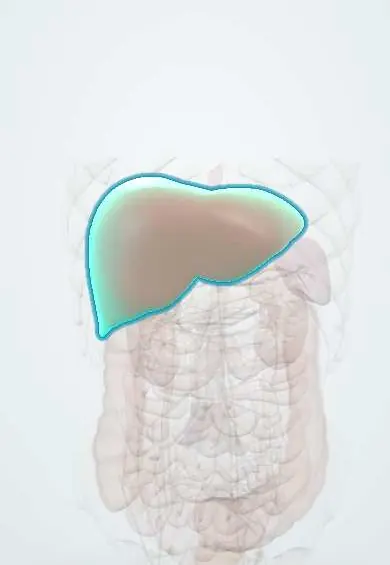
Representative model, for educational purposes only.