
GJB2 (connexin 26) hearing loss
The most common genetic cause of deafness from birth in many populations: a recessive defect in a protein that recycles potassium in the inner ear.
What it is
Autosomal recessive nonsyndromic sensorineural hearing loss caused by biallelic variants in GJB2, which encodes the gap-junction protein connexin 26.
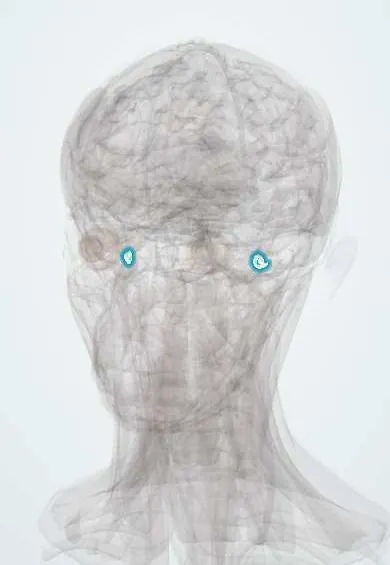
See it in 3D
Who gets it
Genetic causes explain over half of congenital hearing loss in high-income countries, and GJB2 is the single most common gene in many populations.
Causes
- Biallelic GJB2 variants; c.35delG is frequent in people of European and Mediterranean ancestry
- Autosomal recessive inheritance: usually hearing parents who are carriers
Pathophysiology
Connexin 26 forms gap junctions between supporting cells of the cochlea, which recycle potassium back to the endolymph after hair cells fire. Without it, potassium handling fails and hair cells degenerate, causing sensorineural hearing loss without other features.
Symptoms and signs
- Bilateral sensorineural hearing loss present at birth, from mild to profound
- Usually stable, not progressive
- Normal balance and no other organ involvement
Diagnosis
- Clinical
- Suspect in a child with congenital bilateral sensorineural hearing loss and no other findings.
- Tests
- Newborn hearing screening, then auditory brainstem response and audiometry; GJB2 testing is usually the first genetic test, followed by a hearing-loss gene panel if negative. Congenital cytomegalovirus is the main non-genetic cause to exclude.
- Imaging
- Temporal bone imaging is normal in GJB2 hearing loss.
Treatment
- Rehabilitation
- Early hearing aids and, for severe or profound loss, cochlear implants, which work well in GJB2 deafness.
- Rehabilitation
- Early language support, including sign language according to the family's choice.
- Follow-up
- Regular audiology follow-up and genetic counselling for the family.
Complications
- Delayed language and learning if the loss is not found early
Prognosis
With early detection and intervention, language and school outcomes can be good.
Test yourself
Think of the answer, then tap the question to see it.
What does connexin 26 do in the cochlea?
It forms gap junctions that recycle potassium back to the endolymph after hair-cell activity.
Why is a genetic cause found before imaging in many deaf infants?
GJB2 is the commonest cause and testing it is simple; temporal bone imaging is normal in this condition.
Which non-genetic cause of congenital hearing loss must be ruled out?
Congenital cytomegalovirus infection.
Educational information, not medical advice. For any symptom, see a health professional.
Sources: Nonsyndromic hearing loss: MedlinePlus Genetics (MedlinePlus, US National Library of Medicine, 2026); GJB2 gene: MedlinePlus Genetics (MedlinePlus, US National Library of Medicine, 2026).
Spotted a mistake?We are always improving for the community. Tell us what is wrong and our team will review it.Report a mistake
Representative model, for educational purposes only.