
Solar and laser retinopathy
Looking at the sun, an eclipse or a strong laser pointer burns the centre of the retina, leaving a small blind spot. Prevention is key.
What it is
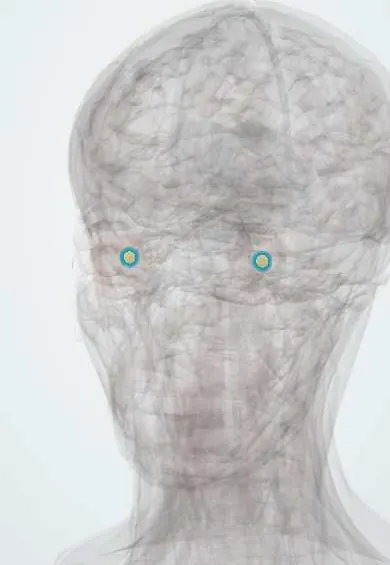
Photic injury to the fovea from sun gazing (often at an eclipse) or a handheld laser. It is mostly photochemical blue-light damage to photoreceptors and pigment epithelium, seen first as a small yellow foveal spot and later as a tiny outer-retinal defect on OCT.
Who gets it
Clusters after solar eclipses; also seen in sun-gazing linked to religious practice or psychosis, and increasingly in children and teenagers playing with high-power laser pointers.
Causes
- Sun gazing, especially during an eclipse
- Handheld laser pointers, often of higher power than labelled
- Welding arcs and industrial or medical lasers without protection
- Recreational drug use or psychiatric illness leading to sun gazing
Risk factors
- Children and young adults (clear lens transmits more light)
- Watching an eclipse without certified filters
- Hallucinogen use
- Psychiatric conditions
Pathophysiology
Visible and blue light focused on the fovea generates reactive oxygen species that damage photoreceptor outer segments and the pigment epithelium (photochemical injury). Intense lasers can also cause thermal burns and even macular holes or haemorrhage.
Symptoms and signs
- Blurred central vision and a small central blind spot, starting hours after exposure
- Distortion, glare and altered colour vision
- Usually both eyes after sun gazing, often one eye after a laser
Diagnosis
- Clinical
- History of exposure; a small yellow-white spot at the fovea in the first days that later becomes a tiny red or grey depression.
- Tests
- Visual acuity and Amsler grid.
- Imaging
- OCT shows a focal hyperreflective lesion early and later a small defect in the outer retina and photoreceptor line at the fovea; fundus autofluorescence may show a central change.
Differential diagnosis
- Macular hole
- Acute macular neuroretinopathy
- Central serous chorioretinopathy
- Drug toxicity of the macula
Small central blind spot: solar injury or a look-alike?
| Feature | Solar or laser retinopathy | Macular hole | Central serous chorioretinopathy |
|---|---|---|---|
| Trigger | Sun, eclipse or laser exposure hours before | None; older adult, often a woman | Stress or corticosteroid use, often a middle-aged man |
| Eyes | Both after sun gazing, one after a laser | Usually one | Usually one |
| Fundus | Small yellow-white foveal spot, later a tiny red or grey pit | Round red defect at the fovea | Clear blister of fluid lifting the macula |
| OCT | Small gap in the outer retina and photoreceptor line | Break through all retinal layers | Fluid under the retina |
| Treatment | None proven; observe and prevent re-exposure | Vitrectomy usually closes it | Often resolves; stop corticosteroids |
Goal of treatment
Support recovery and prevent further exposure; there is no proven treatment for the injury itself.
Treatment
- Follow-up
- Observation with OCT; many patients improve partly over several months.
- Medical
- Anti-VEGF for the rare choroidal neovascularisation after laser injury.
- Surgical
- Vitrectomy for a full-thickness macular hole caused by a laser.
- Lifestyle
- Education on certified eclipse glasses and safe laser use; psychiatric care where relevant.
Complications
- Permanent small central scotoma
- Lamellar or full-thickness macular hole
- Choroidal neovascularisation (laser injury)
Common traps
- A painless eye after sun gazing means no damage: the retina has no pain fibres and photochemical injury is silent; symptoms start hours later
- Ordinary sunglasses make eclipse viewing safe: they let far too much light through; only certified eclipse filters or indirect projection protect the fovea
- A normal-looking fundus excludes solar retinopathy: the foveal spot can be faint or already faded; OCT shows the outer-retinal defect
- Steroids reverse the burn: no treatment is proven; care is observation, avoiding re-exposure and treating rare complications such as a macular hole
- Laser and solar injury behave the same: a laser usually hits one eye and can add thermal burns, haemorrhage, a macular hole and later new vessels, while sun gazing typically harms both eyes photochemically
Prognosis
Acuity often recovers partly within months, but a small central scotoma or distortion may persist permanently.
Prevention
- Never look at the sun; use certified eclipse filters or projection methods
- Keep high-power laser pointers away from children
- Protective eyewear for welding and laser work
Test yourself
Think of the answer, then tap the question to see it.
A teenager notices a small central blind spot in both eyes the morning after watching an eclipse without a filter. What will OCT most likely show?
A small defect in the outer retina and photoreceptor line at the fovea, from photochemical injury to the photoreceptors and pigment epithelium.
Why does solar injury concentrate at the fovea rather than across the whole retina?
The eye focuses the bright image onto the fovea, so energy per area peaks there, and the fovea serves central vision, so even a tiny lesion is noticed.
Why are children and young adults more vulnerable to solar and laser retinopathy?
Their clear lens lets more blue and visible light reach the retina, and they are more likely to stare at the sun or play with high-power laser pointers.
Months after a laser pointer injury to one eye, a boy notices new distortion. Which complication should be looked for?
Choroidal neovascularisation (or a macular hole). OCT and angiography look for it; new vessels are treated with anti-VEGF.
What is the most effective management of solar retinopathy?
Prevention: certified eclipse filters or projection, and keeping high-power lasers from children. Once injured, care is observation; partial recovery over months is common.
Connections
Educational information, not medical advice. For any symptom, see a health professional.
Sources: Solar Retinopathy (EyeWiki (American Academy of Ophthalmology), 2026); Laser Principles in Ophthalmology (StatPearls Publishing (NCBI Bookshelf), 2023).
Spotted a mistake?We are always improving for the community. Tell us what is wrong and our team will review it.Report a mistake
Representative model, for educational purposes only.