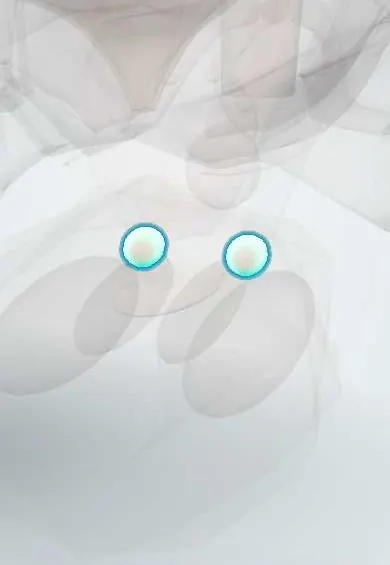
Reproductive system · Pelvis · Female
Bartholin glands !
The Bartholin glands are two pea-sized glands at the back of the vaginal opening; they make fluid that moistens the vulva, and a blocked duct forms a cyst.
Official name: Greater vestibular gland
Opens in the Durgical app, no sign-up needed.
What it is
Two pea-sized glands at the back of the vaginal opening (Bartholin glands), with ducts that open into the vestibule.
What it does
Make fluid that moistens the vestibule.
Key facts
- Where
- Pea-sized glands at the posterior ends of the vestibular bulbs (about 4 and 8 o'clock); ducts open into the vestibule beside the vaginal orifice
- Blood supply
- Artery of the bulb of the vestibule (internal pudendal)
- Nerve
- Perineal branch of pudendal nerve; parasympathetic secretomotor fibres
- Function
- Secrete mucus during arousal; homologue of the bulbourethral glands; duct blockage = Bartholin cyst/abscess
Relations
- Superficial
- The bulbospongiosus and the posterior end of the vestibular bulb
- Deep
- The perineal membrane (the gland lies in the superficial perineal pouch)
- Medial
- The vaginal orifice and the hymen
- Behind
- The superficial transverse perineal muscle and the perineal body
How to find it
Normal glands cannot be felt. A cyst or abscess is felt between a finger just inside the vaginal opening and a thumb on the outer labium, at the lower lateral edge of the introitus; the duct opening may be seen as a tiny pore there.
On imaging
Normal glands are small and usually not seen. On ultrasound or MRI a Bartholin cyst is a well-defined fluid sac in the lower posterolateral vulva at the vaginal opening, bright on T2 MRI; an abscess has a thick wall and surrounding oedema, and ultrasound can guide drainage. A solid mass here, especially after menopause, is studied with MRI and biopsy.
Common problems
- A blocked duct makes a Bartholin cyst; if infected it becomes a painful abscess.
How it is diagnosed
Examination.
Treatment
- Warm sitz baths; drainage with a small catheter or marsupialisation; antibiotics when needed.
Clinical notes
- Abscesses are often polymicrobial; sexually transmitted organisms are found in some
- Drainage that keeps a new opening (a small balloon catheter left in place, or marsupialisation) recurs less than simple incision
- Excision of the gland is reserved for recurrent cases, as it can bleed from the vestibular bulb
Development
Forms from the urogenital sinus; the homologue of the bulbourethral glands of the male.
Related conditions
Test yourself
Think of the answer, then tap the question to see it.
Where is a Bartholin cyst or abscess felt?
In the lower part of one labium, at about 4 or 8 o'clock on the introitus.
Why is a new solid lump at the Bartholin gland in a postmenopausal woman evaluated?
To rule out a rare Bartholin gland cancer; normal glands are neither seen nor felt.
Which drainage methods for a Bartholin abscess recur less than simple incision?
Those that keep a new opening: a small balloon catheter left in place, or marsupialisation.
What is the male homologue of the Bartholin glands?
The bulbourethral glands.
Educational information, not medical advice. For any symptom, see a health professional.
Its names
- Official Latin (TA2)
- glandula vestibularis major TA2 3563
- Official Spanish (DeCS)
- Glándulas vestibulares mayores DeCS D001472
- English (TA2)
- Greater vestibular gland
- Also called
- bartholin's glands · glandulae Bartholini · Bartholin's gland · Duverney's gland · Tiedemann's gland
Related
Sources: Terminologia Anatomica (TA2); DeCS; Anatomy, Abdomen and Pelvis: Bartholin Gland.
Spotted a mistake?We are always improving for the community. Tell us what is wrong and our team will review it.Report a mistake
Representative model, for educational purposes only.