Conditions · Hematology and oncology
Chronic lymphocytic leukaemia !
Chronic lymphocytic leukaemia is a slow cancer of mature B lymphocytes that mainly affects older adults and often needs only monitoring at first.
Updated 2026-11-01
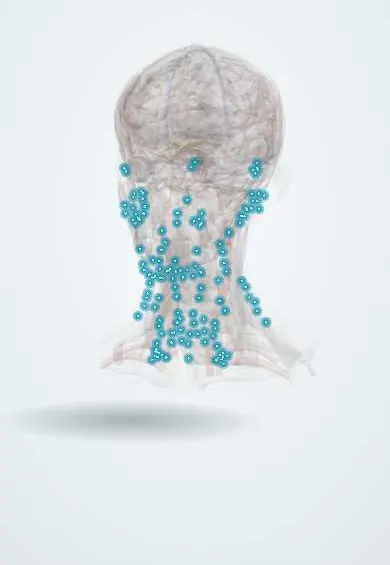
Structures involved
Tap one to see what it is and open it in 3D.
Why it happens
- Apoptosis: the intrinsic and extrinsic pathways
- Evading cell death and replicating without limit: BCL2 and telomerase
- White blood cells: types and functions
- Lymph node and spleen under the microscope
What it is
A chronic lymphoproliferative neoplasm of small, mature-looking but dysfunctional CD5-positive B lymphocytes that accumulate in the blood, marrow, lymph nodes, spleen and liver. Small lymphocytic lymphoma (SLL) is the same disease presenting mainly in lymph nodes.
Who gets it
The most common leukaemia of adults in Western countries, with a median age at diagnosis around 70 and male predominance. It is less frequent in Latin America and Asia than in Europe and North America. Many cases are found incidentally on a blood count.
Causes
- Acquired genetic changes in B cells (for example del(13q), trisomy 12, del(11q), del(17p) or TP53 mutation)
- Strong familial predisposition in some families
- Not linked to radiation; cause otherwise unknown
Risk factors
- Age over 60
- Male sex
- First-degree relative with CLL or another lymphoid cancer
- Monoclonal B-cell lymphocytosis (precursor state)
Pathophysiology
Clonal B cells escape apoptosis (for example through overexpression of BCL2) and receive survival signals through the B-cell receptor, so they accumulate rather than proliferate rapidly. They crowd the marrow, causing anaemia and thrombocytopenia, and fail to make normal antibodies, causing hypogammaglobulinaemia and infections. Immune dysregulation also produces autoimmune haemolytic anaemia and immune thrombocytopenia.
Classification
- Rai stages 0–IV (lymphocytosis, lymphadenopathy, organomegaly, anaemia, thrombocytopenia)
- Binet stages A–C (number of lymphoid areas involved and presence of anaemia or thrombocytopenia)
- Hairy cell leukaemia: a separate, rarer B-cell leukaemia with pancytopenia, massive splenomegaly, 'hairy' projections, BRAF V600E and a dry marrow tap
Symptoms and signs
- Often no symptoms; persistent lymphocytosis on a routine count
- Painless, rubbery, symmetric lymphadenopathy in the neck, axillae and groin
- Fatigue and reduced exercise tolerance
- Fever, night sweats and weight loss (B symptoms)
- Left upper quadrant fullness from splenomegaly
- Recurrent bacterial infections, especially of the lungs and sinuses
Diagnosis
- Clinical
- Older adult with lymphocytosis and painless generalised lymphadenopathy, sometimes splenomegaly. Examination of all node groups, liver and spleen for staging.
- Tests
- Sustained B-lymphocyte count of at least 5 × 10^9/L; smear with small mature lymphocytes and smudge cells. Flow cytometry shows a clonal B population co-expressing CD5, CD19, CD23 with weak surface immunoglobulin. FISH and TP53 testing for prognosis; Coombs test, immunoglobulins and haemolysis markers.
- Imaging
- Not required for diagnosis; CT is used when symptoms suggest bulky internal nodes or before some treatments; PET when Richter transformation is suspected.
Differential diagnosis
- Reactive lymphocytosis (viral infection, pertussis)
- Mantle cell lymphoma (CD5-positive but cyclin D1-positive, CD23 usually negative)
- Other low-grade lymphomas (follicular, marginal zone)
- Hairy cell leukaemia
- Acute lymphoblastic leukaemia (blasts, not mature cells)
Goal of treatment
Watch early, asymptomatic disease and treat only when it is active (symptoms, cytopenias, bulky or progressive nodes), aiming for durable control, prevention of infections and good quality of life.
Treatment
- Follow-up
- Watch and wait for early-stage, asymptomatic disease, with regular examination and blood counts; early treatment does not improve survival.
- Medical
- Targeted therapy is the mainstay: BTK inhibitors and BCL2 inhibitors, often combined with anti-CD20 monoclonal antibodies; chemoimmunotherapy is used less today.
- Medical
- Corticosteroids for autoimmune haemolytic anaemia or immune thrombocytopenia; immunoglobulin replacement for recurrent infections with low antibodies.
- Lifestyle
- Inactivated vaccines (pneumococcal, influenza) and avoidance of live vaccines to reduce infection risk.
- Procedure
- Allogeneic stem cell transplant or cellular therapies in young patients with high-risk or refractory disease.
Complications
- Recurrent infections from hypogammaglobulinaemia
- Autoimmune haemolytic anaemia and immune thrombocytopenia
- Richter transformation to an aggressive lymphoma
- Second cancers, especially of the skin
- Tumour lysis syndrome during treatment
Prognosis
Very variable: many patients with early disease live for years without treatment, while those with del(17p) or TP53 mutation have a worse course. Targeted therapies have improved survival in high-risk disease.
Test yourself
Think of the answer, then tap the question to see it.
What is the classic finding on the blood smear in CLL?
Many small mature lymphocytes and smudge cells.
Which immunophenotype is characteristic of CLL cells?
Clonal B cells co-expressing CD5, CD19 and CD23, with weak surface immunoglobulin.
What is the usual management of early, asymptomatic CLL?
Watch and wait, with regular monitoring and no treatment until the disease is active.
What is Richter transformation?
Conversion of CLL into an aggressive lymphoma, usually diffuse large B-cell lymphoma, with rapid node growth, fever and high LDH.
Which autoimmune complication of CLL presents with anaemia, jaundice and a positive Coombs test?
Warm autoimmune haemolytic anaemia.
Related conditions
- Chronic myeloid leukaemia
- Cervical lymphadenopathy
- Tumour lysis syndrome
- Anaemia of chronic disease (anaemia of inflammation)
Educational information, not medical advice. For any symptom, see a health professional.
Sources: Chronic Lymphocytic Leukemia Treatment (PDQ®)–Patient Version (National Cancer Institute, 2024); Chronic lymphocytic leukemia (CLL) (MedlinePlus (U.S. National Library of Medicine), 2024).
Spotted a mistake?We are always improving for the community. Tell us what is wrong and our team will review it.Report a mistake
Representative model, for educational purposes only.