Conditions · Metabolism (biochemistry)
Congenital adrenal hyperplasia due to 17α-hydroxylase deficiency !
A very rare adrenal hyperplasia: no sex hormones are made and hypertension with low potassium appears, usually found in adolescence.
Updated 2026-11-01
Structures involved
Tap one to see what it is and open it in 3D.
In biochemistry
- Adrenal cortisol synthesis: Step 3 · 17α-Hydroxylase/17,20-lyase (CYP17A1)
- Adrenal enzymes and congenital adrenal hyperplasia
- 17α-Hydroxylase/17,20-lyase (CYP17A1)
In embryology
In physiology
What it is
An autosomal recessive disorder from CYP17A1 variants that blocks cortisol, androgen and oestrogen synthesis and diverts precursors into mineralocorticoids.
Who gets it
It accounts for about 1 % of congenital adrenal hyperplasia and is estimated at 1 in a million people worldwide. No Colombian figures are cited here.
Causes
- Variants in both copies of CYP17A1 (chromosome 10)
- Autosomal recessive inheritance
Risk factors
- Carrier parents
- Consanguinity
Pathophysiology
CYP17A1 has 17α-hydroxylase (cortisol pathway) and 17,20-lyase (androgen pathway) activity. Without it pregnenolone can only follow the mineralocorticoid branch: 11-deoxycorticosterone and corticosterone pile up. DOC retains sodium (hypertension, low potassium, suppressed renin and aldosterone); corticosterone has enough glucocorticoid action, so adrenal crisis is rare. Neither the adrenals nor the gonads make androgens or oestrogens: a 46,XY fetus is not virilised (female or ambiguous external genitalia, internal testes) and puberty is absent in both sexes.
Classification
- Combined 17α-hydroxylase and 17,20-lyase deficiency (classic)
- Isolated 17,20-lyase deficiency (rare)
Symptoms and signs
- No pubertal development and primary amenorrhoea
- In 46,XY: female or ambiguous external genitalia with testes in the abdomen or groin
- High blood pressure
- Muscle weakness from low potassium
- Tall stature with eunuchoid proportions and delayed bone age
Diagnosis
- Clinical
- Suspected in an adolescent girl without puberty, with hypertension and low potassium.
- Tests
- High 11-deoxycorticosterone and corticosterone; low cortisol, androgens and oestrogens; high LH and FSH; low renin and aldosterone; low potassium; karyotype (46,XX or 46,XY); CYP17A1 genetic testing.
- Imaging
- Pelvic ultrasound or MRI to look for a uterus, ovaries or intra-abdominal testes; bone densitometry; hand X-ray for bone age.
Treatment
- Medical
- Glucocorticoid replacement to hold ACTH back and lower DOC
- Medical
- Sex hormone replacement from pubertal age according to the gender of rearing; antihypertensives if needed
- Surgical
- Removal of intra-abdominal testes in 46,XY people raised as women, because of tumour risk
- Follow-up
- Monitoring of blood pressure, potassium and bone mass, and psychological support
Complications
- Chronic hypertension and cardiovascular damage
- Osteoporosis from lack of oestrogen
- Infertility
- Tumours in undescended testes
Prognosis
Good with hormone treatment and blood pressure control; fertility is usually very limited.
Prevention
- Genetic counselling in affected families
Test yourself
Think of the answer, then tap the question to see it.
Why does 17α-hydroxylase deficiency cause hypertension?
Because precursors are diverted to 11-deoxycorticosterone, a mineralocorticoid that retains sodium.
Why is adrenal crisis rare in this deficiency?
Because the piled-up corticosterone has enough glucocorticoid activity.
How does a 46,XY person with this deficiency present?
With female or ambiguous external genitalia, internal testes and absent puberty.
Related conditions
- Congenital adrenal hyperplasia due to 21-hydroxylase deficiency
- Congenital adrenal hyperplasia due to 11β-hydroxylase deficiency
- Arterial hypertension
- Osteoporosis
Educational information, not medical advice. For any symptom, see a health professional.
Sources: 17 alpha-hydroxylase/17,20-lyase deficiency: MedlinePlus Genetics (MedlinePlus, US National Library of Medicine, 2026); CYP17A1 gene: MedlinePlus Genetics (MedlinePlus, US National Library of Medicine, 2026); Congenital adrenal hyperplasia: MedlinePlus Medical Encyclopedia (MedlinePlus, US National Library of Medicine, 2026).
Spotted a mistake?We are always improving for the community. Tell us what is wrong and our team will review it.Report a mistake
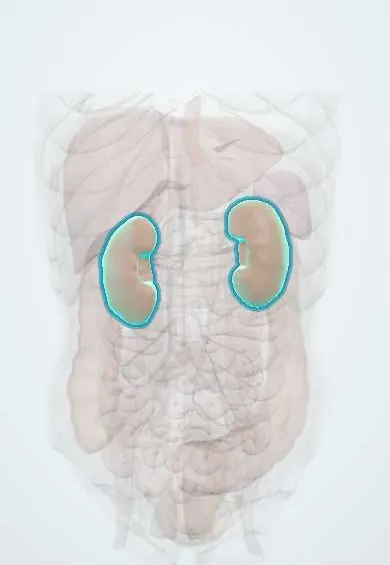
Representative model, for educational purposes only.