Conditions · Metabolism: carbohydrates and glycogen
Hers disease (glycogen storage disease type VI) !
In Hers disease liver phosphorylase fails: the child has a large liver and mild drops in blood sugar that improve with age.
Updated 2026-11-01
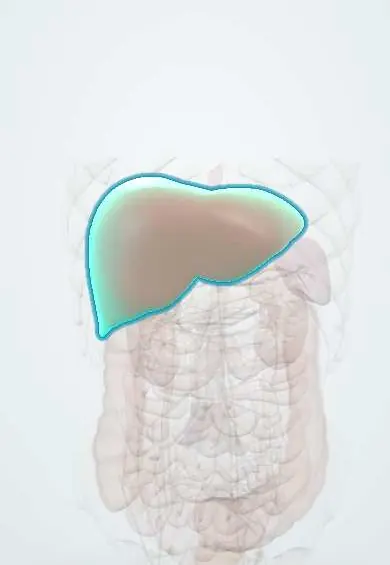
Structures involved
Tap one to see what it is and open it in 3D.
In biochemistry
What it is
Liver glycogen storage disease caused by lack of liver glycogen phosphorylase (PYGL gene). It is usually mild.
Who gets it
Rare and probably underdiagnosed; commoner in the Old Order Mennonite community (1 in 1,000).
Causes
- Autosomal recessive inheritance: PYGL gene variants
Risk factors
- Carrier parents or affected siblings
Pathophysiology
Without liver phosphorylase, glycogen accumulates in the liver and releases little glucose during fasting. Gluconeogenesis is intact, so hypoglycaemia is mild and accompanied by ketosis; lactate and uric acid are usually normal.
Symptoms and signs
- Large abdomen from hepatomegaly in early childhood
- Mild hypoglycaemia with long fasts or illness
- Slow growth
- Tiredness with exercise in some children
Diagnosis
- Clinical
- Child with hepatomegaly, slow growth and mild ketotic hypoglycaemia.
- Tests
- Mildly raised transaminases, fasting ketosis, normal lactate and uric acid. PYGL gene testing (distinguishes GSD VI from GSD IX, phosphorylase kinase).
- Imaging
- Abdominal ultrasound with hepatomegaly.
Treatment
- Lifestyle
- Avoid long fasts; frequent meals and uncooked cornstarch at bedtime if the metabolic team advises it
- Lifestyle
- Diet with good protein intake
- Follow-up
- Monitoring of growth and liver
Complications
- Liver fibrosis (rare)
- Hepatic adenomas (rare)
Prognosis
Good: hepatomegaly and hypoglycaemia usually improve by puberty.
Test yourself
Think of the answer, then tap the question to see it.
Which enzyme is missing in Hers disease?
Liver glycogen phosphorylase (PYGL).
Why is hypoglycaemia mild in Hers disease?
Gluconeogenesis works and makes glucose even though glycogen is not released.
Which glycogen storage disease resembles type VI and how are they told apart?
Type IX (phosphorylase kinase); they are distinguished by genetic testing.
Related conditions
- Von Gierke disease (glycogen storage disease type I)
- Cori disease (glycogen storage disease type III)
Educational information, not medical advice. For any symptom, see a health professional.
Sources: Glycogen storage disease type VI: MedlinePlus Genetics (MedlinePlus, US National Library of Medicine, 2026); PYGL gene: MedlinePlus Genetics (MedlinePlus, US National Library of Medicine, 2026); Textbook of Biochemistry for Medical Students, 6th ed. (Jaypee Brothers Medical Publishers (Vasudevan DM, Sreekumari S, Vaidyanathan K), 2011).
Spotted a mistake?We are always improving for the community. Tell us what is wrong and our team will review it.Report a mistake
Representative model, for educational purposes only.