Conditions · Pediatrics and neonatology
Klinefelter syndrome (47,XXY) !
Klinefelter syndrome is a condition in males with an extra X chromosome. It causes small testes, low testosterone and infertility, and is often found late.
Updated 2026-11-01
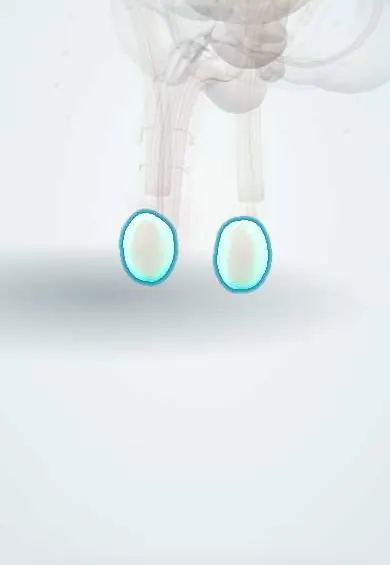
Structures involved
Tap one to see what it is and open it in 3D.
In embryology
- Gametogenesis: spermatogenesis and oogenesis
- Meiosis and nondisjunction: where trisomies come from
- Prenatal diagnosis: ultrasound, serum screening, cell-free DNA, CVS, amniocentesis
- Sex determination: SRY, anti-Müllerian hormone and testosterone
- Differences of sex development: CAH, AIS and 5α-reductase
Why it happens
- Chromosome abnormalities: number and structure
- Sex chromosome disorders: Klinefelter and Turner
- The male gonadal axis and spermatogenesis
- Testosterone and its actions
- Testis: seminiferous tubules, Sertoli and Leydig cells, spermatogenesis
What it is
A sex-chromosome condition of males with at least one extra X chromosome, most often 47,XXY. It is the most common cause of primary hypogonadism and of genetic male infertility.
Who gets it
The most common sex-chromosome disorder, affecting roughly 1 in 600–700 newborn boys. Most affected men are never diagnosed or are found only in adulthood during an infertility work-up, a pattern also seen in Latin America.
Causes
- An extra X chromosome from nondisjunction during meiosis in either parent (47,XXY)
- Mosaicism (46,XY/47,XXY) in about 1 in 10, usually milder
- Rare variants with more X chromosomes (48,XXXY, 49,XXXXY), more severe
Risk factors
- Older maternal age (modest increase)
- Not inherited; recurrence in a family is rare
Pathophysiology
The extra X disrupts testicular development, with hyalinisation of the seminiferous tubules and loss of germ cells and Leydig cell function. Low testosterone with high FSH and LH (hypergonadotropic hypogonadism) follows. The higher oestradiol-to-testosterone ratio causes gynecomastia, and delayed epiphyseal closure plus extra copies of SHOX give long legs and tall stature.
Classification
- Classic 47,XXY
- Mosaic 46,XY/47,XXY
- Higher-grade aneuploidies (48,XXXY, 48,XXYY, 49,XXXXY)
Symptoms and signs
- Small, firm testes, the most consistent sign
- Tall stature with long legs and eunuchoid proportions
- Incomplete or delayed puberty with sparse facial and body hair
- Gynecomastia
- Infertility (azoospermia in most) and low libido or erectile dysfunction
- Speech and language delay, learning difficulties and low muscle tone in childhood; intelligence usually normal
Diagnosis
- Clinical
- Suspected in a boy with learning or speech delay and small testes, an adolescent with poor virilisation and gynecomastia, or an adult with infertility. Testicular volume is measured by orchidometer.
- Tests
- Karyotype confirms the diagnosis. Hormones show low or low-normal testosterone with high FSH and LH; semen analysis usually shows azoospermia. Prenatal detection is possible by cell-free DNA screening or invasive testing.
- Imaging
- Not needed for diagnosis. Bone densitometry (DXA) assesses bone loss; testicular ultrasound if a mass is suspected.
Differential diagnosis
- Other causes of primary hypogonadism (mumps orchitis, testicular trauma, chemotherapy)
- Hypogonadotropic hypogonadism (low FSH and LH, e.g. Kallmann syndrome)
- Marfan syndrome (tall stature with normal testes)
- Pubertal gynecomastia or drug-induced gynecomastia
Goal of treatment
Replace testosterone to complete puberty and protect bone, muscle and mood, support learning and psychosocial development, and offer fertility options and long-term metabolic follow-up.
Treatment
- Medical
- Testosterone replacement from puberty (or when levels fall), which virilises and protects bone but does not restore fertility.
- Surgical
- Testicular sperm extraction (micro-TESE) with assisted reproduction can achieve biological fatherhood in some men; reduction mammoplasty for persistent gynecomastia.
- Rehabilitation
- Early speech, occupational and educational support for language and learning difficulties.
- Follow-up
- Follow-up of testosterone, haematocrit, bone density, weight, glucose, lipids and mental health.
Complications
- Infertility
- Osteoporosis and fractures
- Metabolic syndrome, type 2 diabetes and venous thromboembolism
- Male breast cancer and extragonadal germ cell tumours
- Anxiety, depression and attention difficulties
- Autoimmune diseases such as lupus
Prognosis
Life expectancy is near normal and most men live independent lives. Early diagnosis and testosterone replacement improve body composition, bone health and quality of life; fertility often needs assisted reproduction.
Test yourself
Think of the answer, then tap the question to see it.
What is the karyotype of classic Klinefelter syndrome?
47,XXY.
What hormone pattern is typical of Klinefelter syndrome?
Hypergonadotropic hypogonadism: low testosterone with high FSH and LH.
Which testicular finding is the most consistent sign of Klinefelter syndrome?
Small, firm testes (low testicular volume).
Which cancer has a higher risk in Klinefelter syndrome than in other men?
Male breast cancer (also extragonadal, especially mediastinal, germ cell tumours).
Related conditions
- Gynaecomastia
- Osteoporosis
- Breast cancer
- Metabolic syndrome
- Turner syndrome
- Cryptorchidism (undescended testis)
Educational information, not medical advice. For any symptom, see a health professional.
Sources: Klinefelter syndrome: MedlinePlus Genetics (MedlinePlus, US National Library of Medicine, 2026).
Spotted a mistake?We are always improving for the community. Tell us what is wrong and our team will review it.Report a mistake
Representative model, for educational purposes only.