Gynaecomastia !
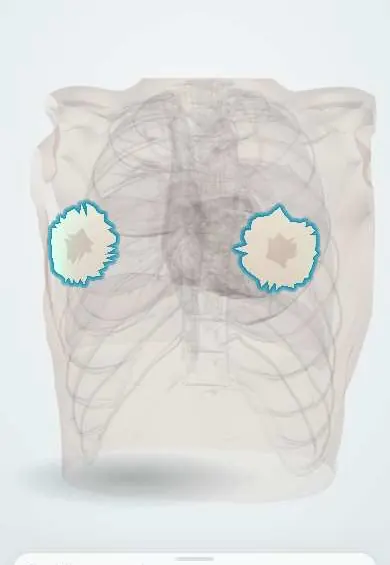
Gynecomastia is a benign enlargement of the male breast from growth of gland tissue, felt as a firm disc under the nipple.
Updated 2026-10-29
Structures involved
Tap one to see what it is and open it in 3D.
In biochemistry
In histology
In the clinical exam
In physiology
Why it happens
- Hyperplasia: physiologic and pathologic
- Actions of estrogen and progesterone
- Testosterone and its actions
What it is
Benign enlargement of the male breast caused by growth of glandular tissue, felt as a firm, rubbery disc under the areola. It can be physiological, drug-induced or caused by disease.
Who gets it
Very common in newborns, adolescents during puberty and older men. Drug-induced and liver-related forms are frequent in adult practice.
Causes
- Physiological: newborns, puberty, older age
- Drugs: antiandrogens, aldosterone antagonists, anabolic steroids, some antipsychotics, antiretrovirals and antiulcer drugs; alcohol and cannabis
- Liver cirrhosis and chronic kidney disease
- Hypogonadism (including Klinefelter syndrome)
- Hyperthyroidism
- Testicular or adrenal tumours that make hormones
Risk factors
- Puberty and older age
- Obesity
- Use of drugs linked to gynaecomastia
- Liver or kidney disease
- Anabolic steroid use
- Androgen deprivation therapy for prostate cancer
Pathophysiology
An imbalance between oestrogens, which stimulate breast tissue, and androgens, which inhibit it, makes the ducts and stroma grow. More oestrogen (from obesity, tumours, liver disease) or less androgen (hypogonadism, ageing, drugs) shifts the balance. Long-standing gynaecomastia becomes fibrotic and less likely to regress.
Classification
- Physiological, drug-induced, pathological or idiopathic
- True gynaecomastia (glandular) or pseudogynaecomastia (fat only)
- Unilateral or bilateral
- Grades by size and skin excess (several grading systems)
Symptoms and signs
- Firm, rubbery, mobile disc of tissue concentric beneath the areola
- Breast enlargement, often bilateral but can be asymmetric
- Tenderness, especially when recent
- Psychological distress and embarrassment
Diagnosis
- Clinical
- Examination distinguishes glandular tissue from fat and looks for warning signs; testicular examination, signs of liver disease and a full drug history are part of the assessment.
- Tests
- Liver and kidney function, thyroid function, testosterone, LH, FSH, oestradiol and hCG in adults or unclear cases.
- Imaging
- Testicular ultrasound if a mass or abnormal hormones; breast ultrasound or mammography when cancer is suspected.
Differential diagnosis
- Pseudogynaecomastia (fatty breast)
- Male breast cancer
- Lipoma
- Breast abscess
- Neurofibroma or dermoid cyst
Goal of treatment
Find and treat the cause, exclude cancer, relieve pain and address the cosmetic and psychological impact.
Treatment
- Follow-up
- Observation and reassurance for pubertal gynaecomastia, which usually resolves on its own; review to check for regression.
- Medical
- Stopping or changing the responsible drug when possible, and treating the cause (hypogonadism, hyperthyroidism, liver disease, tumour).
- Medical
- Selective oestrogen receptor modulators in recent, painful cases; also used to prevent gynaecomastia with antiandrogen therapy, sometimes with breast-bud radiotherapy.
- Surgical
- Surgery (subcutaneous mastectomy, liposuction or both) for long-standing fibrotic gynaecomastia that does not regress.
Complications
- Psychological distress, low self-esteem and social withdrawal
- Persistent fibrotic tissue
- Missed underlying disease (testicular tumour, liver disease)
- Surgical complications: contour irregularity, haematoma
Prognosis
Physiological pubertal gynaecomastia usually resolves within a few years. Drug-induced cases improve if the drug is stopped early; long-standing fibrotic tissue usually needs surgery.
Test yourself
Think of the answer, then tap the question to see it.
What hormonal imbalance causes gynaecomastia?
Too much oestrogen effect relative to androgen effect on male breast tissue.
What are the three physiological peaks of gynaecomastia?
The newborn period, puberty and older age.
How is true gynaecomastia distinguished from pseudogynaecomastia?
True gynaecomastia is a firm, rubbery disc of glandular tissue beneath the areola; pseudogynaecomastia is soft fat with no disc.
What features of a male breast mass suggest cancer?
Hard, eccentric, fixed mass, skin or nipple changes, bloody discharge or axillary lymph nodes.
Why examine the testes in an adult with new gynaecomastia?
To look for a hormone-producing testicular tumour, such as a germ cell or Leydig cell tumour.
Related conditions
- Cirrhosis
- Obesity
- Graves disease (hyperthyroidism)
- Breast cancer
- Chronic kidney disease
- Breast abscess
- Testicular cancer
Educational information, not medical advice. For any symptom, see a health professional.
Sources: Gynecomastia (StatPearls (NCBI Bookshelf), 2023).
Spotted a mistake?We are always improving for the community. Tell us what is wrong and our team will review it.Report a mistake
Representative model, for educational purposes only.