Conditions · Metabolism: fatty acids and ketones
Carnitine palmitoyltransferase II (CPT-II) deficiency !
An inherited disorder that stops muscle burning fat; long exercise or fasting can break down muscle fibres and damage the kidneys.
Updated 2026-11-01
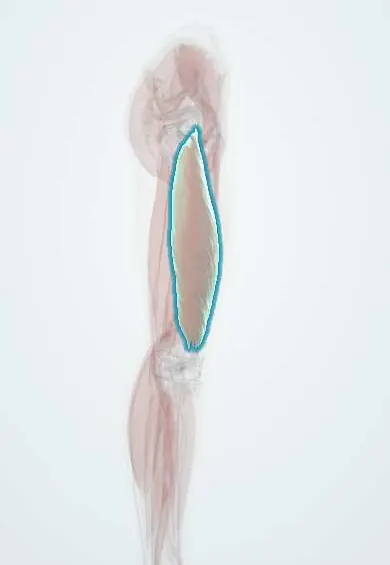
Structures involved
Tap one to see what it is and open it in 3D.
In biochemistry
- Creatine kinase (CK) and CK-MB as lab tests
- Carnitine palmitoyltransferase I (CPT-I)
- Carnitine (L-carnitine)
- Carnitine shuttle
- Exercise metabolism
What it is
An autosomal recessive defect of the CPT-II enzyme (CPT2 gene), the last step of the carnitine shuttle. The adult myopathic form is the most common inherited fat-related cause of recurrent rhabdomyolysis.
Who gets it
Rare. The myopathic form is the most frequent, with more than 300 reported cases; the lethal neonatal and infantile hepatocardiomuscular forms are known in a few dozen families.
Causes
- Variants in both copies of CPT2; p.Ser113Leu is common in the myopathic form
- Autosomal recessive inheritance
Risk factors
- Prolonged exercise (more than short intense effort)
- Fasting or a very low-carbohydrate diet
- Cold, fever, infections and stress
- Some medicines (for example, valproic acid) and general anaesthesia
Pathophysiology
CPT-II puts CoA back on the acyl group inside the mitochondrion. If it fails, long-chain fatty acids cannot enter β-oxidation and build up as acylcarnitines. Muscle relies on fat during prolonged exercise and fasting; without it the muscle runs out of energy, fibres break down (rhabdomyolysis) and release myoglobin, which can block and injure the renal tubules.
Classification
- Myopathic (adolescent or adult): episodes of muscle pain and myoglobinuria
- Severe infantile hepatocardiomuscular: hypoglycaemia, liver failure, cardiomyopathy
- Lethal neonatal: malformations, liver failure and arrhythmias
Symptoms and signs
- Muscle pain and stiffness after long exercise
- Muscle weakness
- Dark, tea- or cola-coloured urine
- Normal strength between episodes
Diagnosis
- Clinical
- Suspected with repeated rhabdomyolysis triggered by prolonged exercise, fasting, cold or fever, with normal muscle between crises.
- Tests
- Very high CK and myoglobinuria during a crisis; creatinine and potassium to watch the kidney; acylcarnitine profile with high C16 and C18:1; CPT2 genetic testing or enzyme activity in muscle or fibroblasts.
- Imaging
- Usually not needed; muscle MRI can show oedema during a crisis.
Treatment
- Acute
- In rhabdomyolysis: generous intravenous fluids and glucose, watching kidney function and potassium
- Lifestyle
- High-carbohydrate diet, frequent meals and no fasting
- Lifestyle
- Plan exercise with breaks and carbohydrate; medium-chain oils as advised by the care team
- Follow-up
- Follow-up of CK and kidney function, and review of medicines and anaesthesia
Complications
- Acute kidney injury from myoglobin
- Hyperkalaemia and arrhythmias
- Respiratory failure in severe crises
Prognosis
Good in the myopathic form if triggers are avoided; the infantile and neonatal forms have high mortality.
Prevention
- Avoiding triggers and family genetic counselling.
Test yourself
Think of the answer, then tap the question to see it.
What typically triggers crises in myopathic CPT-II deficiency?
Prolonged exercise, fasting, cold or fever, when muscle relies on fat.
Why can the kidney be damaged in CPT-II deficiency?
Rhabdomyolysis releases myoglobin, which is filtered and injures the renal tubules.
Which acylcarnitines are raised in CPT-II deficiency?
Long-chain ones, mainly C16 and C18:1.
Related conditions
- Acute kidney injury
- Primary carnitine deficiency
- Medium-chain acyl-CoA dehydrogenase (MCAD) deficiency
Educational information, not medical advice. For any symptom, see a health professional.
Sources: Carnitine palmitoyltransferase II deficiency: MedlinePlus Genetics (MedlinePlus, US National Library of Medicine, 2026); CPT2 gene: MedlinePlus Genetics (MedlinePlus, US National Library of Medicine, 2026); Carnitine shuttle (Reactome, 2026).
Spotted a mistake?We are always improving for the community. Tell us what is wrong and our team will review it.Report a mistake
Representative model, for educational purposes only.