Conditions · Metabolism: fatty acids and ketones
Primary carnitine deficiency !
An inherited disorder in which the kidney loses carnitine and cells cannot burn fat; it can affect the heart and cause hypoglycaemia.
Updated 2026-11-01
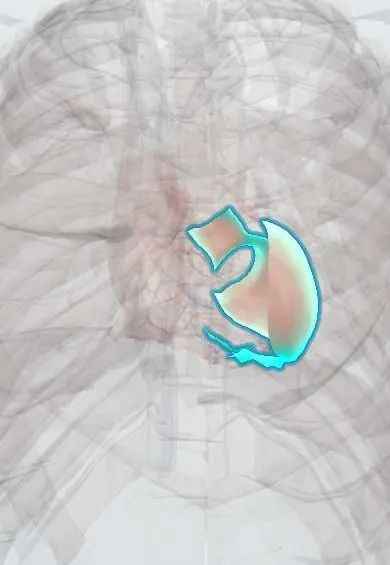
Structures involved
Tap one to see what it is and open it in 3D.
In biochemistry
What it is
An autosomal recessive disorder of the OCTN2 carnitine transporter (SLC22A5 gene). Carnitine is lost in urine and is lacking in muscle, heart and liver, so long-chain fatty acids cannot enter mitochondria.
Who gets it
About 1 in 100,000 newborns worldwide and 1 in 40,000 in Japan. Some symptom-free mothers are found when their baby's screen shows low carnitine.
Causes
- Variants in both copies of SLC22A5 (OCTN2 transporter)
- Autosomal recessive inheritance
Risk factors
- Affected sibling
- Fasting or infection (trigger metabolic crises in infancy)
- Pregnancy in undiagnosed affected women
Pathophysiology
OCTN2 carries carnitine into cells and recovers it in the renal tubule. Without it carnitine is lost in urine and blood and tissue levels fall sharply. Without carnitine the shuttle cannot move long-chain fatty acids into mitochondria: heart and muscle, which rely on fat, weaken (dilated cardiomyopathy) and the liver makes no ketones during fasting (hypoketotic hypoglycaemia).
Classification
- Infantile metabolic form: hypoketotic hypoglycaemia, hepatomegaly, lethargy
- Childhood cardiac form: dilated cardiomyopathy and muscle weakness
- Adults without symptoms or with fatigue, found by screening
Symptoms and signs
- Tiredness and muscle weakness
- Breathlessness and oedema from heart failure
- Vomiting and lethargy with fasting
- Hepatomegaly
Diagnosis
- Clinical
- Suspected with cardiomyopathy or hypoketotic hypoglycaemia in a child, or low carnitine on the newborn screen.
- Tests
- Very low free and total plasma carnitine; high urinary carnitine despite the low level; SLC22A5 testing; fibroblast carnitine uptake if in doubt. Secondary causes are excluded (affected mother, organic aciduria).
- Imaging
- Echocardiogram: dilated left ventricle with reduced function; abdominal ultrasound can show hepatomegaly.
Treatment
- Medical
- Lifelong L-carnitine supplement, which corrects the cardiomyopathy in most
- Acute
- In a metabolic crisis: intravenous glucose and care in a specialist centre
- Lifestyle
- Avoid prolonged fasting, especially in infancy
- Follow-up
- Cardiology follow-up and carnitine level checks
Complications
- Heart failure
- Arrhythmias and sudden death
- Brain damage from hypoglycaemia
Prognosis
Very good with oral carnitine; untreated, the cardiomyopathy can be fatal.
Prevention
- Newborn screening and testing of siblings and the mother of a baby with low carnitine.
Test yourself
Think of the answer, then tap the question to see it.
Which gene and transporter fail in primary carnitine deficiency?
SLC22A5, which encodes the OCTN2 carnitine transporter.
Why is urinary carnitine high when plasma carnitine is low?
Without OCTN2 the kidney cannot reabsorb it, so it is lost in urine.
Which organ is typically damaged in the childhood form?
The heart: dilated cardiomyopathy, which improves with oral carnitine.
Related conditions
- Heart failure
- Medium-chain acyl-CoA dehydrogenase (MCAD) deficiency
- Carnitine palmitoyltransferase II (CPT-II) deficiency
Educational information, not medical advice. For any symptom, see a health professional.
Sources: Primary carnitine deficiency: MedlinePlus Genetics (MedlinePlus, US National Library of Medicine, 2026); SLC22A5 gene: MedlinePlus Genetics (MedlinePlus, US National Library of Medicine, 2026); Carnitine shuttle (Reactome, 2026).
Spotted a mistake?We are always improving for the community. Tell us what is wrong and our team will review it.Report a mistake
Representative model, for educational purposes only.