Conditions · Metabolism: purines and pyrimidines
Hereditary orotic aciduria !
A very rare inherited disease in which pyrimidines are not made properly: anaemia that does not improve with vitamins and crystals in the urine.
Updated 2026-11-01
Structures involved
Tap one to see what it is and open it in 3D.
In biochemistry
- Pyrimidine synthesis: Step 5 · UMP synthase: orotate phosphoribosyltransferase
- Pyrimidine synthesis: Step 6 · UMP synthase: OMP decarboxylase
- CAD (carbamoyl phosphate synthetase II)
- UMP synthase
- Orotic acid
What it is
Autosomal recessive UMP synthase deficiency that blocks pyrimidine synthesis: orotic acid builds up and a megaloblastic anaemia resistant to B12 and folate appears.
Who gets it
Very rare: only a few dozen cases have been described worldwide. There are no Colombian data; it should be considered in an infant with megaloblastic anaemia that does not respond to vitamins.
Causes
- Pathogenic variants in both copies of the UMPS gene (autosomal recessive inheritance)
Risk factors
- Carrier parents or consanguinity
Pathophysiology
UMP synthase joins orotate to PRPP (OPRT) and decarboxylates OMP to UMP (ODC). When it fails, UMP and therefore UTP, CTP and dTTP run short: rapidly dividing cells such as blood precursors cannot complete their DNA and become megaloblastic. With little UTP, CPS-II loses its brake and makes even more orotate, which is excreted in large amounts and can crystallise.
Classification
- Type I: both activities (OPRT and ODC) are missing; the usual form
- Type II: only ODC is missing; exceptional
Symptoms and signs
- Pallor and tiredness from megaloblastic anaemia from the first months
- Failure to thrive and developmental delay
- Crystals in the urine, sometimes with urinary obstruction
- Frequent infections in some patients
Diagnosis
- Clinical
- An infant with vitamin-resistant megaloblastic anaemia, failure to thrive and crystalluria.
- Tests
- Very high urinary orotic acid with normal blood ammonia (rules out OTC deficiency); blood count with macrocytosis and megaloblastic smear; normal B12 and folate; red cell UMP synthase activity and UMPS genetic testing.
- Imaging
- Renal and urinary tract ultrasound if crystal obstruction is suspected.
Treatment
- Medical
- Lifelong oral uridine (as uridine triacetate): it supplies pyrimidines bypassing the enzyme and turns down orotate production
- Follow-up
- Regular monitoring of blood count, urinary orotic acid and growth
- Lifestyle
- Good hydration to reduce crystalluria
Complications
- Urinary obstruction from orotic acid crystals
- Developmental delay if treatment starts late
Prognosis
With early uridine, the anaemia corrects and growth usually normalises.
Test yourself
Think of the answer, then tap the question to see it.
Which enzyme fails in hereditary orotic aciduria?
UMP synthase (OPRT and ODC activities), which turns orotate into UMP.
Which test separates it from OTC deficiency?
Blood ammonia: normal in hereditary orotic aciduria and high in OTC deficiency.
Why does uridine correct the disease?
Uridine kinase turns it into UMP without UMP synthase, and the resulting UTP turns down CPS-II.
Educational information, not medical advice. For any symptom, see a health professional.
Sources: UMPS: Uridine 5'-monophosphate synthase (human) (UniProt, 2026); Pyrimidine biosynthesis (Reactome, 2026); Textbook of Biochemistry for Medical Students, 6th ed. (Jaypee Brothers Medical Publishers (Vasudevan DM, Sreekumari S, Vaidyanathan K), 2011).
Spotted a mistake?We are always improving for the community. Tell us what is wrong and our team will review it.Report a mistake
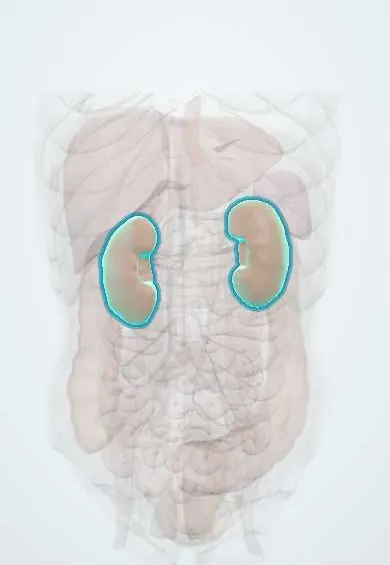
Representative model, for educational purposes only.