Conditions · Vitamins and minerals
Hypervitaminosis A (vitamin A toxicity) !
Too much vitamin A from supplements or retinoids causes headache, liver and bone damage, and birth defects in pregnancy.
Updated 2026-11-01
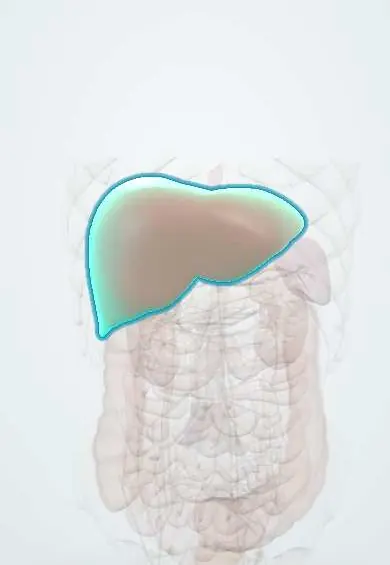
Structures involved
Tap one to see what it is and open it in 3D.
In biochemistry
In embryology
Why it happens
What it is
Toxicity from accumulated preformed retinol or retinoids, acute (one large load) or chronic (excess over weeks or months). Plant carotenes do not cause it.
Who gets it
Uncommon; seen with high-dose supplements, in children given repeated preparations and in people on retinoids. Historic cases followed eating polar bear or large-fish liver.
Causes
- High or repeated doses of vitamin A supplements
- Retinoids (isotretinoin, acitretin)
- Excessive liver or fish liver oil
Risk factors
- Liver disease, alcoholism
- Chronic kidney disease (RBP is not cleared)
- Protein malnutrition
- Young children given over-the-counter preparations
Pathophysiology
When hepatic stellate cells are saturated, free retinol (not bound to RBP) circulates and damages membranes. In the liver it activates stellate cells, producing fibrosis and portal hypertension. Retinoic acid stimulates osteoclasts (bone resorption, hypercalcaemia) and disturbs cerebrospinal fluid absorption (raised intracranial pressure). In pregnancy it disrupts HOX genes and neural crest migration.
Classification
- Acute: after a very large load
- Chronic: sustained excess
- Retinoid teratogenicity
Symptoms and signs
- Headache, nausea, vomiting, blurred vision
- Bulging fontanelle in infants
- Dry, peeling skin, hair loss, cracked lips
- Bone and joint pain
- Enlarged liver
Diagnosis
- Clinical
- History of supplements, retinoids or liver intake with a compatible picture.
- Tests
- High serum retinol and retinyl esters; liver tests, serum calcium.
- Imaging
- Fundoscopy showing papilloedema; X-ray with cortical hyperostosis in children; liver ultrasound or elastography.
Treatment
- Conservative
- Stop every source of preformed vitamin A (supplements, excess liver, retinoids)
- Follow-up
- Monitor liver function, calcium and intracranial pressure until symptoms settle
- Medical
- Treat hypercalcaemia and raised intracranial pressure if present
Complications
- Liver fibrosis and cirrhosis
- Visual loss from raised intracranial pressure
- Osteoporosis and fractures
- Congenital malformations
Prognosis
The acute form improves within days once the source is stopped; chronic liver fibrosis may not reverse.
Prevention
- Avoid high-dose preformed vitamin A supplements without indication
- Pregnancy prevention programmes with isotretinoin
Test yourself
Think of the answer, then tap the question to see it.
Why does β-carotene not cause hypervitaminosis A?
Its conversion to retinal in the gut is regulated and slows when vitamin A is sufficient; excess only turns the skin yellow.
Which neurological syndrome does excess vitamin A cause?
Idiopathic intracranial hypertension (pseudotumour cerebri): headache, papilloedema and risk of visual loss.
What liver damage does chronic toxicity cause?
Stellate cell activation with fibrosis, portal hypertension and cirrhosis.
Why does excess vitamin A cause hypercalcaemia?
Retinoic acid stimulates osteoclasts and increases bone resorption.
Related conditions
Educational information, not medical advice. For any symptom, see a health professional.
Sources: Hypervitaminosis A: MedlinePlus Medical Encyclopedia (MedlinePlus, US National Library of Medicine, 2026); Vitamin A: MedlinePlus Medical Encyclopedia (MedlinePlus, US National Library of Medicine, 2026); Vitamin A blood test: MedlinePlus Medical Encyclopedia (MedlinePlus, US National Library of Medicine, 2026); Textbook of Biochemistry for Medical Students, 6th ed. (Jaypee Brothers Medical Publishers (Vasudevan DM, Sreekumari S, Vaidyanathan K), 2011).
Spotted a mistake?We are always improving for the community. Tell us what is wrong and our team will review it.Report a mistake
Representative model, for educational purposes only.