Conditions · Pediatrics and neonatology
Leukocyte adhesion deficiency !
Inherited immune defect: white cells cannot leave the blood to reach infections, so the cord falls off late, no pus forms and gums are damaged.
Updated 2026-11-01
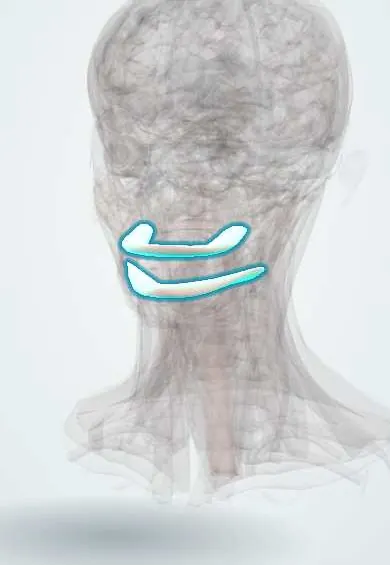
Structures involved
Tap one to see what it is and open it in 3D.
Why it happens
- Leukocyte recruitment: rolling, adhesion, transmigration, chemotaxis
- White blood cells: types and functions
What it is
A group of rare autosomal recessive phagocyte disorders in which neutrophils cannot adhere to the vessel wall and migrate into tissues. Type 1, the most common, is caused by deficiency of the beta-2 integrin chain CD18. Infants have delayed separation of the umbilical cord, omphalitis, infections without pus, poor wound healing, severe periodontitis and very high blood neutrophil counts.
Who gets it
Very rare, about 1 per million people worldwide for type 1, more frequent where consanguinity is common. Severe forms present in the newborn period; moderate forms are recognised later in childhood.
Causes
- LAD type 1: variants in ITGB2, encoding CD18, the common beta-2 chain of leukocyte integrins (LFA-1, Mac-1)
- LAD type 2: defect in fucose metabolism (SLC35C1), with absent sialyl Lewis X selectin ligands
- LAD type 3: variants in FERMT3 (kindlin-3), with integrin activation failure and bleeding
Risk factors
- Parental consanguinity
- Both parents carriers or an affected sibling
Pathophysiology
Neutrophils normally roll on endothelium via selectins, then bind firmly through beta-2 integrins to ICAM-1 before leaving the vessel. Without functional CD18, firm adhesion and migration fail, so neutrophils stay in the blood (marked neutrophilia, even without infection) and do not reach infected tissue. Infections therefore spread without pus formation, wounds heal poorly, and the umbilical stump, which needs neutrophils for its separation, stays attached. Severity correlates with how much CD18 is expressed.
Classification
- LAD-1 severe: less than 2% of normal CD18 expression, neonatal onset
- LAD-1 moderate: about 2 to 30% CD18 expression, milder course
- LAD-2: also short stature, intellectual disability and Bombay blood group
- LAD-3: LAD-1 features plus a bleeding disorder like Glanzmann thrombasthenia
Symptoms and signs
- Delayed separation of the umbilical cord (beyond three weeks) and omphalitis
- Recurrent bacterial and fungal skin and mucosal infections without pus
- Necrotic skin ulcers and slow wound healing with thin scars
- Severe gingivitis and periodontitis with early loss of primary and permanent teeth
- Very high white cell count (neutrophilia) persisting between infections
- Fever, deep infections and sepsis in infancy in the severe form
Diagnosis
- Clinical
- Suspect it in an infant with delayed cord separation or omphalitis, infections that form no pus and persistent marked neutrophilia, or in a child with early severe periodontitis.
- Tests
- Complete blood count with very high neutrophil count; flow cytometry showing absent or reduced CD18 (and CD11a, CD11b, CD11c) on leukocytes, the key test for LAD-1; CD15a (sialyl Lewis X) for LAD-2; genetic testing (ITGB2, SLC35C1, FERMT3); cultures from infected sites.
- Imaging
- Not diagnostic; used to look for deep infections or abscesses when present.
Differential diagnosis
- Chronic granulomatous disease
- Chédiak-Higashi syndrome
- Hyper-IgE syndrome
- Severe congenital neutropenia (low neutrophils instead of high)
- Leukaemoid reaction or leukaemia
Goal of treatment
Cure severe LAD-1 with haematopoietic stem cell transplantation, and control infections, periodontal disease and wounds in the meantime and in moderate forms.
Treatment
- Procedure
- Haematopoietic stem cell transplantation, the only cure and the treatment of choice for severe LAD-1 and LAD-3.
- Medical
- Early, often prolonged antibiotics for infections, and prophylactic antibiotics.
- Medical
- IL-12/IL-23 blockade has been used in moderate LAD-1 to control periodontitis and ulcers; fucose supplementation can help some patients with LAD-2.
- Conservative
- Meticulous oral hygiene, periodontal treatment and dental care.
- Conservative
- Careful wound and umbilical care; granulocyte transfusions in selected severe infections.
- Follow-up
- Monitoring for infections, growth and wound healing; genetic counselling for the family.
Complications
- Omphalitis and neonatal sepsis
- Severe periodontitis and early tooth loss
- Chronic skin ulcers and poor wound healing
- Recurrent life-threatening bacterial and fungal infections
- Bleeding in LAD-3
Prognosis
Without transplantation, most children with severe LAD-1 die in the first years of life. Transplantation can cure the disease. Moderate forms often survive into adulthood with recurrent infections and periodontal disease.
Prevention
- Genetic counselling and carrier testing in affected families
- Prenatal diagnosis when the familial variants are known
Test yourself
Think of the answer, then tap the question to see it.
Which protein is deficient in LAD type 1?
CD18, the beta-2 integrin chain (gene ITGB2).
What umbilical finding is classic?
Delayed separation of the umbilical cord (beyond 3 weeks), often with omphalitis.
Why do infected sites lack pus?
Neutrophils cannot adhere to endothelium and migrate into tissues.
What is the typical blood count?
Marked neutrophilic leukocytosis, even between infections.
What is the curative treatment?
Haematopoietic stem cell transplantation.
Related conditions
- Neonatal sepsis
- Periodontitis
- Chronic granulomatous disease
- Chédiak–Higashi syndrome
- Hyper-IgE syndrome (Job syndrome)
- Cellulitis of the leg
- Gastroschisis and omphalocele
Educational information, not medical advice. For any symptom, see a health professional.
Sources: Leukocyte adhesion deficiency type 1 (MedlinePlus Genetics (U.S. National Library of Medicine), 2014).
Spotted a mistake?We are always improving for the community. Tell us what is wrong and our team will review it.Report a mistake
Representative model, for educational purposes only.