Conditions · Pediatrics and neonatology
Neonatal hypoglycaemia (including infant of a diabetic mother) !
Low blood sugar in a newborn, common in babies of diabetic mothers or born small or early. Untreated, it can injure the brain.
Updated 2026-11-01
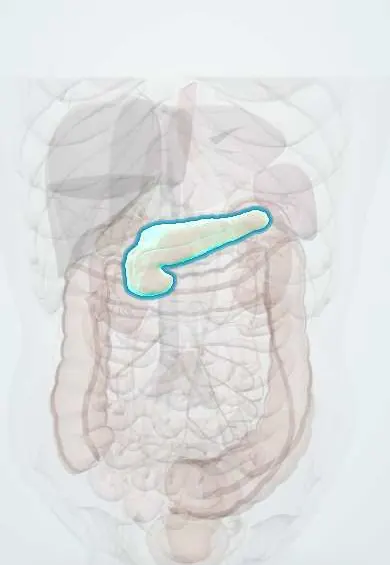
Structures involved
Tap one to see what it is and open it in 3D.
In embryology
Why it happens
- Prematurity and fetal growth restriction
- Genomic imprinting: Prader–Willi and Angelman
- The physiological response to hypoglycemia
- Islets and insulin: secretion and actions
- Gluconeogenesis
- Glycogen metabolism
What it is
A low plasma glucose level in a newborn, below the threshold that the brain needs, usually in the first hours to days of life. The infant of a diabetic mother is the classic example: fetal hyperinsulinaemia persists after the cord is cut and glucose supply stops.
Who gets it
Transient low glucose is common in the first hours of life, and up to half of at-risk infants (preterm, small, large for gestational age or born to diabetic mothers) have at least one low value. In Colombia and Latin America the rising frequency of obesity, gestational diabetes and type 2 diabetes in pregnancy increases the number of at-risk newborns.
Causes
- Hyperinsulinism: infant of a diabetic mother, large for gestational age, Beckwith–Wiedemann syndrome, congenital hyperinsulinism
- Low glycogen and fat stores: prematurity and intrauterine growth restriction
- Increased use: perinatal asphyxia, sepsis, hypothermia, respiratory distress
- Less often, endocrine and metabolic disorders: hypopituitarism, adrenal insufficiency, glycogen storage disease and other inborn errors
Risk factors
- Mother with pre-gestational or gestational diabetes, especially poorly controlled
- Preterm or late-preterm birth
- Small or large for gestational age
- Perinatal stress: asphyxia, sepsis, hypothermia
- Delayed or inadequate feeding
- Maternal use of beta-blockers or intrapartum glucose infusions
Pathophysiology
At birth the continuous placental glucose supply stops, and the newborn must release glucose from liver glycogen and later produce it by gluconeogenesis, helped by glucagon, catecholamines and cortisol. In the infant of a diabetic mother, maternal hyperglycaemia crosses the placenta and causes fetal pancreatic beta-cell hyperplasia and high insulin; after birth insulin remains high, blocking glycogen release and ketone production, so the brain loses both of its fuels. Prolonged or severe hypoglycaemia injures neurons, classically in the parieto-occipital cortex.
Classification
- Transitional (normal first-hours glucose fall, usually asymptomatic)
- Transient: lasts days, from hyperinsulinism of maternal diabetes, low stores or stress
- Persistent or recurrent: congenital hyperinsulinism, hormone deficiencies or inborn errors
Symptoms and signs
- Often no symptoms; found by screening at-risk infants
- Jitteriness, tremor and irritability
- Poor feeding, weak or high-pitched cry
- Hypotonia, lethargy, sweating and hypothermia
- Tachypnoea, apnoea or cyanosis
- In the infant of a diabetic mother: macrosomia, plethora and a round face
Diagnosis
- Clinical
- Scheduled glucose checks in at-risk newborns before feeds during the first 24 to 48 hours, and in any infant with suggestive signs. The infant of a diabetic mother is also examined for birth trauma and malformations.
- Tests
- Bedside glucose screening confirmed by a laboratory plasma glucose (bedside meters are less accurate at low values). Operational thresholds differ between guidelines; values below about 45–50 mg/dL in the first days usually lead to treatment. In persistent cases a «critical sample» during hypoglycaemia measures insulin, beta-hydroxybutyrate, cortisol and growth hormone. In infants of diabetic mothers also calcium, magnesium, haematocrit and bilirubin.
- Imaging
- Echocardiography in the infant of a diabetic mother to look for hypertrophic cardiomyopathy or congenital heart disease; brain MRI when hypoglycaemia was severe or symptomatic.
Differential diagnosis
- Neonatal sepsis
- Hypocalcaemia or hypomagnesaemia (also cause jitteriness and seizures)
- Hypoxic-ischaemic encephalopathy
- Neonatal abstinence syndrome
- Inborn errors of metabolism and adrenal insufficiency
Goal of treatment
Restore and keep glucose in a safe range to protect the brain, using feeding first when possible, find the cause, and plan follow-up for infants with persistent or severe hypoglycaemia.
Treatment
- Conservative
- Early and frequent breastfeeding with skin-to-skin contact in at-risk infants; buccal dextrose gel is used in many units for mild, asymptomatic hypoglycaemia together with feeding.
- Acute
- Intravenous dextrose (a small bolus followed by a continuous infusion) for symptomatic infants or when glucose stays low despite feeding; glucagon in selected cases while access is obtained.
- Medical
- Persistent hyperinsulinism is treated with drugs that reduce insulin release (diazoxide) or with somatostatin analogues; hydrocortisone for adrenal insufficiency; specialist care and sometimes partial pancreatectomy for focal congenital hyperinsulinism.
- Follow-up
- Nursing care: glucose checks before feeds on a set schedule, feeding records, temperature control, watching for jitteriness, lethargy and seizures, and confirming stable glucose before discharge.
Complications
- Seizures and permanent brain injury (classically parieto-occipital)
- Neurodevelopmental delay, visual impairment and epilepsy
- In the infant of a diabetic mother: macrosomia with shoulder dystocia and brachial plexus injury, respiratory distress syndrome, hypocalcaemia, polycythaemia, hyperbilirubinaemia, hypertrophic cardiomyopathy and congenital malformations (caudal regression syndrome, heart defects, small left colon)
Prognosis
Transient hypoglycaemia treated promptly usually has a good outcome; recurrent, prolonged or symptomatic episodes, especially with seizures, carry a risk of lasting neurological sequelae.
Prevention
- Good glucose control before and during pregnancy in women with diabetes
- Screening for gestational diabetes in pregnancy
- Early breastfeeding and skin-to-skin contact, keeping at-risk infants warm
- Glucose screening protocols for at-risk newborns
Test yourself
Think of the answer, then tap the question to see it.
Why does the infant of a diabetic mother become hypoglycaemic after birth?
Maternal hyperglycaemia causes fetal beta-cell hyperplasia and hyperinsulinism, which persists after glucose supply from the placenta stops.
Which four risk groups need routine glucose screening after birth?
Infants of diabetic mothers, preterm infants, small for gestational age and large for gestational age infants.
What is the classic pattern of brain injury after severe neonatal hypoglycaemia?
Parieto-occipital cortex and white matter injury, which can cause visual impairment and seizures.
Which congenital malformation is strongly associated with maternal diabetes?
Caudal regression syndrome (also heart defects and small left colon syndrome).
What treatment is given to a newborn with symptomatic hypoglycaemia?
Intravenous dextrose bolus followed by a continuous glucose infusion, with glucose monitoring.
Related conditions
- Type 1 diabetes mellitus
- Type 2 diabetes mellitus
- Prematurity and its complications
- Neonatal sepsis
- Neonatal respiratory distress syndrome (hyaline membrane disease)
- Perinatal asphyxia and hypoxic-ischaemic encephalopathy
- Neonatal jaundice
- Adrenal insufficiency
Educational information, not medical advice. For any symptom, see a health professional.
Sources: Low blood sugar - newborns (MedlinePlus (U.S. National Library of Medicine), 2024); Infant of diabetic mother (MedlinePlus (U.S. National Library of Medicine), 2024).
Spotted a mistake?We are always improving for the community. Tell us what is wrong and our team will review it.Report a mistake
Representative model, for educational purposes only.