Conditions · Ophthalmology and ENT
Refractive errors and presbyopia !
When the eye does not bend light onto the retina properly, vision blurs: myopia, hyperopia, astigmatism and, with age, presbyopia. Glasses usually fix it.
Updated 2026-11-01
Structures involved
Tap one to see what it is and open it in 3D.
Why it happens
- How organs age: normal changes vs disease
- Optics of the eye, accommodation and refractive errors
- The eye wall: cornea, sclera, uvea and lens
What it is
Refractive errors are conditions in which the cornea and lens do not focus light exactly on the retina, so the image is blurred. They include myopia, hyperopia and astigmatism; presbyopia is the age-related loss of near focusing.
Who gets it
The commonest cause of visual impairment worldwide, and uncorrected refractive error is a leading avoidable cause in Latin America. Myopia is increasing in children with more near work and less time outdoors; presbyopia affects almost everyone after about 40 to 45 years.
Causes
- Myopia: eyeball too long or cornea too curved, so light focuses in front of the retina
- Hyperopia: eyeball too short or optics too weak, so light focuses behind the retina
- Astigmatism: unequal curvature of the cornea or lens, so no single point of focus
- Presbyopia: the lens stiffens with age and the ciliary muscle can no longer change its shape enough for near vision
Risk factors
- Family history of myopia
- Much near work and little time outdoors in childhood
- Age over 40 years (presbyopia)
- Prematurity and some genetic syndromes
- Keratoconus (irregular astigmatism)
- Diabetes with high glucose (temporary changes in refraction)
Pathophysiology
Sharp vision needs the optical power of the cornea and lens to match the length of the eye. A mismatch moves the focal point in front of or behind the retina, or splits it in astigmatism. Accommodation lets the ciliary muscle relax zonular tension so the lens rounds up for near objects; the lens loses this elasticity with age, giving presbyopia. In childhood, a large or unequal uncorrected error can stop the visual cortex from developing normally (amblyopia).
Classification
- Myopia (nearsightedness); high myopia when severe
- Hyperopia (farsightedness)
- Astigmatism: regular or irregular
- Anisometropia: different refraction between the two eyes
- Presbyopia: age-related loss of accommodation
Symptoms and signs
- Blurred distance vision (myopia) or near vision (hyperopia, presbyopia)
- Squinting, eye strain and headache after reading or screen use
- Holding reading material farther away (presbyopia)
- Distorted vision or glare and halos (astigmatism)
- In children: poor school performance, sitting close to the board or screen, eye turn
Diagnosis
- Clinical
- Visual acuity at distance and near with a chart; improvement with a pinhole suggests a refractive cause. Refraction (objective with retinoscopy or an autorefractor, then subjective) measures the correction. Children often need cycloplegic drops to relax accommodation.
- Tests
- Routine vision screening in children and a full eye examination with dilated fundus in adults to exclude other disease.
- Imaging
- Not needed for diagnosis. Corneal topography before refractive surgery or when keratoconus is suspected; biometry measures axial length.
Differential diagnosis
- Cataract
- Amblyopia
- Keratoconus
- Diabetic or other retinopathy and macular disease
- Temporary blur from uncontrolled diabetes
Goal of treatment
Give clear, comfortable vision for daily life and school or work, prevent amblyopia in children and slow myopia progression in children where possible.
Treatment
- Conservative
- Spectacles are the simplest and safest correction; reading glasses or multifocal lenses for presbyopia.
- Conservative
- Contact lenses, with teaching on hygiene to prevent corneal infection.
- Medical
- Myopia control in children: low-concentration atropine drops, special spectacle or contact lenses and orthokeratology.
- Surgical
- Laser refractive surgery that reshapes the cornea, phakic intraocular lenses or lens replacement in selected adults.
- Lifestyle
- More time outdoors and breaks from near work in children, which may slow the onset of myopia.
Complications
- Amblyopia and strabismus in children with uncorrected error
- High myopia: retinal detachment, myopic maculopathy, glaucoma and earlier cataract
- Hyperopia: higher risk of angle-closure glaucoma
- Contact lens keratitis
- Poor school and work performance and falls from uncorrected vision
Prognosis
Vision is usually fully corrected with glasses or contact lenses. Myopia tends to progress through childhood and stabilise in early adulthood; presbyopia progresses until about age 60. High myopia carries a lifelong risk of sight-threatening complications.
Prevention
- Vision screening in preschool and school children
- Time outdoors in childhood
- Regular eye examinations from age 40
Test yourself
Think of the answer, then tap the question to see it.
In myopia, where does light focus relative to the retina?
In front of the retina, usually because the eye is too long; it is corrected with diverging (minus) lenses.
What is the mechanism of presbyopia?
Age-related stiffening of the lens, so ciliary muscle contraction can no longer round it enough for near focus.
Which simple bedside test suggests that reduced acuity is due to a refractive error?
Improvement of visual acuity when looking through a pinhole.
Why is uncorrected refractive error in a young child serious?
It can cause amblyopia, a permanent loss of vision if not treated during the critical period.
Which refractive error raises the risk of retinal detachment, and which of angle-closure glaucoma?
High myopia raises the risk of retinal detachment; hyperopia (a short eye with a crowded angle) of angle-closure glaucoma.
Related conditions
- Strabismus and amblyopia
- Cataract
- Acute angle-closure glaucoma
- Open-angle glaucoma
- Retinal detachment
- Diabetic retinopathy
Educational information, not medical advice. For any symptom, see a health professional.
Sources: Refractive Errors | National Eye Institute (National Eye Institute (NIH), 2024).
Spotted a mistake?We are always improving for the community. Tell us what is wrong and our team will review it.Report a mistake
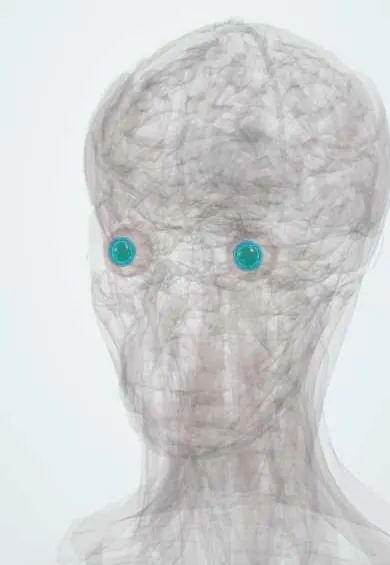
Representative model, for educational purposes only.