
Retinitis pigmentosa
An inherited disease of the retina's rods: night blindness first, then a slowly narrowing field. Rehabilitation and genetic counselling help.
What it is
A group of inherited retinal dystrophies in which rod photoreceptors die first and cones later. It causes night blindness in youth, a progressive loss of peripheral field (tunnel vision) and, late, loss of central vision. It can be isolated or part of a syndrome such as Usher syndrome (with deafness).
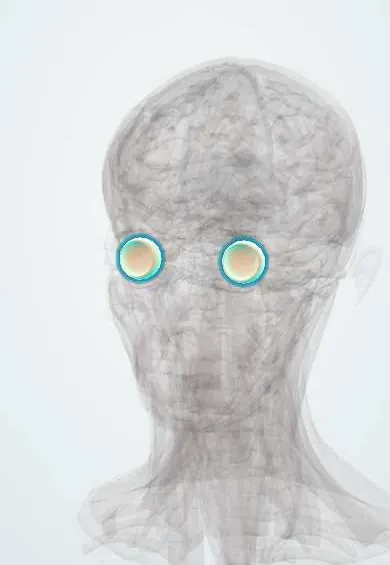
See it in 3D
Who gets it
The most common inherited retinal dystrophy; symptoms usually begin in childhood or early adulthood.
Causes
- Mutations in one of many genes for photoreceptor or pigment epithelium proteins
- Autosomal dominant, autosomal recessive or X-linked inheritance
- Syndromic forms (Usher, Bardet-Biedl)
Risk factors
- Family history
- Parental consanguinity
Pathophysiology
A genetic defect makes the rods degenerate, beginning in the mid-periphery. Dying photoreceptors release pigment that migrates into the retina as bone-spicule clumps; cones then fail and the retinal vessels and optic nerve atrophy.
Symptoms and signs
- Poor vision in the dark (night blindness)
- Gradual loss of side vision
- Glare and slow adaptation to light changes
- Late loss of central vision
Diagnosis
- Clinical
- Fundus shows bone-spicule pigmentation in the mid-periphery, narrowed arterioles and a pale, waxy disc; visual fields show a ring scotoma or tunnel vision.
- Tests
- Electroretinography (reduced or absent responses) and genetic testing.
- Imaging
- OCT and fundus autofluorescence to follow the macula and detect cystoid macular oedema.
Differential diagnosis
- Vitamin A deficiency
- Drug toxicity (thioridazine, chloroquine)
- Syphilis or other inflammatory retinopathies
- Cancer-associated retinopathy
Goal of treatment
Preserve remaining vision, treat complications, support rehabilitation and offer genetic counselling.
Treatment
- Rehabilitation
- Low vision rehabilitation, mobility training and educational support.
- Surgical
- Cataract surgery when lens opacity worsens vision.
- Medical
- Treatment of cystoid macular oedema with carbonic anhydrase inhibitors under ophthalmology.
- Medical
- Gene therapy for some specific mutations in specialised centres.
Complications
- Tunnel vision and legal blindness
- Posterior subcapsular cataract
- Cystoid macular oedema
Prognosis
Slowly progressive over decades; many patients keep useful central vision until middle age or later.
Prevention
- Genetic counselling for affected families
Test yourself
Think of the answer, then tap the question to see it.
What is usually the first symptom of retinitis pigmentosa?
Night blindness.
What are the classic fundus signs?
Bone-spicule pigmentation, narrowed arterioles and a pale, waxy optic disc.
Which syndrome combines retinitis pigmentosa and deafness?
Usher syndrome.
Why it happens
In ophthalmology
Connections
Educational information, not medical advice. For any symptom, see a health professional.
Sources: Retinitis Pigmentosa (StatPearls Publishing (NCBI Bookshelf), 2024).
Spotted a mistake?We are always improving for the community. Tell us what is wrong and our team will review it.Report a mistake
Representative model, for educational purposes only.