
Sunburn (acute ultraviolet skin injury)
Red, sore skin hours after too much sun: ultraviolet light has damaged skin-cell DNA. Blistering burns, above all in childhood, raise skin cancer risk.
What it is
An acute inflammatory reaction of the skin to excess ultraviolet radiation, mainly UVB. It ranges from redness and tenderness (a superficial burn) to blistering with fever and dehydration, and resolves with peeling. Each episode marks DNA damage that adds to the lifetime risk of skin cancer and photoaging.
Who gets it
Sunburn is very common in fair-skinned people, children and outdoor workers, and on holidays near water, sand or snow. Ultraviolet exposure causes most skin cancers: WHO estimates that in 2020 excessive UV caused about 325 000 cases of melanoma and 57 000 melanoma deaths worldwide. UV levels rise closer to the equator and with altitude. In Colombia both apply: measurements in Bogotá, at about 2 600 m, put the daily UV index mostly in the very high and extremely high categories, so a burn can happen quickly even on a cool or cloudy day.
Causes
- Unprotected exposure to sunlight, mainly UVB, especially around midday
- Artificial UV: sunbeds and tanning lamps
- Reflection from water, sand, snow and pale surfaces, and high altitude
- Photosensitising drugs that lower the threshold (a phototoxic burn): doxycycline and other tetracyclines, hydrochlorothiazide and other diuretics, amiodarone, voriconazole, some NSAIDs
- Diseases with abnormal light sensitivity: lupus, porphyrias, xeroderma pigmentosum
Risk factors
- Fair skin that burns easily, red hair, freckles
- Childhood and adolescence (more time outdoors, less protection)
- Outdoor work or sport, beach and mountain holidays, high altitude
- Alcohol and falling asleep in the sun
- Taking a photosensitising drug, for example doxycycline as malaria prophylaxis when travelling in the tropics
Pathophysiology
During exposure, UVB photons are absorbed by DNA in keratinocytes → cyclobutane pyrimidine dimers form; UVA adds reactive oxygen species → damaged keratinocytes release RNA, which activates Toll-like receptor 3 and NF-κB → IL-6, TNF-α and prostaglandin E2 are released → dermal vessels dilate and leak: redness, warmth, swelling and pain begin 3 to 5 hours after exposure and peak at 12 to 24 hours → with higher doses keratinocytes undergo apoptosis (sunburn cells with pyknotic nuclei) and the epidermis may separate into blisters → the skin's local immune defences are suppressed → over about a week the damaged epidermis peels and the skin heals without scarring → dimers that escape repair become mutations, which accumulate with each burn and lead to actinic keratoses, carcinomas and melanoma.
Classification
- Superficial (first-degree): redness, warmth, tenderness, no blisters
- Blistering (second-degree, superficial partial thickness): vesicles and bullae on a red base
- Severe or extensive with systemic symptoms («sun poisoning»): fever, chills, headache, nausea, dehydration
- Phototoxic burn: an exaggerated sunburn after modest exposure in a person taking a photosensitising drug or with plant juice on the skin
Symptoms and signs
- Red, hot, tender skin limited to areas exposed to the sun, with sharp edges at clothing lines
- Swelling, burning pain and itch
- Blisters in more severe burns
- Fever, chills, headache, nausea and tiredness after extensive burns
- Peeling a few days later
- Painful, gritty, watering eyes if the eyes were exposed (photokeratitis)
Diagnosis
- Clinical
- Clinical: redness and tenderness limited to sun-exposed skin, with sparing under clothing, beginning hours after a known exposure. Grade the extent and blistering, check hydration, temperature and mental state, and ask about drugs, plants and previous light sensitivity whenever the burn is out of proportion to the exposure.
- Tests
- Usually none. With extensive burns, fever or vomiting: electrolytes and kidney function for dehydration. When sensitivity to light is unexplained: antinuclear antibodies (lupus), porphyrin studies, and referral for phototesting.
- Imaging
- No imaging is needed for sunburn.
Differential diagnosis
- Phototoxic drug reaction (see «Sun-induced rashes and photosensitivity»)
- Phytophotodermatitis (lime or other plant juice plus sun)
- Polymorphous light eruption
- Photosensitive lupus and dermatomyositis
- Thermal burn and scald
- Erythropoietic protoporphyria (burning pain within minutes of sun, little visible change)
Red skin after sun: sunburn or something else?
| Condition | Trigger | Timing | Look | Clue |
|---|---|---|---|---|
| Sunburn | UV dose above the person's threshold | Starts 3–5 h, peaks 12–24 h, peels in a week | Uniform redness of exposed skin, ± blisters | Matches the exposure; sharp clothing lines |
| Phototoxic drug reaction | Drug plus modest UV (mostly UVA) | Hours, like a sunburn | Exaggerated sunburn, later pigment; nail separation with some drugs | New drug: doxycycline, thiazide, amiodarone, voriconazole |
| Polymorphous light eruption | Sun in early season | Hours to days | Itchy papules or plaques, not uniform redness | Recurs each sunny season, spares the face that is always exposed |
| Photosensitive lupus | Sun, sometimes little | Days, lasting weeks | Red scaly or annular plaques, malar rash | Joint pain, ulcers, positive antinuclear antibodies |
| Thermal burn | Heat, hot liquid or flame | Immediate | Shape of the hot object or splash, any skin | Pain at once, not hours later |
| Phytophotodermatitis | Plant juice (lime, celery, fig) plus UVA | Hours to a day | Streaks, drips, handprints; then brown marks | Squeezing limes or handling plants outdoors |
Goal of treatment
Stop further exposure, relieve pain and inflammation, keep the patient hydrated, protect blisters from infection, and use the episode to teach prevention.
Treatment
- Acute
- Get out of the sun, preferably indoors, as soon as the burn is noticed. Extensive blistering, fever, vomiting or dehydration need medical assessment; a few patients need intravenous fluids or burn-unit care.
- Conservative
- Frequent cool baths, showers or compresses; loose clothing; a moisturiser with aloe vera or soy on damp skin; avoid products ending in «-caine» (such as benzocaine), which can irritate or sensitise. Leave blisters intact and keep them clean and covered.
- Medical
- Oral NSAIDs such as ibuprofen or aspirin reduce pain, redness and swelling. Topical or systemic corticosteroids and antihistamines do little or nothing to shorten recovery. Antibiotics only for secondary infection of broken skin.
- Lifestyle
- Drink more fluid than usual, because sunburn draws fluid to the skin. Keep the burnt skin out of the sun until healed.
- Follow-up
- If the burn was out of proportion to the exposure, review the medication list with the prescriber (photosensitising drug) and consider lupus or porphyria.
Complications
- Dehydration and heat illness with extensive burns
- Secondary infection of broken blisters
- Photokeratitis and photoconjunctivitis
- Pseudoporphyria or photo-onycholysis with some photosensitising drugs
- Long term: photoaging, actinic keratoses, basal cell and squamous cell carcinoma, and melanoma
Common traps
- A cool or cloudy day is safe from sunburn: UV passes through cloud and is reflected by water, sand, snow and pale surfaces, and it is stronger at altitude and near the equator, as in the Colombian Andes
- If the skin does not hurt yet, the exposure was fine: redness only begins 3 to 5 hours after the exposure and peaks at 12 to 24 hours; by then the DNA damage is done
- Sunscreen lets a person stay in the sun longer: sunscreen is for skin that clothing cannot cover and should not be used to extend time in the sun; shade, clothing and timing come first
- Steroid creams or antihistamines speed recovery from sunburn: they do little or nothing for recovery time; cooling, NSAIDs and fluids are the treatment
- A severe burn after a short time outdoors is just bad luck: think of a photosensitising drug (doxycycline, a thiazide, amiodarone, voriconazole) or plant juice; phototoxic reactions are often dismissed as ordinary sunburn
Prognosis
An ordinary sunburn heals without scarring within about a week, peeling as it resolves. Severe, extensive burns can need hospital care. The lasting cost is cumulative DNA damage: sunburns in childhood raise the risk of skin cancer later in life.
Prevention
- Check the daily UV index and protect the skin whenever it is 3 or higher, which in Colombia is most days
- Seek shade and limit time in the sun around midday
- Wear long sleeves, trousers, a broad-brimmed hat and wraparound sunglasses that block UVA and UVB
- Apply a broad-spectrum, water-resistant sunscreen (SPF 30 or higher) to skin that clothing cannot cover, and reapply after swimming or sweating
- Do not use sunbeds; protect children especially, and take extra care when taking a photosensitising drug
Test yourself
Think of the answer, then tap the question to see it.
Why does sunburn give no warning during the exposure itself?
UVB damages DNA silently while it is absorbed; redness depends on inflammatory mediators released afterwards, so it starts 3 to 5 hours later and peaks at 12 to 24 hours.
What are sunburn cells and what do they show?
Apoptotic keratinocytes with pyknotic nuclei in the epidermis; they show that the UV dose damaged DNA beyond repair and the cells were removed.
A traveller on doxycycline for malaria prophylaxis gets a blistering burn after a short beach walk. What happened?
A phototoxic reaction: doxycycline absorbs UV and damages skin cells directly, lowering the dose needed to burn; it looks like an exaggerated sunburn.
Why does a person in Bogotá burn easily even on a cool, cloudy day?
UV rises with altitude and near the equator and passes through cloud; Bogotá's UV index is mostly very high to extremely high, while temperature gives no clue.
Why does a blistering sunburn in childhood matter decades later?
Each burn marks DNA damage (pyrimidine dimers) that can escape repair as mutations; childhood sunburns raise the risk of skin cancer, including melanoma, later in life.
Connections
Educational information, not medical advice. For any symptom, see a health professional.
Sources: Sunburn (Eplasty) (PubMed Central, US National Library of Medicine, 2024); Ultraviolet radiation (fact sheet) (World Health Organization, 2022); How to treat sunburn (American Academy of Dermatology, 2026); Drug-induced photosensitivity: culprit drugs, potential mechanisms and clinical consequences (Journal der Deutschen Dermatologischen Gesellschaft) (Europe PMC, 2021); Índice ultravioleta en Bogotá durante el fenómeno de La Niña (Revista Momento) (Universidad Nacional de Colombia, 2011).
Spotted a mistake?We are always improving for the community. Tell us what is wrong and our team will review it.Report a mistake
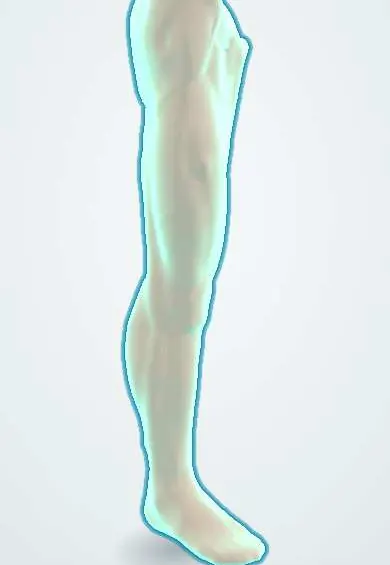
Representative model, for educational purposes only.