Conditions · Metabolism (biochemistry)
Ataxia-telangiectasia !
An inherited childhood disease with unsteady walking, dilated vessels in the eyes, infections and a high cancer risk.
Updated 2026-11-01
Structures involved
Tap one to see what it is and open it in 3D.
In biochemistry
In the clinical exam
Why it happens
- Genomic instability: mismatch repair, BRCA and xeroderma pigmentosum
- Cellular aging: telomeres, DNA damage, senescence and proteostasis
- Radiation and cancer: ultraviolet and ionizing
- Hereditary cancer syndromes: the table to know
What it is
An autosomal recessive disorder caused by variants in ATM, the kinase that senses DNA double-strand breaks and coordinates their repair.
Who gets it
It affects 1 in 40,000 to 100,000 people worldwide. Single-copy carriers (about 1% of the population) have a higher breast cancer risk. No specific figures for Colombia.
Causes
- Biallelic variants in the ATM gene (chromosome 11q22-23)
- Autosomal recessive inheritance
Risk factors
- Parents carrying an ATM variant
- Consanguinity
Pathophysiology
ATM kinase switches on at a double-strand break and phosphorylates p53, CHK2, BRCA1 and histone H2AX, which halts the cell cycle and starts repair. Without ATM the breaks persist: chromosomes rearrange (especially at the lymphocyte receptor genes on chromosomes 7 and 14), lymphocytes mature poorly (immunodeficiency) and cerebellar Purkinje cells, very sensitive to oxidative stress, die. The cells are hypersensitive to ionising radiation.
Symptoms and signs
- Ataxia when starting to walk (1–4 years) that progresses; many use a wheelchair by adolescence
- Telangiectasias on the conjunctiva and skin by about 3–6 years
- Slurred speech, abnormal eye movements (oculomotor apraxia) and involuntary movements
- Recurrent respiratory infections
- Poor growth and delayed puberty
Diagnosis
- Clinical
- A child with progressive cerebellar ataxia and, later, ocular telangiectasias and recurrent infections.
- Tests
- Raised alpha-fetoprotein (very characteristic), low immunoglobulins (IgA, IgG2, IgE) and low lymphocytes; ATM genetic testing or absent ATM protein; karyotype with 7;14 translocations and radiosensitivity in culture.
- Imaging
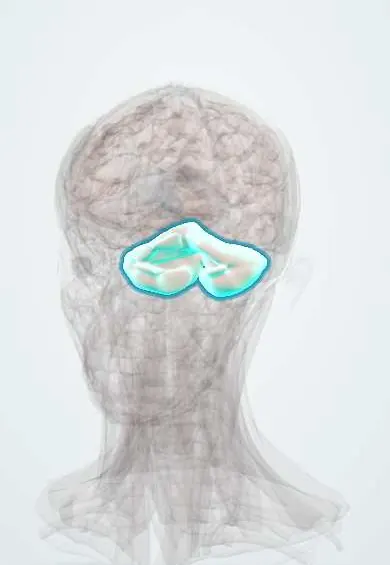
- Brain MRI shows cerebellar atrophy, especially of the vermis.
Treatment
- Rehabilitation
- Physiotherapy, occupational and speech therapy to keep mobility and communication; a wheelchair when needed.
- Medical
- Immunoglobulin replacement and preventive antibiotics in patients with recurrent infections.
- Follow-up
- Cancer surveillance (lymphomas, leukaemias, breast in adult women) avoiding X-rays and CT where possible.
- Conservative
- Nutritional support and swallowing assessment to prevent aspiration.
- Medical
- If cancer appears, chemotherapy and radiotherapy are adjusted for the radiation hypersensitivity.
Complications
- Lymphomas and leukaemias (mainly in childhood)
- Breast cancer and other solid tumours in adulthood
- Chronic lung disease and bronchiectasis
- Insulin-resistant diabetes
- Premature ageing of skin and hair
Prognosis
Most live into their second to fourth decade; the main causes of death are cancer and lung disease.
Prevention
- Genetic counselling and prenatal diagnosis in affected families
- Avoiding unnecessary ionising radiation
Test yourself
Think of the answer, then tap the question to see it.
What does the ATM protein do?
It is a kinase that senses DNA double-strand breaks and activates p53, CHK2 and repair.
Which simple lab finding points to ataxia-telangiectasia in a child with ataxia?
Raised serum alpha-fetoprotein.
Why are unnecessary X-rays avoided in these patients?
Their cells repair radiation-induced breaks poorly: more toxicity and cancer risk.
Related conditions
Educational information, not medical advice. For any symptom, see a health professional.
Sources: Ataxia-telangiectasia: MedlinePlus Genetics (MedlinePlus, US National Library of Medicine, 2026); ATM gene: MedlinePlus Genetics (MedlinePlus, US National Library of Medicine, 2026); Textbook of Biochemistry for Medical Students, 6th ed. (Jaypee Brothers Medical Publishers (Vasudevan DM, Sreekumari S, Vaidyanathan K), 2011).
Spotted a mistake?We are always improving for the community. Tell us what is wrong and our team will review it.Report a mistake
Representative model, for educational purposes only.