Nervous system · Head and neck
Vermis !
The vermis is the narrow middle strip of the cerebellum; it controls trunk balance and walking and is the first part damaged by alcohol.
Official name: Central lobule
Opens in the Durgical app, no sign-up needed.
What it is
The narrow middle strip of the cerebellum.
What it does
Controls trunk balance and walking; alcohol damages it first.
Key facts
- Where
- Midline of the cerebellum
- Blood supply
- SCA, PICA
- Function
- Trunk balance and gait (damaged first by alcohol)
Relations
- Lateral
- Cerebellar hemispheres, through the paravermal zone
- In front
- Roof of the fourth ventricle: superior medullary velum above; nodulus and inferior medullary velum below
- Above
- Tentorium cerebelli at its junction with the falx cerebri, which holds the straight sinus; the great cerebral vein in front
- Below
- Vallecula between the cerebellar tonsils, opening onto the cisterna magna
- Behind
- Posterior cerebellar notch with the falx cerebelli and the internal occipital crest
How to find it
It cannot be felt. On midline sagittal MRI it is the branching central strip of the cerebellum behind the fourth ventricle; front to back its lobules are lingula, central lobule, culmen, declive, folium, tuber, pyramid, uvula and nodulus, the primary fissure lying between culmen and declive. Surgeons reach it through a midline suboccipital opening, between the hemispheres.
Examination
- Tandem gait (heel to toe along a straight line): a vermis lesion makes it fail early, with a wide-based, lurching walk, even when finger-to-nose and heel-to-shin are nearly normal
- Balance sitting and standing with the eyes open: swaying of the trunk or the need to stand with the feet far apart points to a midline cerebellar problem
- Romberg test: with a vermis lesion the person is already unsteady with the eyes open and closing them adds little; clear worsening only when the eyes close points instead to loss of position sense
On imaging
Sagittal MRI shows its full outline. Dandy–Walker malformation: a small or absent vermis with a cystic fourth ventricle in an enlarged posterior fossa. Joubert syndrome: vermis hypoplasia with a 'molar tooth' midbrain on axial images.
Clinical notes
- Splitting the vermis to reach the fourth ventricle in children can be followed, a day or more later, by cerebellar mutism (posterior fossa syndrome): loss of speech with irritability that usually improves over weeks to months
- Dandy–Walker malformation: a small, upwardly rotated vermis with a cystic, enlarged fourth ventricle and a large posterior fossa; often seen on prenatal ultrasound, and many children develop hydrocephalus
- A stroke or bleed in the vermis can present as sudden vertigo with inability to stand or walk while the limbs move well; it mimics an inner ear disorder and is easily missed
Development
The two cerebellar plates, from the rhombic lips of the hindbrain, fuse in the midline to form the vermis; failure of this growth underlies vermian hypoplasia.
Memory aid
Vermis = midline = trunk; hemispheres = limbs on the same side.
Related conditions
- Wernicke encephalopathy (thiamine deficiency)
- Ataxia-telangiectasia
- Childhood brain tumours (medulloblastoma, pilocytic astrocytoma, craniopharyngioma)
- Spinocerebellar ataxias (autosomal dominant ataxias)
Test yourself
Think of the answer, then tap the question to see it.
What does a lesion of the cerebellar vermis cause?
Truncal ataxia: a broad-based, staggering gait and swaying when sitting or standing, while finger-to-nose may be normal.
Which part of the vermis does chronic alcohol use damage first, and what fails?
The upper front vermis: walking and heel-to-shin fail while the arms are spared.
How does a medulloblastoma of the vermis present in a child?
It fills the fourth ventricle and causes obstructive hydrocephalus, with morning vomiting and unsteadiness.
Educational information, not medical advice. For any symptom, see a health professional.
Its names
- Official Latin (TA2)
- lobulus centralis vermis TA2 5821
- Official Spanish (DeCS)
- Vermis Cerebeloso DeCS D065814
- English (TA2)
- Central lobule
- Also called
- lobus centralis vermis
Related
Sources: Terminologia Anatomica (TA2); DeCS; Neuroanatomy, Cerebellum; Neuroanatomy, Nucleus Fastigial; 16.5 The Coordination and Gait Exams (OpenStax (Rice University), 2022) · adapted, CC BY 4.0; Tratado de anatomía humana (9.ª ed.), tomo II, Libro V, sección 2 (Encéfalo), capítulos I-V: bulbo, protuberancia, cerebelo, cuarto ventrículo, mesencéfalo.
Spotted a mistake?We are always improving for the community. Tell us what is wrong and our team will review it.Report a mistake
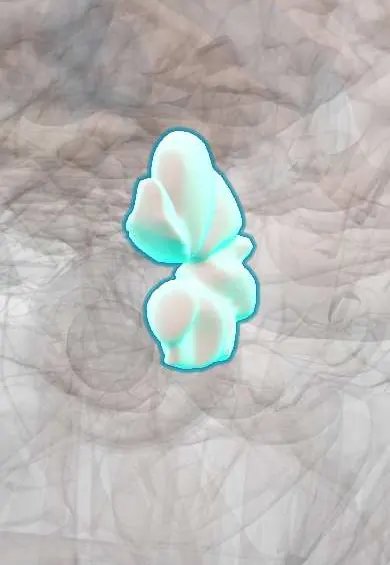
Representative model, for educational purposes only.