Conditions · Metabolism: heme, bilirubin and iron
Crigler-Najjar syndrome !
A very rare inherited disease in which the liver barely conjugates bilirubin; in type 1 severe jaundice threatens the brain from birth.
Updated 2026-11-01
Structures involved
Tap one to see what it is and open it in 3D.
In biochemistry
- Heme breakdown and bilirubin: Step 3 · UDP-glucuronosyltransferase 1A1 (UGT1A1)
- Uronic acid pathway
- UGT1A1 (bilirubin UDP-glucuronosyltransferase)
- Bilirubin
- Glucuronidation
Why it happens
What it is
Severe unconjugated hyperbilirubinemia from absent (type 1) or markedly reduced (type 2) liver UGT1A1.
Who gets it
It affects fewer than 1 in a million newborns; it is more common where there is consanguinity.
Causes
- Autosomal recessive inheritance: two UGT1A1 variants
Risk factors
- Consanguineous parents
- An affected sibling
Pathophysiology
Without conjugation, indirect bilirubin cannot leave through bile and builds up. The free, fat-soluble fraction crosses the blood–brain barrier and deposits in the basal ganglia, brainstem and cerebellum (kernicterus).
Classification
- Type 1: no UGT1A1 activity; very high bilirubin; no response to phenobarbital
- Type 2 (Arias): activity under 10 %; lower bilirubin; responds to phenobarbital
Symptoms and signs
- Intense jaundice from the first days of life
- Drowsiness, poor feeding and hypotonia in the newborn
- In type 2, milder jaundice that worsens with fasting or infection
Diagnosis
- Clinical
- Severe, persistent unconjugated jaundice without hemolysis or liver disease.
- Tests
- Very high indirect bilirubin (type 1 often above 20 mg/dL) with normal liver tests; no hemolysis; bilirubin response to phenobarbital (separates types 1 and 2); UGT1A1 gene testing.
- Imaging
- Brain MRI if kernicterus is suspected (signal in the globus pallidus).
Treatment
- Procedure
- Intense daily phototherapy (type 1), several hours each day
- Acute
- Exchange transfusion or plasmapheresis in crises of very high bilirubin
- Medical
- Phenobarbital in type 2, which induces the remaining enzyme
- Surgical
- Liver transplantation, the definitive cure for type 1
Complications
- Kernicterus: choreoathetoid cerebral palsy, deafness, limited upward gaze
- Pigment gallstones
Prognosis
Type 2 has a good prognosis; type 1 depends on constant phototherapy and transplantation.
Test yourself
Think of the answer, then tap the question to see it.
How is Crigler-Najjar type 1 distinguished from type 2?
Type 2 keeps some UGT1A1 and bilirubin falls with phenobarbital; type 1 does not respond.
What is the most feared complication of type 1?
Kernicterus: unconjugated bilirubin deposited in the basal ganglia.
Which treatment cures type 1?
Liver transplantation, which supplies functional UGT1A1.
Related conditions
Educational information, not medical advice. For any symptom, see a health professional.
Sources: Crigler-Najjar syndrome: MedlinePlus Genetics (MedlinePlus, US National Library of Medicine, 2026); UGT1A1 gene: MedlinePlus Genetics (MedlinePlus, US National Library of Medicine, 2026); Bilirubin blood test: MedlinePlus Medical Encyclopedia (MedlinePlus, US National Library of Medicine, 2026).
Spotted a mistake?We are always improving for the community. Tell us what is wrong and our team will review it.Report a mistake
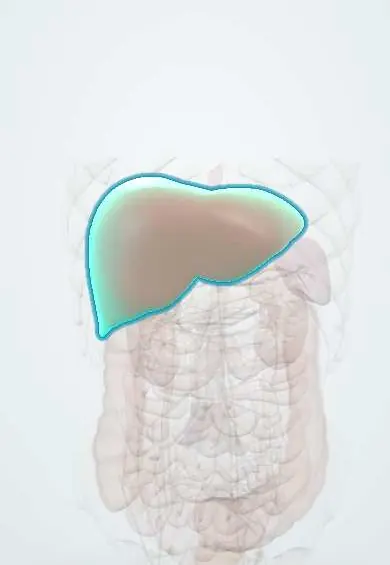
Representative model, for educational purposes only.