Conditions · Metabolism (biochemistry)
Fanconi anaemia !
An inherited disease in which the bone marrow stops making blood, with birth defects and a high risk of leukaemia and cancer.
Updated 2026-11-01
Structures involved
Tap one to see what it is and open it in 3D.
In biochemistry
In physiology
Why it happens
- Genomic instability: mismatch repair, BRCA and xeroderma pigmentosum
- Hereditary cancer syndromes: the table to know
What it is
An inherited bone marrow failure syndrome caused by variants in one of more than 20 FANC genes, which make up the pathway that repairs interstrand DNA crosslinks.
Who gets it
It affects 1 in 100,000 to 160,000 people worldwide; more common in Ashkenazi Jews, the Roma population of Spain, Afrikaners and Japanese. It is the most common inherited cause of bone marrow failure. No published figures for Colombia.
Causes
- Biallelic variants in FANC genes (FANCA is the most common)
- Autosomal recessive in most; FANCB X-linked; RAD51/FANCR dominant
- FANCD1 = BRCA2 and FANCN = PALB2 (two altered copies)
Risk factors
- Carrier parents
- Consanguinity
- Populations with founder variants
Pathophysiology
Interstrand crosslinks (from endogenous aldehydes, alkylating agents, cisplatin) stall the replication fork. Normally the FANC core complex monoubiquitinates the FANCD2–FANCI pair, which recruits nucleases, translesion polymerases and homologous recombination (BRCA1, BRCA2). Without the pathway, haematopoietic stem cells accumulate damage, activate p53 and die: marrow failure follows. Unrepaired chromosome breaks favour myeloid leukaemia and squamous carcinomas.
Symptoms and signs
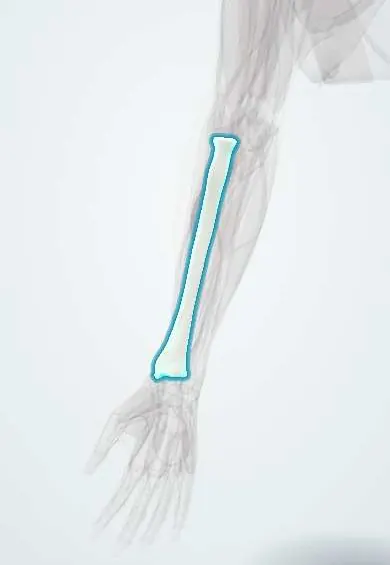
- Thumb or radius malformations (absent, small or an extra digit)
- Short stature and café-au-lait spots
- Kidney, heart or ear malformations
- Progressive pancytopenia from childhood: pallor, bruising, bleeding and infections
- Infertility
Diagnosis
- Clinical
- A child with thumb or radius malformations, short stature and cytopenias; or a young adult with head and neck squamous carcinoma and no risk factors.
- Tests
- Chromosome fragility test: increased breaks after exposing lymphocytes to diepoxybutane or mitomycin C (diagnostic); blood count with macrocytosis and high fetal haemoglobin; FANC gene panel.
- Imaging
- Renal ultrasound and echocardiogram to look for malformations; forearm and hand X-rays.
Treatment
- Procedure
- Haematopoietic stem cell transplantation, the only cure for marrow failure, with reduced-intensity conditioning.
- Medical
- Androgens and transfusions as support while transplant is prepared or when it is not possible.
- Follow-up
- Surveillance for leukaemia (periodic bone marrow studies) and for head, neck and genital cancer.
- Surgical
- Repair of thumb, radius, kidney or heart malformations.
- Lifestyle
- Avoiding tobacco, alcohol and unnecessary radiation; HPV vaccination.
Complications
- Marrow failure (aplasia)
- Myelodysplastic syndrome and acute myeloid leukaemia
- Squamous carcinoma of the head, neck, oesophagus and anogenital region
- Liver tumours with androgen use
- Severe toxicity from standard chemotherapy and radiotherapy
Prognosis
Transplantation has improved survival, but the risk of solid tumours stays high for life; median survival is around the fourth decade.
Prevention
- Genetic counselling and prenatal diagnosis
- Lifelong cancer surveillance
Test yourself
Think of the answer, then tap the question to see it.
Which kind of DNA damage does the Fanconi pathway repair?
Crosslinks between the two DNA strands, which block the replication fork.
Which test confirms Fanconi anaemia?
The chromosome fragility test: more breaks after exposing lymphocytes to diepoxybutane or mitomycin C.
Which hereditary cancer gene is also a Fanconi gene?
BRCA2 (FANCD1): two altered copies cause severe Fanconi anaemia.
Which upper-limb malformation is typical?
Absent or underdeveloped thumb and radius.
Related conditions
Educational information, not medical advice. For any symptom, see a health professional.
Sources: Fanconi anemia: MedlinePlus Genetics (MedlinePlus, US National Library of Medicine, 2026); FANCA gene: MedlinePlus Genetics (MedlinePlus, US National Library of Medicine, 2026); Fanconi Anemia Pathway (Reactome, 2026); Textbook of Biochemistry for Medical Students, 6th ed. (Jaypee Brothers Medical Publishers (Vasudevan DM, Sreekumari S, Vaidyanathan K), 2011).
Spotted a mistake?We are always improving for the community. Tell us what is wrong and our team will review it.Report a mistake
Representative model, for educational purposes only.