Conditions · Metabolism (biochemistry)
High anion gap metabolic acidosis !
The blood turns acidic because an acid not routinely measured builds up: lactate, ketones, toxins or the waste of kidney failure.
Updated 2026-11-01
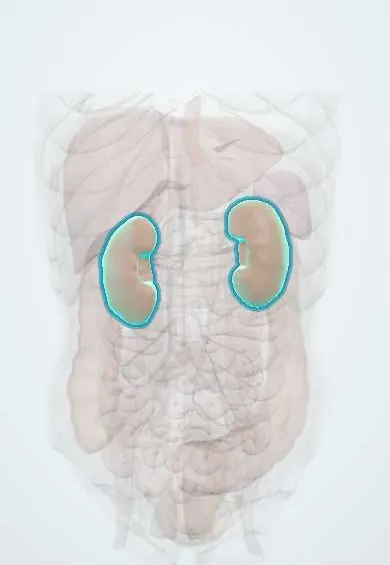
Structures involved
Tap one to see what it is and open it in 3D.
In biochemistry
- Acid–base interpretation (step by step)
- Anion gap and delta ratio
- Serum osmolality and osmolar gap
- Acid–base compensation rules
In physiology
- Physiology of diabetes and ketoacidosis
- Reading an arterial blood gas step by step
- Metabolic acidosis, the anion gap and compensation
- Mixed acid–base disorders
What it is
A metabolic acidosis in which an acid with an unmeasured anion is added to plasma, uses up bicarbonate and raises the anion gap.
Who gets it
It is the most common acidosis in emergency and intensive care, mainly from lactic acidosis in sepsis and shock, diabetic ketoacidosis and kidney disease. Latin America also sees outbreaks of methanol poisoning from adulterated drinks.
Causes
- Lactic acidosis: shock, sepsis, hypoxia, seizures, metformin in renal failure, mitochondrial defects
- Ketoacidosis: diabetic, alcoholic, starvation
- Uraemia from advanced kidney disease or acute kidney injury
- Toxins: methanol, ethylene glycol, salicylates, chronic paracetamol (5-oxoproline), propylene glycol
- Inborn errors: organic acidaemias (methylmalonic, propionic)
Risk factors
- Type 1 diabetes with missed insulin or infection
- Sepsis or shock
- Heavy alcohol use with fasting
- Chronic kidney disease
- Drinking adulterated alcohol
Pathophysiology
A strong acid (lactic, β-hydroxybutyric, formic, glycolic, sulfuric and phosphoric in uraemia) dissociates; the H⁺ is buffered by HCO₃⁻, which becomes CO₂ and is exhaled, and the anion stays in plasma unmeasured: HCO₃⁻ falls and the anion gap rises with normal chloride. The low pH stimulates chemoreceptors and deep Kussmaul breathing appears (compensation predicted by Winter's formula). Severe acidaemia depresses cardiac contractility, causes vasodilatation and arrhythmias, and shifts potassium out of cells.
Classification
- By the acid: lactic (type A from hypoperfusion, type B without), ketoacidosis, uraemic, toxic
- Pure or mixed by the delta ratio (with metabolic alkalosis or with normal-gap acidosis)
Symptoms and signs
- Fast, deep breathing (Kussmaul)
- Nausea, vomiting, abdominal pain
- Confusion, drowsiness
- Fruity breath in ketoacidosis
- Blurred vision in methanol poisoning
Diagnosis
- Clinical
- Focused history (diabetes, alcohol, toxins, drugs, infection) and examination for hypoperfusion and Kussmaul breathing.
- Tests
- Arterial or venous gases, electrolytes with albumin-corrected anion gap, lactate, blood ketones (β-hydroxybutyrate), glucose, creatinine and BUN, measured osmolality for the osmolar gap, salicylate and toxic alcohol levels, delta ratio.
- Imaging
- Does not make the diagnosis; used according to the suspected cause (chest X-ray in sepsis, abdominal CT for bowel ischaemia).
Treatment
- Acute
- Treat the cause: fluids and infection control in lactic acidosis; insulin and fluids in ketoacidosis
- Medical
- Correct potassium and other electrolytes during treatment, because they shift as the acidosis corrects
- Medical
- Antidotes in poisoning: alcohol dehydrogenase inhibitors for methanol or ethylene glycol; alkalinisation for salicylates
- Procedure
- Haemodialysis for severe uraemia, toxic alcohols, salicylates or refractory acidosis
- Follow-up
- Serial gases, anion gap and lactate; intravenous bicarbonate is kept for very severe acidaemia by protocol
Complications
- Arrhythmias and myocardial depression
- Hyperkalaemia
- Coma
- Blindness (methanol) or crystal kidney injury (ethylene glycol)
- Death
Prognosis
Depends on the cause: treated ketoacidosis usually resolves within hours; lactic acidosis from shock carries high mortality.
Prevention
- Sick-day education in diabetes
- Control of adulterated alcohol
- Adjusting metformin to kidney function
Test yourself
Think of the answer, then tap the question to see it.
Which acids cause a high anion gap metabolic acidosis?
Lactate, ketones, uraemic acids and toxins such as methanol, ethylene glycol and salicylates (GOLD MARK).
Why does the anion gap rise in ketoacidosis?
β-hydroxybutyrate and acetoacetate use up bicarbonate and their anions stay in plasma unmeasured.
Which test is ordered if the anion gap is high without ketones, lactate or uraemia?
Measured osmolality to calculate the osmolar gap and look for toxic alcohols.
What is Kussmaul breathing?
Fast, deep breathing that removes CO₂ to compensate for metabolic acidosis.
Related conditions
- Normal anion gap (hyperchloraemic) metabolic acidosis
- Diabetic ketoacidosis
- Lactic acidosis
- Acute kidney injury
- Chronic kidney disease
- Sepsis and septic shock
Educational information, not medical advice. For any symptom, see a health professional.
Sources: Metabolic acidosis: MedlinePlus Medical Encyclopedia (MedlinePlus, US National Library of Medicine, 2026); Anion Gap Blood Test: MedlinePlus Medical Test (MedlinePlus, US National Library of Medicine, 2026); Lactate Test: MedlinePlus Medical Test (MedlinePlus, US National Library of Medicine, 2026); Ketones in Blood: MedlinePlus Medical Test (MedlinePlus, US National Library of Medicine, 2026); Textbook of Biochemistry for Medical Students, 6th ed. (Jaypee Brothers Medical Publishers (Vasudevan DM, Sreekumari S, Vaidyanathan K), 2011).
Spotted a mistake?We are always improving for the community. Tell us what is wrong and our team will review it.Report a mistake
Representative model, for educational purposes only.