
Leber congenital amaurosis
A severe inherited retinal disease that causes very poor sight from birth, with wandering eyes and eye poking. One genetic form has a gene therapy.
What it is
The earliest and most severe inherited retinal dystrophy, present at birth or in the first months of life. Infants have poor visual behaviour, nystagmus, sluggish pupils and an extinguished electroretinogram, often with a normal-looking fundus at first. More than 25 genes are involved, including CEP290, GUCY2D, CRB1 and RPE65.
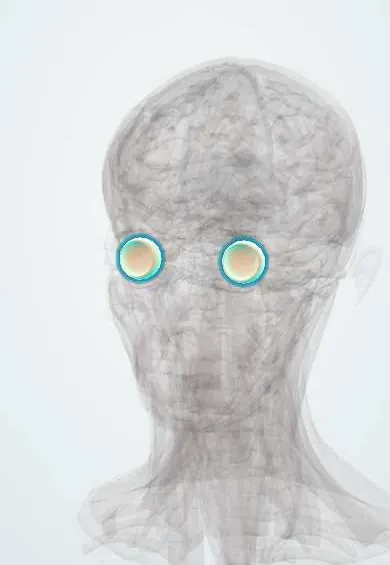
See it in 3D
Who gets it
About 2 to 3 per 100,000 newborns. It is one of the leading causes of inherited blindness in children.
Causes
- Mutations in more than 25 genes (CEP290, GUCY2D, CRB1, RPE65, AIPL1 and others)
- Mostly autosomal recessive
- Rarely autosomal dominant (for example CRX)
Risk factors
- Consanguineous parents
- An affected sibling
Pathophysiology
The genes act in phototransduction, the visual cycle (RPE65 regenerates 11-cis-retinal), photoreceptor development or the photoreceptor cilium. Photoreceptors work poorly from the start and degenerate over time; in some forms, such as RPE65, viable cells remain for years, which makes gene therapy possible.
Classification
- Leber congenital amaurosis: onset at birth or within the first months
- Early-onset severe retinal dystrophy: similar disease starting in early childhood with some residual function
Symptoms and signs
- Poor fixation and following from birth
- Roving eye movements or nystagmus
- Oculodigital sign: pressing or poking the eyes
- Photophobia or night blindness, depending on the gene
- High hyperopia; keratoconus and cataract later
Diagnosis
- Clinical
- Poor visual behaviour, nystagmus and sluggish or paradoxical pupils. The fundus may be normal early, later showing pigment changes, macular atrophy or optic disc pallor.
- Tests
- Full-field electroretinogram severely reduced or extinguished in infancy; genetic panel testing to identify the gene (required for gene therapy); kidney and neurological assessment when a syndrome is suspected.
- Imaging
- OCT shows how much outer retina remains (relatively preserved in RPE65 and GUCY2D forms); MRI of the brain when neurological signs suggest a syndrome.
Differential diagnosis
- Congenital stationary night blindness (non-progressive, better acuity, 'negative' electroretinogram)
- Achromatopsia
- Albinism
- Optic nerve hypoplasia
- Cortical visual impairment
- Congenital infections (TORCH)
Infant with poor vision and nystagmus: which one?
| Condition | Vision | Course | Electroretinogram | Eyes and pupils | Fundus |
|---|---|---|---|---|---|
| Leber congenital amaurosis | Very poor from birth | Stable or slowly worse | Extinguished or severely reduced | Roving eyes, sluggish pupils, eye poking | Often normal early, later pigment or atrophy |
| Congenital stationary night blindness | Moderately reduced | Stable | 'Negative': b-wave smaller than a-wave | Nystagmus, often myopia | Normal or myopic |
| Achromatopsia | Poor, with marked light aversion | Stable | Cone responses absent, rods normal | Nystagmus, squinting in daylight | Normal |
| Cortical visual impairment | Variable and fluctuating | Often improves with time | Normal | Normal pupils, often no nystagmus | Normal |
Goal of treatment
Confirm the gene, offer gene therapy when eligible and support development with early low-vision services.
Treatment
- Procedure
- Voretigene neparvovec, a subretinal gene therapy for confirmed biallelic RPE65 mutations with enough viable retinal cells; it improves light sensitivity and navigation in dim light.
- Rehabilitation
- Early intervention, low-vision services, Braille and orientation and mobility training.
- Surgical
- Cataract surgery and treatment of keratoconus when they appear.
- Follow-up
- Genetic counselling for the family and referral to clinical trials for other genes (such as CEP290).
Complications
- Severe lifelong visual impairment
- Keratoconus (worsened by eye rubbing)
- Cataract
- Developmental delay from visual deprivation
Common traps
- A blind infant with a normal fundus must have cortical or optic nerve disease: in LCA the fundus is often normal early, and only the electroretinogram shows the retina is silent
- Eye poking is a habit to be discouraged and nothing more: the oculodigital sign is a clue to very poor retinal vision, and chronic rubbing also drives keratoconus
- Any child with LCA can receive gene therapy: voretigene neparvovec is only for confirmed biallelic RPE65 mutations with enough viable retinal cells, so the genetic result comes first
- Gene therapy cures LCA: it improves light sensitivity and navigation in dim light but does not restore normal vision
- Nystagmus with poor vision and a normal fundus means LCA: congenital stationary night blindness, achromatopsia, albinism and optic nerve hypoplasia look similar, and the electroretinogram and examination separate them
Prognosis
Vision is usually very poor and many children are legally blind; some forms stay fairly stable while others decline. RPE65 gene therapy improves function but is not a cure.
Prevention
- Genetic counselling and carrier testing
Test yourself
Think of the answer, then tap the question to see it.
A 3-month-old does not fix or follow, has roving eyes and sluggish pupils, and a normal-looking fundus. What test comes next?
A full-field electroretinogram; an extinguished response points to Leber congenital amaurosis, and a genetic panel then names the gene.
Why is genetic testing needed before discussing treatment?
Only confirmed biallelic RPE65 mutations qualify for voretigene neparvovec, and the gene also guides trials, prognosis and family counselling.
Why does a child with LCA poke the eyes, and why does it matter?
Pressing the globe makes light sensations in a child with very little vision; chronic rubbing contributes to keratoconus.
An infant with poor vision has a 'negative' electroretinogram and vision that does not worsen. Which diagnosis fits better than LCA?
Congenital stationary night blindness: non-progressive, better acuity, and a b-wave smaller than the a-wave rather than an extinguished response.
Which findings in a child with LCA should prompt a search for a syndrome?
Developmental delay, seizures or kidney disease, which suggest Joubert or Senior-Løken syndrome; arrange kidney and neurological assessment and a brain MRI.
Connections
Educational information, not medical advice. For any symptom, see a health professional.
Sources: Leber Congenital Amaurosis (EyeWiki (American Academy of Ophthalmology), 2025); Leber congenital amaurosis: MedlinePlus Genetics (MedlinePlus, US National Library of Medicine, 2025); Retinal Dystrophies (StatPearls Publishing (NCBI Bookshelf), 2024).
Spotted a mistake?We are always improving for the community. Tell us what is wrong and our team will review it.Report a mistake
Representative model, for educational purposes only.