Conditions · Metabolism: carbohydrates and glycogen
McArdle disease (glycogen storage disease type V) !
In McArdle disease muscle cannot use its glycogen: exercise brings on cramps, pain and sometimes dark urine.
Updated 2026-11-01
Structures involved
Tap one to see what it is and open it in 3D.
In biochemistry
- Glycogen metabolism: Step 6 · Glycogen phosphorylase
- Glycogen phosphorylase
- Glycogen
- Creatine kinase (CK) and CK-MB as lab tests
- Purine nucleotide cycle (muscle)
- Exercise metabolism
In physiology
What it is
Muscle glycogen storage disease caused by lack of myophosphorylase (PYGM gene). It is the commonest muscle glycogen storage disease.
Who gets it
About 1 in 100,000 people according to US studies; probably underdiagnosed. No Colombian figures of its own.
Causes
- Autosomal recessive inheritance: PYGM gene variants (the commonest in Europe, R50X)
Risk factors
- Carrier parents or affected siblings
- Intense or isometric exercise (trigger)
Pathophysiology
Without muscle phosphorylase the fibre cannot break down its glycogen at the start of intense effort: ATP runs short, cramps and contractures appear and the fibre breaks down (rhabdomyolysis, myoglobinuria). After about 8–10 minutes blood glucose and fatty acids reach the fibre and tolerance improves (second-wind phenomenon). Lactate does not rise with exercise; ammonia does.
Symptoms and signs
- Exercise intolerance from childhood or adolescence
- Cramps and muscle pain in the first minutes of effort
- Improvement on slowing down and carrying on (second wind)
- Dark urine (myoglobinuria) after intense effort
Diagnosis
- Clinical
- Cramps in the first minutes of exercise, myoglobinuria and second-wind phenomenon.
- Tests
- High CK even at rest. Forearm exercise test: lactate does not rise while ammonia does. PYGM gene testing; muscle biopsy (absent phosphorylase) is rarely needed.
- Imaging
- Imaging is not needed for diagnosis; muscle MRI may show affected muscles in adults.
Treatment
- Lifestyle
- Regular moderate aerobic exercise with gradual warm-up; avoid isometric or maximal efforts
- Lifestyle
- A sugary drink before planned effort may improve tolerance, as advised by the care team
- Acute
- Urgent intravenous fluids in rhabdomyolysis
- Follow-up
- Review of anaesthesia and muscle-toxic drugs before surgery
Complications
- Rhabdomyolysis with acute kidney injury
- Compartment syndrome
- Mild proximal weakness in adulthood
Prognosis
Life expectancy is normal; with adapted exercise most lead an active life.
Test yourself
Think of the answer, then tap the question to see it.
What is the second-wind phenomenon?
Improvement after a few minutes of exercise, when blood glucose and fatty acids replace muscle glycogen.
What does the forearm exercise test show in McArdle disease?
Lactate does not rise while ammonia does.
Why is there no hypoglycaemia in McArdle disease?
Liver phosphorylase is a different enzyme (PYGL) and works normally.
What is the serious complication of myoglobinuria?
Acute kidney injury from rhabdomyolysis.
Related conditions
Educational information, not medical advice. For any symptom, see a health professional.
Sources: Glycogen storage disease type V: MedlinePlus Genetics (MedlinePlus, US National Library of Medicine, 2026); PYGM gene: MedlinePlus Genetics (MedlinePlus, US National Library of Medicine, 2026); Textbook of Biochemistry for Medical Students, 6th ed. (Jaypee Brothers Medical Publishers (Vasudevan DM, Sreekumari S, Vaidyanathan K), 2011).
Spotted a mistake?We are always improving for the community. Tell us what is wrong and our team will review it.Report a mistake
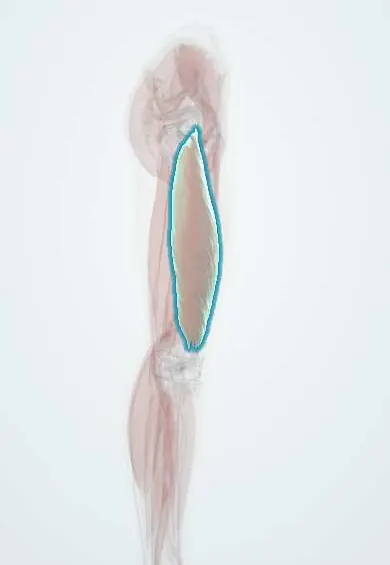
Representative model, for educational purposes only.