Conditions · Metabolism (biochemistry)
Tarui disease (muscle phosphofructokinase deficiency) !
Tarui disease is an inherited disorder in which muscles cannot burn sugar: exercise brings cramps and dark urine.
Updated 2026-10-31
Structures involved
Tap one to see what it is and open it in 3D.
In biochemistry
- Glycolysis: Step 3 · Phosphofructokinase-1 (PFK-1)
- Fructose 1,6-bisphosphate
- Phosphofructokinase-1 (PFK-1)
- Exercise metabolism
What it is
Glycogen storage disease type VII: muscle phosphofructokinase is missing (PFKM gene). Muscle cannot use glucose or glycogen for energy during effort.
Who gets it
Very rare; described worldwide, with most published cases in Japanese and Ashkenazi Jewish families.
Causes
- Autosomal recessive inheritance, PFKM variants
Risk factors
- Affected siblings or carrier parents
Pathophysiology
Without muscle PFK-1, glycolysis stops at fructose 6-phosphate: glycogen builds up and muscle relies on fatty acids. Red cells lose half their activity (the M subunit), causing mild hemolysis; nucleotide breakdown raises uric acid.
Classification
- Classic form: exercise intolerance from childhood
- Late-onset form: progressive weakness in adults
- Severe infantile form (rare)
Symptoms and signs
- Cramps and muscle pain with hard exercise
- Dark urine after effort (myoglobinuria)
- Fatigue that worsens after a carbohydrate-rich meal
- Mild jaundice from hemolysis
- Gout or high uric acid
Diagnosis
- Clinical
- Exercise intolerance with cramps and myoglobinuria, plus compensated hemolysis; worse after carbohydrates.
- Tests
- High CK; raised reticulocytes and bilirubin; high uric acid. On forearm exercise testing lactate fails to rise while ammonia does. Muscle biopsy with stored glycogen and low PFK activity; PFKM gene testing.
- Imaging
- Imaging is not needed for diagnosis; muscle MRI may show fatty change in late forms.
Treatment
- Lifestyle
- Avoid intense or long exercise; regular, moderate aerobic exercise
- Lifestyle
- Avoid carbohydrate-heavy meals before exercise
- Acute
- Urgent intravenous fluids if rhabdomyolysis occurs
- Medical
- Treatment of high uric acid or gout
Complications
- Rhabdomyolysis with acute kidney injury
- Gout
- Gallstones from hemolysis
Test yourself
Think of the answer, then tap the question to see it.
Which glycolysis step fails in Tarui disease?
Step 3, muscle phosphofructokinase-1.
What does forearm exercise testing show?
Lactate does not rise while ammonia does.
Why does a carbohydrate-rich meal make symptoms worse?
Insulin lowers free fatty acids and ketones, the only fuel the affected muscle can use.
Related conditions
Educational information, not medical advice. For any symptom, see a health professional.
Sources: Glycogen storage disease type VII: MedlinePlus Genetics (MedlinePlus, US National Library of Medicine, 2026); PFKM gene: MedlinePlus Genetics (MedlinePlus, US National Library of Medicine, 2026); Textbook of Biochemistry for Medical Students, 6th ed. (Jaypee Brothers Medical Publishers (Vasudevan DM, Sreekumari S, Vaidyanathan K), 2011).
Spotted a mistake?We are always improving for the community. Tell us what is wrong and our team will review it.Report a mistake
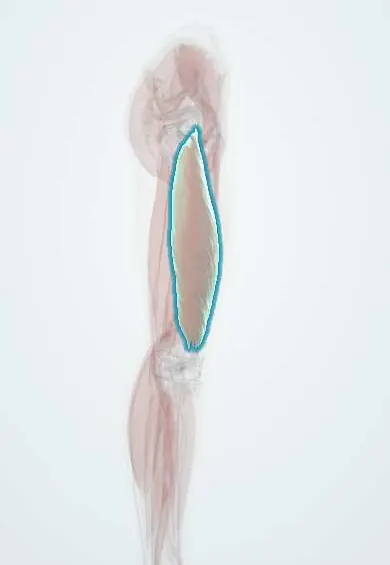
Representative model, for educational purposes only.