Conditions · Metabolism (biochemistry)
Myoadenylate deaminase deficiency (AMP deaminase deficiency) !
A common inherited lack of muscle AMP deaminase. Most people never notice it; some get early tiredness, cramps or muscle pain with exercise.
Updated 2026-11-01
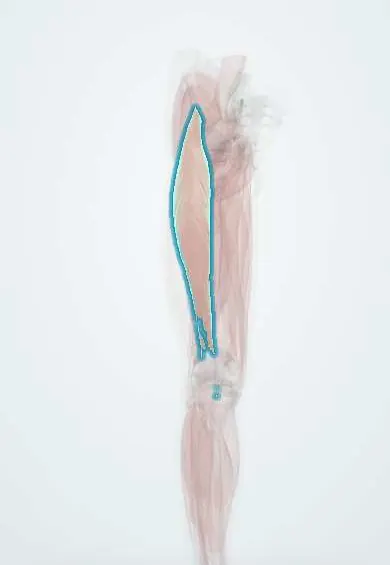
Structures involved
Tap one to see what it is and open it in 3D.
In biochemistry
What it is
An inherited deficiency of AMP deaminase 1 (gene AMPD1), the muscle enzyme of the purine nucleotide cycle.
Who gets it
One of the most common inherited muscle disorders in white populations (about 1 in 50 to 100 people); much rarer in African American and Japanese populations. Its frequency in Colombia is not known.
Causes
- Autosomal recessive variants in AMPD1 (a common nonsense variant explains most cases)
- Acquired (secondary) deficiency in other muscle diseases
Risk factors
- Family history
- Ancestry with a high carrier frequency
Pathophysiology
AMP deaminase turns AMP into IMP and ammonia in working muscle. Without it, AMP is not removed, the adenylate kinase reaction (2 ADP ⇌ ATP + AMP) is less pulled toward ATP, and less fumarate is supplied to the Krebs cycle. During sustained or intense exercise this may limit energy supply, causing early fatigue, cramps and pain in some people, while many remain symptom-free.
Symptoms and signs
- Most affected people have no symptoms
- Muscle tiredness, cramps or aching after exercise
- Exercise intolerance compared with peers
Diagnosis
- Clinical
- Exercise-related muscle pain or cramps with normal strength and normal examination at rest.
- Tests
- Forearm exercise test: lactate rises normally but ammonia does not; CK normal or mildly raised; AMP deaminase histochemistry or activity in a muscle biopsy; AMPD1 gene testing. Other metabolic myopathies must be excluded because the variant is common and may be a coincidental finding.
- Imaging
- No characteristic imaging; muscle MRI is usually normal.
Treatment
- Lifestyle
- Graded exercise with rest breaks and avoidance of sudden, exhausting efforts
- Conservative
- Symptomatic care of cramps and myalgia; good hydration
- Follow-up
- Follow-up to look for another muscle disease if symptoms are marked
Complications
- Rare episodes of rhabdomyolysis have been reported
- It may worsen symptoms of a coexisting muscle disease
Prognosis
Good; it does not shorten life.
Test yourself
Think of the answer, then tap the question to see it.
Which reaction does myoadenylate deaminase catalyse?
AMP → IMP + NH₃, the first step of the purine nucleotide cycle in muscle.
What does a forearm exercise test show in this deficiency?
A normal rise in lactate but no rise in ammonia.
How does the forearm test separate it from McArdle disease?
In McArdle disease ammonia rises but lactate does not; in AMP deaminase deficiency the opposite happens.
Why must a positive AMPD1 result be interpreted with caution?
The variant is very common and often silent, so it may coexist with another cause of the patient's symptoms.
Related conditions
- McArdle disease (glycogen storage disease type V)
- Tarui disease (muscle phosphofructokinase deficiency)
Educational information, not medical advice. For any symptom, see a health professional.
Sources: Adenosine monophosphate deaminase deficiency: MedlinePlus Genetics (MedlinePlus, US National Library of Medicine, 2026); AMPD1 gene: MedlinePlus Genetics (MedlinePlus, US National Library of Medicine, 2026); Textbook of Biochemistry for Medical Students, 6th ed. (Jaypee Brothers Medical Publishers (Vasudevan DM, Sreekumari S, Vaidyanathan K), 2011).
Spotted a mistake?We are always improving for the community. Tell us what is wrong and our team will review it.Report a mistake
Representative model, for educational purposes only.