
Trochlear (fourth) nerve palsy
Weakness of the superior oblique causes vertical double vision, worse reading or going downstairs. Head trauma is the usual cause.
What it is
Weakness of the superior oblique muscle from damage to the fourth cranial nerve, the thinnest cranial nerve and the only one leaving the back of the brainstem. It causes vertical and torsional double vision, worse looking down and inward. Patients tilt the head away from the affected side to fuse the images.
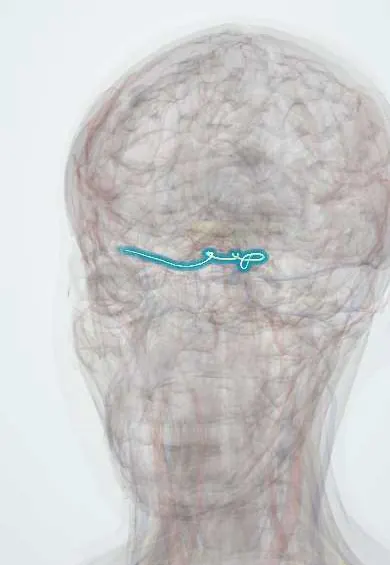
See it in 3D
Who gets it
The most common cause of acquired vertical double vision; trauma and congenital palsies are frequent.
Causes
- Closed head trauma
- Congenital palsy that decompensates later in life
- Microvascular ischaemia
- Tumours or inflammation (less common)
Risk factors
- Head trauma
- Diabetes and hypertension
Pathophysiology
The long, thin intracranial course makes the nerve vulnerable to shearing in head trauma. Without the superior oblique, the eye drifts upward and rotates outward, most noticeably when looking down and in.
Symptoms and signs
- Vertical or diagonal double vision
- Worse when reading or going downstairs
- Images tilted
- Head tilted to the side opposite the affected eye
Diagnosis
- Clinical
- Hypertropia of the affected eye that increases looking to the opposite side and with head tilt to the same side (three-step test); old photographs with a head tilt suggest a congenital palsy.
- Tests
- Glucose and blood pressure in microvascular cases; ESR and CRP over 50.
- Imaging
- MRI when there is no trauma or vascular explanation, or other neurological signs.
Differential diagnosis
- Skew deviation (brainstem)
- Myasthenia gravis
- Thyroid eye disease
- Orbital floor fracture
Goal of treatment
Relieve double vision and treat the cause.
Treatment
- Conservative
- Prisms in glasses or patching for double vision.
- Follow-up
- Observation for recovery of traumatic and microvascular palsies over months.
- Surgical
- Strabismus surgery for persistent or congenital decompensated palsies.
Complications
- Persistent double vision
- Chronic neck strain from head tilt
Prognosis
Microvascular palsies usually recover; traumatic palsies recover less often; surgery corrects most stable deviations.
Test yourself
Think of the answer, then tap the question to see it.
Which muscle does the trochlear nerve supply?
The superior oblique.
When is the double vision worst in fourth nerve palsy?
Looking down and inward, as when reading or going downstairs.
Which way do patients tilt the head?
Away from the affected side.
In ophthalmology
Connections
Educational information, not medical advice. For any symptom, see a health professional.
Sources: Trochlear Nerve Palsy (StatPearls Publishing (NCBI Bookshelf), 2024).
Spotted a mistake?We are always improving for the community. Tell us what is wrong and our team will review it.Report a mistake
Representative model, for educational purposes only.