Conditions · Vitamins and minerals
Vitamin K deficiency bleeding of the newborn !
Bleeding in a newborn or young baby from lack of vitamin K; it can affect the brain and is prevented by an injection at birth.
Updated 2026-11-01
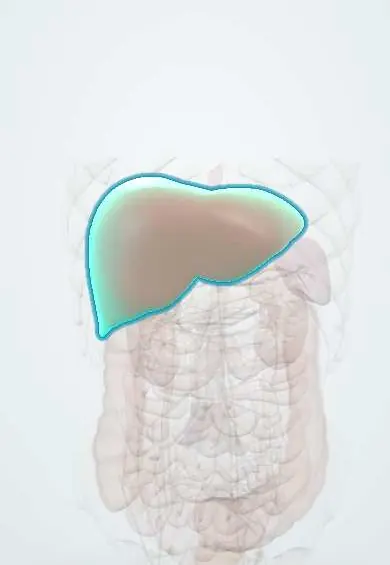
Structures involved
Tap one to see what it is and open it in 3D.
In biochemistry
In the clinical exam
In physiology
- The coagulation cascade
- Coagulation tests: PT/INR, aPTT and platelets
- Thrombosis and bleeding: Virchow's triad and hemostatic defects
- Newborn physiology and fetal maturation
Why it happens
- Vitamin deficiencies: what each one does to tissue
- Hemorrhage: petechiae, purpura, ecchymosis, hematoma, and what blood loss does
What it is
A bleeding disorder of newborns and young infants caused by deficiency of the vitamin K-dependent clotting factors (II, VII, IX and X). It used to be called haemorrhagic disease of the newborn.
Who gets it
Without prophylaxis it affects a notable share of newborns (the classic form) and the late form is severe; with vitamin K at birth it becomes very rare. Current cases cluster in babies whose parents declined prophylaxis or who have liver disease.
Causes
- Little vitamin K crosses the placenta
- Breast milk contains little vitamin K
- Gut without bacteria to make menaquinones
- Immature liver
- Maternal drugs: anticonvulsants, warfarin, rifampicin, isoniazid (early form)
- Infant cholestasis or malabsorption: biliary atresia, cystic fibrosis (late form)
Risk factors
- No vitamin K at birth
- Exclusive breastfeeding
- Prematurity
- Prolonged diarrhoea or antibiotic use in the infant
Pathophysiology
Without vitamin K the liver's γ-glutamyl carboxylase cannot form the Gla residues of factors II, VII, IX and X and proteins C and S; the factors are released but cannot bind calcium or platelets. Clotting is prolonged and bleeding occurs in skin, mucosa, umbilicus, gut and brain. Platelets and fibrinogen are normal.
Classification
- Early: first 24 hours, from maternal drugs
- Classic: days 2 to 7, gut, umbilical or circumcision bleeding
- Late: weeks 2 to 12 (up to 6 months), often intracranial haemorrhage
Symptoms and signs
- Bleeding from the umbilicus, circumcision or puncture sites
- Vomiting blood or black or bloody stools
- Bruises and petechiae
- Pallor
- Irritability, seizures, bulging fontanelle or drowsiness (intracranial haemorrhage)
Diagnosis
- Clinical
- Bleeding in an otherwise well baby who had no prophylaxis (or who has cholestasis); treatment starts without waiting for results.
- Tests
- Very prolonged prothrombin time and INR, prolonged aPTT, normal platelets and fibrinogen; high PIVKA-II; rapid correction after vitamin K. Direct bilirubin and liver tests to look for cholestasis.
- Imaging
- Cranial ultrasound through the fontanelle or head CT if intracranial haemorrhage is suspected; abdominal ultrasound if biliary atresia is suspected.
Treatment
- Acute
- Intravenous or subcutaneous vitamin K immediately when suspected
- Acute
- Fresh frozen plasma or prothrombin complex concentrate for severe bleeding
- Procedure
- Neurosurgical management of intracranial haemorrhage when needed
- Medical
- Find and treat the cause: cholestasis, malabsorption, maternal drugs
Drugs for this condition
Complications
- Intracranial haemorrhage with permanent neurological damage
- Hypovolaemic shock
- Death
Prognosis
It responds within hours to vitamin K; intracranial haemorrhage in the late form leaves deficits in many survivors.
Prevention
- Intramuscular vitamin K for every newborn at birth
- Vitamin K for mothers on anticonvulsants in pregnancy, when indicated
- Early detection of cholestatic jaundice (pale stools, dark urine)
Test yourself
Think of the answer, then tap the question to see it.
Why do newborns have little vitamin K?
Little crosses the placenta, breast milk contains little, the gut has no bacteria yet and the liver is immature.
Which clotting pattern does vitamin K deficiency bleeding show?
Prolonged PT/INR and aPTT with normal platelets and fibrinogen, corrected by vitamin K.
Which form is most severe, and why?
The late form (2 to 12 weeks), because it often presents as intracranial haemorrhage.
What is the preventive measure?
One intramuscular dose of vitamin K for every newborn soon after birth.
Related conditions
Educational information, not medical advice. For any symptom, see a health professional.
Sources: Vitamin K deficiency bleeding of the newborn: MedlinePlus Medical Encyclopedia (MedlinePlus, US National Library of Medicine, 2026); Vitamin K: MedlinePlus Medical Encyclopedia (MedlinePlus, US National Library of Medicine, 2026); Prothrombin Time Test and INR (PT/INR): MedlinePlus Medical Test (MedlinePlus, US National Library of Medicine, 2026); Textbook of Biochemistry for Medical Students, 6th ed. (Jaypee Brothers Medical Publishers (Vasudevan DM, Sreekumari S, Vaidyanathan K), 2011).
Spotted a mistake?We are always improving for the community. Tell us what is wrong and our team will review it.Report a mistake
Representative model, for educational purposes only.