Joints and ligaments · Lower limb
Fibular head ligaments !
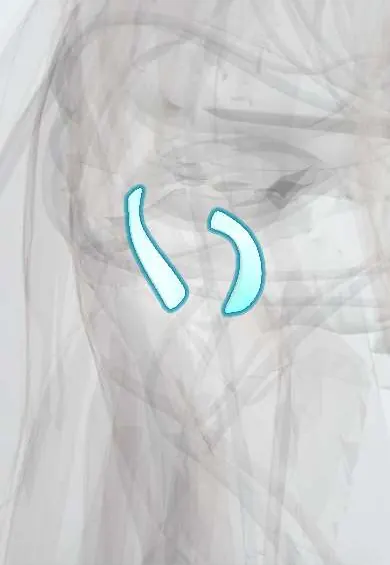
The fibular head ligaments hold the top of the fibula against the tibia, just below the outer side of the knee.
Official name: Anterior ligament of fibular head
Opens in the Durgical app, no sign-up needed.
What it is
Ligaments in front of and behind the head of the fibula.
What it does
Hold the top of the fibula against the tibia.
Key facts
- Attaches
- Anterior and posterior ligaments of fibular head: fibular head to lateral tibial condyle
- Function
- Stabilize the proximal (superior) tibiofibular joint
Relations
- In front
- Origins of fibularis longus and extensor digitorum longus
- Behind
- Popliteus tendon reinforcing the posterior ligament, and the soleus origin from the back of the fibular head
- Lateral
- LCL and biceps femoris tendon inserting on the fibular head
- Below
- Common fibular nerve curling round the fibular neck
How to find it
Follow the biceps tendon down to the fibular head, a small knob at the back and outer side of the lateral tibial condyle, a little above the level of the tibial tuberosity. The joint line lies just in front of and above it, against the tibial condyle; the thick front part of the capsule is felt there.
Examination
- Fibular head translation: with the knee bent to 90° (relaxing the LCL and biceps), the fibular head is pushed forward and backward; more movement or pain than on the other side suggests instability
On imaging
AP and lateral knee X-rays compared with the other side show a displaced fibular head, but subtle dislocations are easy to miss; CT shows the joint alignment more reliably.
Clinical notes
- Ganglion cysts from this joint can track along the articular branch into the common fibular nerve and cause foot drop
- Fibular nerve palsy may accompany a dislocation or a fibular neck fracture
- Can be a source of lateral knee pain mistaken for a lateral meniscus problem
Anatomical variants
- The joint surface may be nearly horizontal or steeply oblique; the oblique type is described as more prone to instability (Ogden)
Test yourself
Think of the answer, then tap the question to see it.
What type of joint do the fibular head ligaments stabilize?
The proximal tibiofibular joint, a plane synovial joint whose cavity communicates with the knee in some adults.
What is the most common type of proximal tibiofibular dislocation and its mechanism?
Anterolateral, from a fall on a bent knee with the foot turned in.
How can a ganglion from the proximal tibiofibular joint cause foot drop?
It can track along the articular branch into the common fibular nerve, which winds round the fibular neck.
Educational information, not medical advice. For any symptom, see a health professional.
Its names
- Official Latin (TA2)
- ligamentum anterius capitis fibulae TA2 1910
- Official Spanish (DeCS)
- Ligamentos anterior y posterior de la cabeza de la fíbula
- English (TA2)
- Anterior ligament of fibular head
- Also called
- ligamentum anterius capituli fibulae
Related
Sources: Terminologia Anatomica (TA2); Anatomy, Bony Pelvis and Lower Limb: Fibula; Anatomy of the Human Body (20th ed.): Surface Anatomy of the Lower Extremity (Lea & Febiger (Gray's Anatomy, 1918), 1918) · adapted, Public domain; Anatomy of the Human Body (20th ed.): Articulations between the Tibia and Fibula (Lea & Febiger (Gray's Anatomy, 1918), 1918) · adapted, Public domain.
Spotted a mistake?We are always improving for the community. Tell us what is wrong and our team will review it.Report a mistake
Representative model, for educational purposes only.