Joints and ligaments · Upper limb
SGHL !
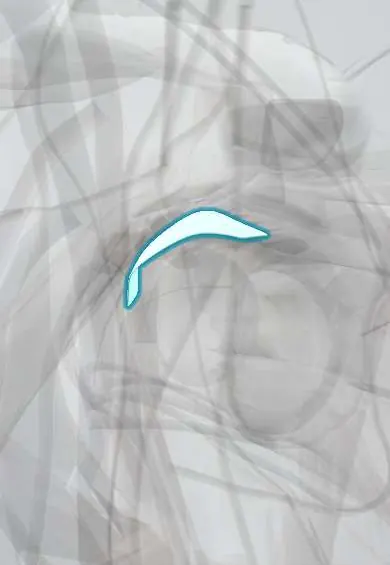
The superior glenohumeral ligament is a band at the top front of the shoulder joint; it steadies the hanging arm and helps hold the biceps tendon in place.
Official name: Superior glenohumeral ligament
Opens in the Durgical app, no sign-up needed.
What it is
A small band at the top front of the shoulder capsule.
What it does
Steadies the shoulder with the arm hanging at the side and helps hold the biceps tendon in its groove.
Key facts
- Attaches
- Superior glenoid near the supraglenoid tubercle to above the lesser tubercle
- Function
- Resists inferior translation of the hanging arm; part of the biceps pulley
- Tight in
- Adduction + external rotation
Relations
- Medial
- Superior glenoid near the supraglenoid tubercle, close to the long biceps tendon origin and the anterosuperior labrum
- Lateral
- Small fovea just above the lesser tubercle, at the entrance of the bicipital groove
- Above
- Coracohumeral ligament, superficial to it in the rotator interval; the front edge of the supraspinatus tendon
- Below
- Upper border of the subscapularis tendon
- Behind
- Long biceps tendon, which it cradles as the tendon turns into the groove
How to find it
Not palpable. At arthroscopy it lies in the rotator interval, the triangle bounded by the biceps tendon, the upper edge of subscapularis and the glenoid; it runs beside the biceps and curves under it as the floor of the pulley.
Examination
- Sulcus sign: downward pull on the arm at the side opens a dimple below the acromion; a sulcus that persists in external rotation points to rotator interval (SGHL and coracohumeral ligament) laxity
- Yergason test (resisted supination with the elbow at 90°): pain or a snap in the groove suggests biceps instability, often from a pulley lesion
On imaging
On MR arthrography the SGHL is seen on axial slices at the level of the coracoid and on sagittal oblique views of the rotator interval; a pulley tear shows the long biceps tendon subluxed medially, sometimes under a torn upper subscapularis.
Clinical notes
- Pulley lesions (SGHL, coracohumeral ligament, upper subscapularis) cause anterior shoulder pain and medial subluxation of the biceps tendon in overhead athletes
- Rotator interval closure tightens the SGHL and coracohumeral ligament in some instability repairs; overtightening limits external rotation
- The rotator interval thickens and scars in frozen shoulder and is released in arthroscopic capsular release
Related conditions
Test yourself
Think of the answer, then tap the question to see it.
In which interval does the superior glenohumeral ligament lie?
The rotator interval, between the supraspinatus and subscapularis tendons, with the coracohumeral ligament.
What do the superior glenohumeral ligament and coracohumeral ligament form together?
The biceps pulley, which keeps the long biceps tendon from slipping medially out of its groove.
A sulcus sign that persists in external rotation points to laxity of which structures?
The rotator interval structures: the superior glenohumeral ligament and the coracohumeral ligament.
Educational information, not medical advice. For any symptom, see a health professional.
Its names
- Official Latin (TA2)
- ligamentum glenohumerale superius TA2 1767
- Official Spanish (DeCS)
- Ligamento glenohumeral superior
- English (TA2)
- Superior glenohumeral ligament
- Also called
- superior glenohumeral band
Related
Sources: Terminologia Anatomica (TA2); Anatomy, Shoulder and Upper Limb, Glenohumeral Joint; Anatomy, Shoulder and Upper Limb, Shoulder.
Spotted a mistake?We are always improving for the community. Tell us what is wrong and our team will review it.Report a mistake
Representative model, for educational purposes only.