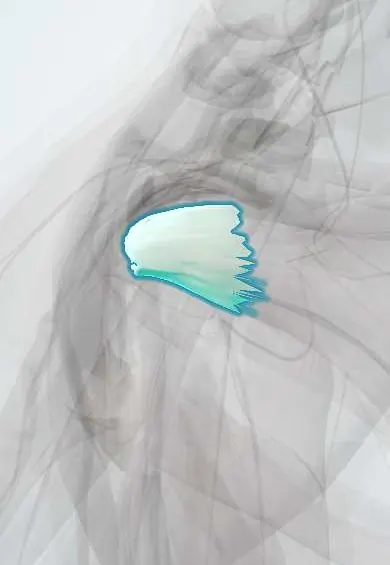
Subscapularis tendon !
The subscapularis tendon crosses the front of the shoulder; it turns the arm inward and blocks the ball from slipping forward.
Opens in the Durgical app, no sign-up needed.
What it is
The broad rotator cuff tendon at the front of the shoulder; tears weaken inward rotation (lift-off and belly-press tests). It is detached and repaired in shoulder replacement.
What it does
Turns the arm inward and blocks the ball from slipping forward.
Key facts
- Attaches
- Subscapularis to the lesser tubercle; upper fibres help form the pulley of the long biceps tendon and some cross the intertubercular groove
- Function
- Medial rotation and front stability of the shoulder; a tear can let the long biceps tendon slip medially; lift-off and belly-press tests
- Tight in
- Lateral rotation
Relations
- Course
- From the subscapular fossa on the front of the scapula it passes laterally in front of the shoulder joint, under the coracoid process, to the lesser tubercle; some fibres cross the intertubercular groove
- In front
- Coracobrachialis and the short head of the biceps (the conjoint tendon), and in front of them the axillary artery and the cords of the brachial plexus
- Deep
- Anterior shoulder capsule and the middle glenohumeral ligament; the subscapular recess between tendon and capsule usually opens into the joint
- Above
- Rotator interval and the coracoid process; across the interval lies the supraspinatus tendon
- Below
- Axillary nerve and posterior circumflex humeral artery, which pass along its lower border toward the quadrangular space; the anterior circumflex humeral vessels cross its lower third
How to find it
With the arm at the side and slightly rotated outward, the insertion is felt on the lesser tubercle, just medial to the intertubercular groove and lateral to the tip of the coracoid process. Most of the tendon lies deep to the deltoid and the conjoint tendon.
Examination
- Lift-off test (Gerber): the back of the hand rests on the lower back; inability to lift it away indicates a tear (needs full medial rotation, often painful)
- Belly-press test: the hand presses on the abdomen with the elbow kept forward; if the elbow drops back or the wrist flexes to push, the tendon is weak
- Bear-hug test: the hand rests on the opposite shoulder with the elbow forward and the examiner tries to lift it off; inability to resist suggests an upper-border tear
- Internal rotation lag sign: the hand is lifted off the back passively and released; if it falls back onto the back, the tendon is torn
- More passive lateral rotation than on the other side suggests a complete tear
On imaging
Axial MRI shows the tendon crossing in front of the humeral head to the lesser tubercle; a tear appears as fluid or a gap at the upper insertion, often with the long biceps tendon displaced medially out of an empty groove. Ultrasound with the arm turned outward assesses it dynamically and shows biceps instability.
Common problems
- Rotator cuff tear, partial or full, from wear with age or from a fall; the most common cause of shoulder weakness.
- Tendinopathy and impingement: pain lifting the arm and at night.
- Calcific tendinitis: calcium deposits that cause sudden severe pain.
How it is diagnosed
Weakness and pain on cuff tests (for example the empty-can test). Ultrasound or MRI shows the tear size and muscle quality.
Treatment
- Physical therapy, pain medicines and sometimes injections, especially for partial and age-related tears.
- Arthroscopic rotator cuff repair with suture anchors for many full-thickness tears, especially recent ones in active people.
- Reverse shoulder replacement for large, irreparable tears with arthritis.
Clinical notes
- In the deltopectoral approach the anterior circumflex humeral vessels (the 'three sisters', an artery with two veins) mark its lower border
- Supplied by the upper and lower subscapular nerves; the axillary nerve at its lower border is at risk when the tendon is released
- After shoulder replacement or open stabilisation, failure of its repair causes anterior instability and positive lift-off and belly-press tests
- Traumatic tears follow forced lateral rotation or extension of the abducted arm, or an anterior dislocation in an older adult
Development
The lesser tubercle ossifies from a separate centre that joins the rest of the upper humeral epiphysis; in adolescents a forceful pull of this tendon can avulse the tubercle, an injury easily missed on plain X-rays.
Test yourself
Think of the answer, then tap the question to see it.
Where does the subscapularis tendon insert?
On the lesser tubercle, the only rotator cuff tendon there; it is the strongest cuff unit.
Which test is most sensitive for upper-border subscapularis tendon tears?
The bear-hug test: the hand on the opposite shoulder, elbow forward; inability to resist the examiner lifting it off is positive.
What imaging clue suggests a missed upper subscapularis tendon tear?
A medially displaced long biceps tendon, since upper subscapularis fibres help form the biceps pulley.
What is the belly-press test for the subscapularis tendon?
The hand presses on the abdomen with the elbow forward; if the elbow drops back or the wrist flexes to push, the tendon is weak.
Which vessels mark the lower border of the subscapularis tendon in the deltopectoral approach?
The anterior circumflex humeral vessels, an artery with two veins.
Educational information, not medical advice. For any symptom, see a health professional.
Its names
- Official Latin (TA2)
- tendo musculi subscapularis TA2 2460
- Official Spanish (DeCS)
- Tendón del músculo subescapular
- English (TA2)
- Subscapularis tendon
Related
Sources: Terminologia Anatomica (TA2); Anatomy, Shoulder and Upper Limb, Subscapularis Muscle; Anatomy, Rotator Cuff.
Spotted a mistake?We are always improving for the community. Tell us what is wrong and our team will review it.Report a mistake
Representative model, for educational purposes only.