
Cerumen impaction (earwax)
Earwax that builds up and blocks the ear canal, causing a blocked ear, dull hearing or itch. Softening drops, irrigation or removal by a clinician clear it.
What it is
Accumulation of cerumen in the external acoustic meatus that causes symptoms or prevents examination of the ear. Earwax itself is normal and protective; it becomes a problem only when it blocks the canal.
Who gets it
One of the most common reasons for ear visits in primary care. It affects about 1 in 10 children and 1 in 20 healthy adults, and many more older adults, nursing-home residents and people with intellectual disability, in whom it is a leading cause of reversible hearing loss.
Causes
- Failure of the canal's self-cleaning: skin and wax normally migrate outwards
- Wax pushed deeper with cotton buds, hairpins or other objects
- Hearing aids, earplugs or in-ear headphones that block outward migration
- Narrow, tortuous or hairy canals and bony exostoses
- Drier, harder wax with ageing
Risk factors
- Older age
- Hearing aid or earplug use
- Intellectual disability or dementia
- Habitual cleaning with cotton buds
- Narrow canals or exostoses (cold-water swimmers and surfers)
- Eczema or psoriasis of the ear canal
Pathophysiology
Cerumen mixes secretions of the ceruminous (modified apocrine) and sebaceous glands of the outer cartilaginous third of the canal with shed keratin. It lubricates, acidifies and protects the canal. The canal epithelium migrates outwards like a conveyor belt and carries the wax out; when this fails, or wax is pushed into the bony canal, it compacts against the eardrum. Wet (dominant) or dry (recessive) wax type depends on the ABCC11 gene; dry wax is common in East Asian and Indigenous American ancestry.
Classification
- By occlusion: partial or complete
- By consistency: soft and wet, or hard and dry
- Symptomatic impaction versus asymptomatic wax that only hides the eardrum
Symptoms and signs
- Fullness or a blocked ear
- Conductive hearing loss, sometimes sudden after showering or swimming as the wax swells
- Tinnitus
- Itch or ear discomfort
- Dizziness
- Reflex cough from stimulation of the auricular branch of the vagus nerve (Arnold nerve)
- In people who cannot report symptoms: worsening hearing, confusion or behaviour change
Diagnosis
- Clinical
- Otoscopy shows wax filling the canal and hiding the eardrum; the diagnosis needs wax plus symptoms, or a need to see the eardrum. With one ear blocked, Weber lateralises to the blocked ear and Rinne is negative on that side.
- Tests
- Audiometry is not needed to diagnose it; after removal the canal and eardrum are inspected and hearing is retested if loss persists.
- Imaging
- Not needed.
Differential diagnosis
- Otitis externa or otomycosis
- Foreign body in the ear canal
- Keratosis obturans or canal cholesteatoma
- Otitis media with effusion
- Sudden sensorineural hearing loss
- Exostoses or osteoma of the canal
Goal of treatment
Remove the wax safely only when it causes symptoms or blocks a needed examination; asymptomatic wax can be left alone.
Treatment
- Conservative
- Asymptomatic wax needs no treatment. Education: the ear cleans itself; cotton buds, objects in the canal and ear candling are discouraged (candling does not work and can burn).
- Medical
- Cerumenolytic drops for a few days (water-based, oil-based or non-water non-oil, such as carbamide peroxide, sodium bicarbonate solution or saline) soften the wax, alone or before irrigation; no agent is clearly better than another.
- Procedure
- Irrigation of the canal with body-temperature water by syringe or irrigator; it is avoided with a perforation or ventilation tubes, prior ear surgery, otitis externa, diabetes or immunosuppression, or an only-hearing ear.
- Procedure
- Manual removal under direct vision with a curette, hook or suction by a trained clinician, preferred when irrigation is contraindicated; microsuction under the microscope by otolaryngology.
- Follow-up
- Referral to otolaryngology when removal fails, with perforation, prior ear surgery or abnormal canal anatomy, when symptoms persist after clearing, or when another lesion is suspected. Hearing-aid users benefit from periodic ear checks.
Complications
- Of the impaction: conductive hearing loss, social isolation and worse cognition in older adults, and missed diagnoses when the eardrum cannot be seen
- Of removal: canal laceration and bleeding, otitis externa, eardrum perforation, vertigo, tinnitus and, rarely, ossicular injury or sensorineural loss
Prognosis
Excellent: hearing returns after removal. Recurrence is common, especially in older adults and hearing-aid users.
Test yourself
Think of the answer, then tap the question to see it.
Which tuning-fork pattern does a complete wax plug in the right ear give?
Weber lateralises to the right (blocked) ear and Rinne is negative on the right: a conductive pattern.
Why is ear-irrigation water kept at body temperature?
Colder or warmer water stimulates the lateral semicircular canal (caloric effect) and causes vertigo, nausea and nystagmus.
What are three contraindications to ear irrigation?
Eardrum perforation or ventilation tubes, prior ear surgery, and diabetes or immunosuppression (risk of necrotizing otitis externa); also active otitis externa.
Why can cleaning the ear canal provoke a cough?
It stimulates the auricular branch of the vagus nerve (Arnold nerve), which supplies part of the canal.
Should asymptomatic earwax be removed?
No: wax is protective. It is removed only if it blocks a needed view of the eardrum or the person cannot report symptoms.
In ENT
- External ear problems: wax, otomycosis, furuncle, perichondritis, exostoses and keratosis obturans
- ENT medicines: ear drops, nasal sprays, decongestants and gargles
Connections
Educational information, not medical advice. For any symptom, see a health professional.
Sources: Cerumen Impaction Removal (StatPearls (NCBI Bookshelf), 2023); Clinical Practice Guideline (Update): Earwax (Cerumen Impaction) (Otolaryngology-Head and Neck Surgery (American Academy of Otolaryngology-Head and Neck Surgery Foundation), 2017).
Spotted a mistake?We are always improving for the community. Tell us what is wrong and our team will review it.Report a mistake
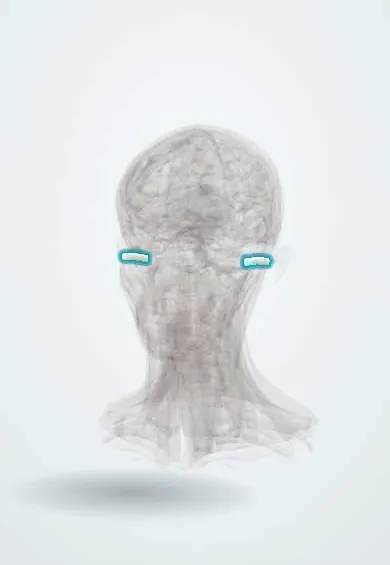
Representative model, for educational purposes only.