Presbycusis (age-related hearing loss) !
Presbycusis is the gradual hearing loss that comes with age, in both ears, affecting high-pitched sounds first; it is the commonest in adults.
Updated 2026-10-29
Structures involved
Tap one to see what it is and open it in 3D.
In histology
In the clinical exam
In physiology
Why it happens
What it is
Gradual, bilateral, symmetrical sensorineural hearing loss that comes with ageing, affecting high frequencies first. It is the most common cause of hearing loss in adults.
Who gets it
Very common after about 60 years of age and rising with life expectancy. It is underdiagnosed and undertreated, and access to hearing aids is limited in many Latin American settings.
Causes
- Age-related degeneration of the cochlea and auditory pathway
- Cumulative noise exposure
- Genetic predisposition
- Ototoxic medicines (some aminoglycosides, platinum chemotherapy, loop diuretics)
Risk factors
- Older age
- Occupational or recreational noise
- Smoking
- Diabetes, hypertension and cardiovascular disease
- Family history
- Ototoxic drug exposure
Pathophysiology
With age, outer hair cells at the base of the cochlea (high frequencies) are lost, the stria vascularis that powers the cochlea atrophies, and spiral ganglion neurons decline. Central auditory processing also slows, so understanding speech in noise becomes harder than detecting sounds.
Classification
- Sensory (hair cell loss)
- Neural (spiral ganglion loss)
- Metabolic or strial
- Mixed (most cases); the classic types often overlap
Symptoms and signs
- Slowly progressive hearing loss in both ears
- Difficulty understanding speech, especially in noise or with several speakers
- Hearing people but not understanding them («they mumble»)
- High-pitched tinnitus
- Turning up the television volume; social withdrawal
Diagnosis
- Clinical
- History and otoscopy to exclude wax, otitis or other conductive causes; tuning fork tests suggest a sensorineural loss. Screening questionnaires help in primary care.
- Tests
- Pure-tone audiometry shows symmetrical sensorineural loss, worse at high frequencies (sloping pattern); speech audiometry measures understanding.
- Imaging
- Not needed when the loss is symmetrical and typical. MRI if the loss is asymmetric or there are other neurological signs.
Differential diagnosis
- Cerumen impaction
- Noise-induced hearing loss
- Ototoxicity
- Otosclerosis or other conductive loss
- Vestibular schwannoma (if asymmetric)
- Ménière disease
Goal of treatment
Restore communication and quality of life, slow further damage and reduce social isolation.
Treatment
- Conservative
- Hearing aids fitted after audiometry are the main treatment; the earlier they are used, the better the adaptation.
- Surgical
- Cochlear implant when hearing aids no longer give useful speech understanding.
- Rehabilitation
- Auditory rehabilitation: communication strategies, lip-reading, assistive listening devices and involving family members.
- Lifestyle
- Protection from noise, avoiding ototoxic drugs when possible and control of cardiovascular risk factors.
Complications
- Social isolation and depression
- Cognitive decline (untreated hearing loss is a recognised modifiable risk factor for dementia)
- Falls
- Reduced safety (alarms, traffic)
Prognosis
Progressive and irreversible, but hearing aids and implants improve communication and quality of life for most people.
Prevention
- Hearing protection against occupational and recreational noise
- Not smoking; control of diabetes and hypertension
- Hearing screening in older adults
Test yourself
Think of the answer, then tap the question to see it.
Which frequencies are lost first in presbycusis?
High frequencies, giving a sloping audiogram that is symmetrical in both ears.
Which cochlear structure is mainly affected in sensory presbycusis?
The outer hair cells at the base of the cochlea.
What finding in an older adult with hearing loss should prompt an MRI?
Asymmetric or one-sided sensorineural hearing loss, to exclude vestibular schwannoma.
Why does treating presbycusis matter beyond hearing?
Untreated hearing loss is linked to social isolation, depression and cognitive decline.
Related conditions
Educational information, not medical advice. For any symptom, see a health professional.
Sources: Presbycusis (StatPearls (NCBI Bookshelf), 2023).
Spotted a mistake?We are always improving for the community. Tell us what is wrong and our team will review it.Report a mistake
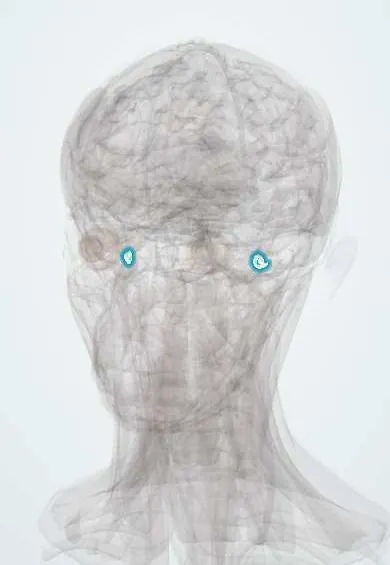
Representative model, for educational purposes only.