Disruptive mood dysregulation disorder (DMDD) !
A childhood mood disorder with severe, frequent temper outbursts and an irritable or angry mood most of the day, almost every day.
Updated 2026-11-01
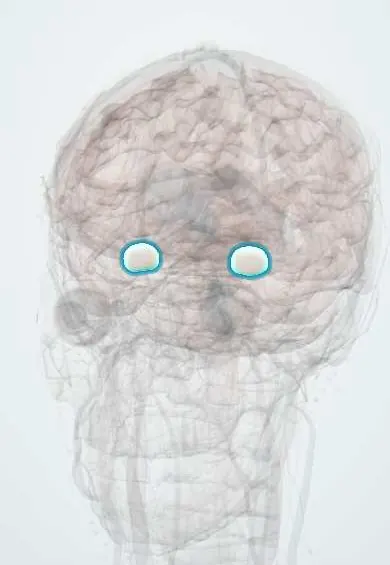
Structures involved
Tap one to see what it is and open it in 3D.
What it is
A depressive disorder of childhood characterised by severe recurrent temper outbursts (verbal or physical) far out of proportion to the situation, occurring on average 3 or more times a week, with a persistently irritable or angry mood between outbursts. Symptoms last at least 12 months in at least 2 settings, start before age 10, and the diagnosis is made only between ages 6 and 18. It was introduced partly to avoid over-diagnosing bipolar disorder in children with chronic irritability.
Who gets it
Estimated to affect a few percent of children, more often boys and school-age children; it becomes less frequent in adolescence. Most affected children have other diagnoses, especially ADHD, anxiety disorders and depression. Data for Colombia are limited, but chronic irritability and behaviour problems are a frequent reason for child mental health consultation in Latin America.
Causes
- Abnormal processing of frustration and reward
- Bias toward interpreting ambiguous faces or situations as hostile
- Family history of depression and anxiety
- Adverse childhood experiences, family conflict and harsh or inconsistent discipline
Risk factors
- Male sex and school age
- Coexisting ADHD, anxiety disorders or autism
- Parental mental illness or substance use
- Exposure to violence, neglect or abuse
Pathophysiology
Children with severe irritability show altered activity in the amygdala, cingulate and frontal (prefrontal) regions when facing frustration or blocked rewards, together with difficulty recognising facial emotions. Their emotional reactions are larger and their top-down regulation weaker than in peers.
Symptoms and signs
- Severe temper outbursts (screaming, aggression toward people or property) out of proportion to the trigger
- Outbursts on average 3 or more times a week, inconsistent with developmental level
- Irritable or angry mood most of the day, nearly every day, between outbursts, noticed by others
- Problems at home, at school and with peers
- Symptoms present for at least 12 months without a symptom-free period of 3 or more months
Diagnosis
- Clinical
- Clinical diagnosis using reports from the child, caregivers and school. Requires frequent severe outbursts plus chronic irritability for 12 months or more in 2 or more settings (severe in at least 1), onset before age 10, and age 6 to 18 at diagnosis. DMDD cannot be diagnosed together with oppositional defiant disorder (if both are met, only DMDD is given), bipolar disorder or intermittent explosive disorder. Screen for ADHD, anxiety, depression, autism and trauma.
- Tests
- No laboratory test confirms the diagnosis. Baseline weight, blood glucose and lipids are checked if antipsychotic treatment is considered.
- Imaging
- Not indicated.
Differential diagnosis
- Bipolar disorder (episodic rather than chronic, with elevated mood)
- Oppositional defiant disorder
- ADHD with emotional dysregulation
- Major depressive disorder (irritability limited to episodes)
- Intermittent explosive disorder
- Autism spectrum disorder and post-traumatic stress disorder
Goal of treatment
Reduce outbursts and irritability, improve functioning at home and school, and treat coexisting conditions, starting with psychological treatments.
Treatment
- Conservative
- Psychotherapy first: cognitive behavioural therapy for the child to manage frustration and anger, and interpretation-bias training in some programmes.
- Conservative
- Parent management training to make responses predictable and reduce escalation, plus a school support plan.
- Medical
- When ADHD coexists: stimulant medication, which often reduces irritability as well.
- Medical
- Selective serotonin reuptake inhibitors (SSRIs) are sometimes used for irritability, with monitoring for activation and suicidal thoughts.
- Medical
- Severe aggression not controlled otherwise: specialist use of second-generation antipsychotics (such as risperidone or aripiprazole) with metabolic and movement monitoring.
- Follow-up
- Regular monitoring of outbursts, mood, safety and medication side effects.
Complications
- School failure, suspension and peer rejection
- Family stress and conflict
- Later depression and anxiety disorders in adolescence and adulthood
- Suicidal behaviour and risky behaviour
Prognosis
Irritability often lessens with age, but many children later develop unipolar depression or anxiety disorders. Progression to bipolar disorder is uncommon.
Test yourself
Think of the answer, then tap the question to see it.
What are the age rules for DMDD?
Onset before age 10, and the diagnosis is made only between ages 6 and 18.
What distinguishes DMDD from bipolar disorder in children?
DMDD is chronic, non-episodic irritability with outbursts; bipolar disorder has distinct episodes of elevated mood.
If a child meets criteria for both DMDD and oppositional defiant disorder, what is diagnosed?
Only DMDD.
What adult outcome is DMDD most associated with?
Unipolar depression and anxiety disorders, not bipolar disorder.
Related conditions
- Bipolar disorder
- Attention-deficit/hyperactivity disorder (ADHD)
- Conduct disorder and oppositional defiant disorder
- Major depressive disorder
- Generalized anxiety disorder
- Separation anxiety disorder
- Autism spectrum disorder (ASD)
- Suicidal behaviour and suicide risk
- Child maltreatment (physical abuse, abusive head trauma, neglect)
Educational information, not medical advice. For any symptom, see a health professional.
Sources: Disruptive Mood Dysregulation Disorder (DMDD) (National Institute of Mental Health (NIMH), 2025).
Spotted a mistake?We are always improving for the community. Tell us what is wrong and our team will review it.Report a mistake
Representative model, for educational purposes only.