Separation anxiety disorder !
Excessive, persistent fear of being apart from parents or other attachment figures, beyond what is expected for the child's age.
Updated 2026-11-01
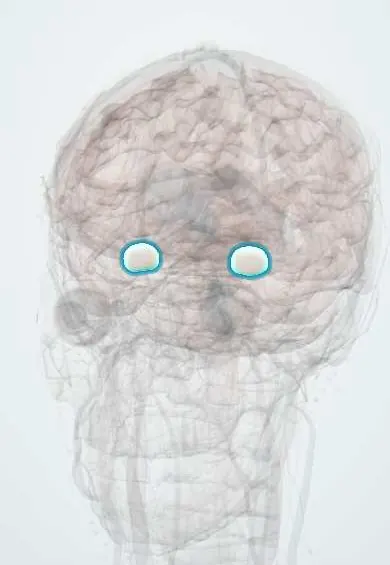
Structures involved
Tap one to see what it is and open it in 3D.
What it is
An anxiety disorder in which fear or distress about separation from home or from attachment figures is developmentally inappropriate, lasts at least 4 weeks in children and adolescents (usually 6 months or more in adults) and impairs daily life. Normal separation anxiety appears in infancy and fades in the toddler years; the disorder is the persistence or reappearance of this fear at an age when it should have resolved.
Who gets it
One of the most common anxiety disorders in children under 12, affecting about 4% of children; prevalence falls in adolescence and adulthood. Equal or slightly higher frequency in girls. In Colombia and Latin America, family separation through migration, displacement or loss of a parent can trigger or worsen the condition.
Causes
- Inherited tendency to anxiety, often with an anxious parent
- Inhibited temperament (shyness and caution with new situations)
- Stressful life events: death or illness of a relative, moving house or school, parental separation, migration
- Overprotective or anxious parenting that reinforces avoidance
Risk factors
- Parental anxiety, depression or panic disorder
- Recent loss, family conflict or traumatic events
- Exposure to violence, displacement or migration of a caregiver
- Coexisting anxiety disorders, ADHD or autism
Pathophysiology
Children with anxiety disorders show heightened amygdala reactivity to perceived threat and weaker regulation by the prefrontal and cingulate cortex. Each avoided separation brings short-term relief, which reinforces the fear (negative reinforcement); parental accommodation keeps the cycle going.
Symptoms and signs
- Intense distress when separation from home or caregivers is anticipated or occurs
- Persistent worry that something bad will happen to the parent or to the child (getting lost, kidnapped)
- Refusal to go to school or elsewhere because of fear of separation
- Reluctance to sleep alone or away from home; nightmares about separation
- Physical complaints (stomachache, headache, nausea) on school days or before separations
- Clinging, shadowing the parent around the house, tantrums at separation
Diagnosis
- Clinical
- Clinical diagnosis from interviews with the child and caregivers and reports from school: developmentally excessive fear about separation with at least 3 typical features (distress at separation, worry about harm to attachment figures or to self, school refusal, fear of being alone, refusal to sleep away, nightmares, physical complaints), lasting at least 4 weeks in children and causing impairment. Rating scales for childhood anxiety support screening.
- Tests
- No laboratory test is needed. Limited tests only if physical complaints suggest an organic problem; screening for abuse and family stressors is part of the assessment.
- Imaging
- Not indicated.
Differential diagnosis
- Developmentally normal separation anxiety in infants and toddlers
- Generalised anxiety disorder (worries about many topics)
- Social anxiety disorder or specific phobia (fear of school itself or of people)
- Panic disorder and agoraphobia
- Depression with school refusal
- Post-traumatic stress after a real separation or traumatic event
Goal of treatment
Reduce fear and avoidance, return the child to school and normal activities as early as possible, and teach the family how to support gradual independence.
Treatment
- Conservative
- First-line: cognitive behavioural therapy with gradual exposure to separations and coping skills.
- Conservative
- Parent training to reduce accommodation and reassurance seeking, with consistent, brief goodbyes.
- Conservative
- Coordination with the school for a gradual, planned return and a supportive adult at school.
- Medical
- Moderate to severe or refractory cases: selective serotonin reuptake inhibitors (SSRIs) added to therapy, with monitoring for activation and suicidal thoughts.
- Follow-up
- Regular monitoring of school attendance, symptoms and family stressors.
Complications
- Prolonged school absence and academic decline
- Social isolation
- Later panic disorder, agoraphobia, other anxiety disorders or depression
- Family stress and parental work disruption
Prognosis
Most children respond well to treatment and many recover fully, especially with early return to school. Persistent cases carry a higher risk of anxiety disorders and depression in adolescence and adulthood.
Prevention
- Preparing children in advance for separations and changes
- Supporting anxious parents and families facing loss or migration
- Early recognition by teachers and primary care of repeated school refusal
Test yourself
Think of the answer, then tap the question to see it.
How long must symptoms last to diagnose separation anxiety disorder in a child?
At least 4 weeks (usually 6 months or more in adults), with impairment.
What is a classic presentation in school-age children?
School refusal with stomachaches or headaches on school days and worry that something will happen to a parent.
What is the first-line treatment?
Cognitive behavioural therapy with gradual exposure, with parent involvement.
Which adult disorders is separation anxiety disorder associated with later in life?
Panic disorder, agoraphobia and other anxiety disorders, and depression.
Related conditions
- Generalized anxiety disorder
- Panic disorder
- Social anxiety disorder and specific phobia
- Major depressive disorder
- Attention-deficit/hyperactivity disorder (ADHD)
- Autism spectrum disorder (ASD)
- Adjustment disorder
- Child maltreatment (physical abuse, abusive head trauma, neglect)
- Disruptive mood dysregulation disorder (DMDD)
Educational information, not medical advice. For any symptom, see a health professional.
Sources: Separation anxiety in children (MedlinePlus (U.S. National Library of Medicine), 2025); Anxiety and Depression in Children (Centers for Disease Control and Prevention (CDC), 2025).
Spotted a mistake?We are always improving for the community. Tell us what is wrong and our team will review it.Report a mistake
Representative model, for educational purposes only.