Conditions · Hematology and oncology
Dyskeratosis congenita and other telomere biology disorders !
An inherited disease of very short telomeres. It affects nails, skin and mouth and can cause bone marrow failure, lung scarring and cancer.
Updated 2026-11-01
Structures involved
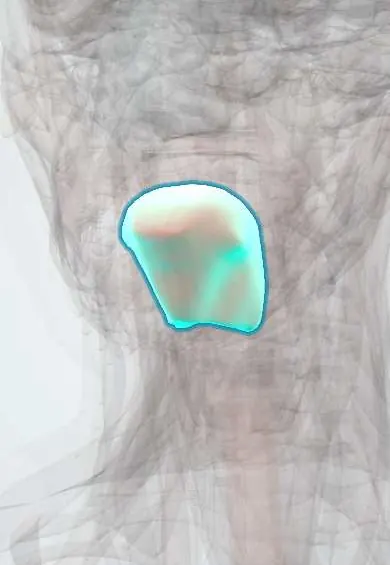
Tap one to see what it is and open it in 3D.
Why it happens
- Cellular aging: telomeres, DNA damage, senescence and proteostasis
- Evading cell death and replicating without limit: BCL2 and telomerase
- Telomerase
- Hematopoiesis
- Stem cells and tissue renewal: labile, stable and permanent tissues
What it is
An inherited bone marrow failure syndrome caused by defective telomere maintenance, with the triad of nail dystrophy, lacy skin pigmentation and oral leukoplakia. It carries high risks of marrow failure, pulmonary fibrosis, liver disease and cancer.
Who gets it
Rare, estimated around 1 in a million people. Classic forms appear in childhood, often in boys (X-linked type), while milder telomere disorders may first appear in adults with unexplained lung fibrosis, liver disease or low blood counts.
Causes
- Pathogenic variants in genes that maintain telomeres, such as DKC1, TERC, TERT and TINF2
- X-linked recessive (DKC1), autosomal dominant (TERC, TERT, TINF2) or autosomal recessive inheritance
- In dominant forms telomeres shorten further each generation, so disease starts earlier (anticipation)
Risk factors
- Family history of early aplastic anaemia, pulmonary fibrosis, liver cirrhosis or premature grey hair
- Male sex for the X-linked form
- Smoking and alcohol, which worsen lung and liver damage
Pathophysiology
Telomeres protect chromosome ends and shorten with each cell division; telomerase and the shelterin complex normally maintain them. When these fail, telomeres become critically short and rapidly dividing tissues stop renewing: bone marrow, skin, nails, mucosa, lung alveolar cells and liver. Genomic instability from short telomeres raises the risk of squamous cell carcinoma and myeloid cancers.
Classification
- Classic dyskeratosis congenita (mucocutaneous triad with marrow failure)
- Hoyeraal–Hreidarsson syndrome (severe infantile form with cerebellar hypoplasia)
- Revesz syndrome (severe form with bilateral exudative retinopathy)
- Adult-onset telomere biology disorders (isolated pulmonary fibrosis, aplastic anaemia or liver disease)
Symptoms and signs
- Ridged, thin or absent fingernails and toenails
- Lacy grey-brown pigmentation of the neck and upper chest
- White mucosal patches on the tongue and inside the mouth (oral leukoplakia)
- Early grey hair, hair loss and excessive tearing from blocked tear ducts
- Fatigue, pallor, infections or bleeding from bone marrow failure
- Short stature, dental problems and developmental delay in severe forms
Diagnosis
- Clinical
- The mucocutaneous triad with bone marrow failure suggests the diagnosis. It should also be suspected in a young person with aplastic anaemia or pulmonary fibrosis plus a suggestive family history.
- Tests
- Measurement of leukocyte telomere length (very short, below the 1st percentile for age) is the main screening test; genetic panel testing confirms the gene. Blood count and bone marrow biopsy assess marrow failure and MDS. Pulmonary function tests and liver tests screen organ involvement.
- Imaging
- High-resolution chest CT for pulmonary fibrosis; liver ultrasound; head imaging in severe infantile forms.
Differential diagnosis
- Fanconi anaemia (chromosome breakage testing is abnormal)
- Acquired aplastic anaemia
- Shwachman–Diamond syndrome and other inherited marrow failure syndromes
- Idiopathic pulmonary fibrosis
- Lichen planus or tobacco-related oral leukoplakia
Goal of treatment
Support blood counts, offer the only curative option for marrow failure (transplant) with conditioning adapted to fragile tissues, and detect lung disease and cancer early through regular surveillance.
Treatment
- Medical
- Androgens can raise blood counts in many people with marrow failure; haematopoietic growth factors and transfusions as support.
- Procedure
- Allogeneic haematopoietic stem cell transplant cures the marrow failure but not the other organs; reduced-intensity regimens avoid radiation and some alkylating agents because tissues are very sensitive to damage.
- Medical
- Lung transplant may be considered for end-stage pulmonary fibrosis; antifibrotic drugs are being studied.
- Follow-up
- Yearly blood counts, oral and head-and-neck cancer checks, skin and gynaecological examinations, lung function and liver tests; genetic counselling and testing of related donors.
- Lifestyle
- Avoiding smoking and alcohol, good oral hygiene and sun protection.
Complications
- Aplastic anaemia, the main cause of death
- Myelodysplastic syndrome and acute myeloid leukaemia
- Squamous cell carcinoma of the head and neck, anus and genitals
- Pulmonary fibrosis and pulmonary arteriovenous malformations
- Liver fibrosis or cirrhosis and gastrointestinal bleeding
- Osteoporosis and avascular necrosis
Prognosis
Highly variable. Severe forms cause marrow failure in childhood and shorten life, often to the third or fourth decade, while milder telomere disorders may first appear in late adulthood. Transplant outcomes are improving with adapted conditioning, but lung disease and cancer limit long-term survival.
Test yourself
Think of the answer, then tap the question to see it.
What is the classic mucocutaneous triad of dyskeratosis congenita?
Nail dystrophy, reticulate skin pigmentation and oral leukoplakia.
What is the basic cellular defect in dyskeratosis congenita?
Defective telomere maintenance, leading to very short telomeres.
Which test is used to screen for a telomere biology disorder?
Leukocyte telomere length measurement (very short for age).
Which gene causes the X-linked form of dyskeratosis congenita?
DKC1, encoding dyskerin.
What is the most common cause of death in dyskeratosis congenita?
Bone marrow failure, followed by pulmonary fibrosis and cancer.
Related conditions
- Aplastic anaemia
- Myelodysplastic syndromes
- Acute leukaemia (AML and ALL)
- Interstitial lung disease
- Head and neck squamous cell carcinoma (oral cavity and oropharynx, HPV)
- Cirrhosis
- Fanconi anaemia
Educational information, not medical advice. For any symptom, see a health professional.
Sources: Dyskeratosis congenita (MedlinePlus Genetics, US National Library of Medicine, 2026); Dyskeratosis Congenita (National Organization for Rare Disorders (NORD), 2024).
Spotted a mistake?We are always improving for the community. Tell us what is wrong and our team will review it.Report a mistake
Representative model, for educational purposes only.