Conditions · Hematology and oncology
Aplastic anaemia !
The bone marrow stops making enough blood cells, so red cells, white cells and platelets all fall; in most cases the immune system attacks the marrow.
Updated 2026-11-01
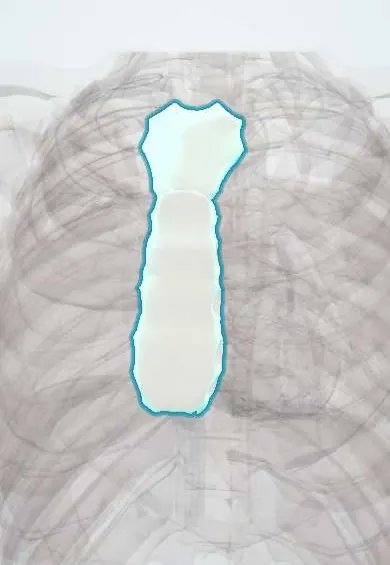
Structures involved
Tap one to see what it is and open it in 3D.
In the clinical exam
Why it happens
- Ionizing radiation injury
- Injury by therapeutic drugs: the classic examples
- Hematopoiesis
- Hematopoiesis and bone marrow
- Stem cells and tissue renewal: labile, stable and permanent tissues
What it is
A rare bone marrow failure in which the blood-forming stem cells are lost and the marrow becomes empty and replaced by fat, causing pancytopenia without leukaemia or fibrosis. Most acquired cases are immune-mediated. Fanconi anaemia is the classic inherited form.
Who gets it
About two new cases per million people a year in Europe and North America, two to three times higher in Asia; it peaks in adolescents and young adults and again after 60. Latin American series report a similar young-adult peak; access to transplantation and immunosuppressive therapy is a key limitation in the region.
Causes
- Immune-mediated (idiopathic) destruction of stem cells by T lymphocytes, the most common cause
- Drugs and chemicals: chloramphenicol, some anticonvulsants and antithyroid drugs, benzene, insecticides
- Viral: seronegative hepatitis (hepatitis-associated aplastic anaemia), Epstein-Barr virus, HIV
- Radiation and cytotoxic chemotherapy (predictable, dose-related)
- Inherited bone marrow failure syndromes: Fanconi anaemia, dyskeratosis congenita
- Pregnancy and paroxysmal nocturnal haemoglobinuria (overlap)
Risk factors
- Exposure to benzene, solvents or pesticides
- Use of drugs linked to marrow toxicity
- Recent hepatitis of unknown cause
- Family history of marrow failure or congenital anomalies
Pathophysiology
Activated cytotoxic T cells and cytokines (interferon-gamma, TNF) destroy CD34-positive haematopoietic stem cells. With fewer stem cells, all three lines fall: anaemia with low reticulocytes, neutropenia and thrombocytopenia. Fanconi anaemia is a defect in DNA repair genes that causes progressive marrow failure, congenital anomalies (short stature, thumb and radius defects, café-au-lait spots) and a high risk of leukaemia and squamous cancers.
Classification
- Severity (Camitta criteria): severe if marrow cellularity is under 25% plus two of neutrophils under 0.5 x 10^9/L, platelets under 20 x 10^9/L or very low reticulocytes
- Very severe: as above with neutrophils under 0.2 x 10^9/L
- Non-severe: cytopenias not reaching these limits
- Acquired versus inherited (Fanconi anaemia, telomere disorders)
Symptoms and signs
- Fatigue, pallor and breathlessness
- Petechiae, bruising, gum bleeding and nosebleeds
- Recurrent or severe infections, mouth ulcers
- No enlargement of the spleen, liver or lymph nodes (their presence suggests another diagnosis)
- In Fanconi anaemia: short stature, thumb or forearm anomalies, skin pigment changes
Diagnosis
- Clinical
- Pancytopenia without organomegaly in a young adult or child; take a careful history of drugs, chemicals, recent hepatitis and family history, and look for congenital anomalies.
- Tests
- Complete blood count with low reticulocytes and a blood film without blasts or dysplasia. The key test is a bone marrow biopsy showing a hypocellular, fat-filled marrow without abnormal cells or fibrosis. Flow cytometry for a PNH clone, chromosome breakage test (diepoxybutane or mitomycin C) for Fanconi anaemia in young patients, vitamin B12 and folate, liver tests, viral serologies and HLA typing of patient and siblings early for transplantation.
- Imaging
- Not routinely needed; ultrasound of the abdomen to confirm normal spleen size and imaging of kidneys and limbs if Fanconi anaemia is suspected.
Differential diagnosis
- Hypoplastic myelodysplastic syndrome
- Acute leukaemia (especially hypocellular ALL in children)
- Paroxysmal nocturnal haemoglobinuria
- Megaloblastic anaemia (B12 or folate deficiency)
- Marrow infiltration or fibrosis (lymphoma, myelofibrosis, tuberculosis)
- Hypersplenism and severe infections causing pancytopenia
Goal of treatment
Restore blood production with transplantation or immunosuppression, while preventing infection and bleeding with supportive care.
Treatment
- Procedure
- Allogeneic haematopoietic stem cell transplantation from a matched sibling is first-line for severe disease in young patients and can be curative.
- Medical
- Immunosuppressive therapy with antithymocyte globulin plus ciclosporin, usually with eltrombopag (a thrombopoietin receptor agonist), for patients without a suitable donor or who are older.
- Acute
- Supportive care: leucodepleted and irradiated blood products used sparingly before transplant, platelet transfusion for bleeding or very low counts, and empirical broad-spectrum antibiotics for febrile neutropenia.
- Conservative
- Stop any suspected drug or toxic exposure; iron chelation if many transfusions have been given.
- Follow-up
- Nursing priorities: neutropenic precautions and hand hygiene, bleeding precautions (soft toothbrush, no injections into muscle), temperature monitoring, transfusion safety, and long-term surveillance for relapse, PNH, myelodysplasia or leukaemia.
Drugs for this condition
Complications
- Severe bacterial and invasive fungal infections
- Haemorrhage, including intracranial bleeding
- Transfusion complications: alloimmunisation, iron overload
- Clonal evolution to PNH, myelodysplastic syndrome or acute myeloid leukaemia
- Graft-versus-host disease after transplantation
Prognosis
Untreated severe aplastic anaemia is usually fatal. Transplantation from a matched sibling in young patients and modern immunosuppressive therapy give long-term survival for most patients, though relapse and clonal evolution can occur after immunosuppression.
Prevention
- Avoid unnecessary exposure to benzene and pesticides and use protective equipment at work
- Monitor blood counts when using drugs known to suppress the marrow
Test yourself
Think of the answer, then tap the question to see it.
What does the bone marrow biopsy show in aplastic anaemia?
A hypocellular marrow replaced by fat, without abnormal or malignant cells.
Which antibiotic is classically linked to aplastic anaemia?
Chloramphenicol.
What is first-line treatment for severe aplastic anaemia in a young patient with a matched sibling?
Allogeneic haematopoietic stem cell transplantation.
Which inherited disorder combines marrow failure, thumb and radius anomalies and DNA repair defects?
Fanconi anaemia, confirmed with a chromosome breakage test.
Why does splenomegaly argue against aplastic anaemia?
Aplastic anaemia is marrow failure without infiltration; an enlarged spleen suggests leukaemia, lymphoma, myelofibrosis or hypersplenism.
Related conditions
- Acute leukaemia (AML and ALL)
- Myelodysplastic syndromes
- Paroxysmal nocturnal haemoglobinuria
- Viral hepatitis
- Febrile neutropenia
- Immune thrombocytopenia (ITP)
- Megaloblastic anaemia (B12 or folate deficiency)
- Transfusion reactions
Educational information, not medical advice. For any symptom, see a health professional.
Sources: Aplastic anemia (MedlinePlus (U.S. National Library of Medicine), 2026); Fanconi anemia (MedlinePlus (U.S. National Library of Medicine), 2025).
Spotted a mistake?We are always improving for the community. Tell us what is wrong and our team will review it.Report a mistake
Representative model, for educational purposes only.