
Ectropion and entropion
The lower eyelid turns out (ectropion) or in (entropion), usually with age. Out it waters; in the lashes scratch the eye. Surgery corrects both.
Quick facts
- Key signs
- Watering eye · Redness and irritation
- Diagnosis
- Clinical
Red flags ↓
No doses: the clinician sets them by the current guideline.
What it is
Malpositions of the eyelid margin. In ectropion the lid turns away from the eye, exposing the conjunctiva and letting tears spill. In entropion it turns inward, so the lashes rub the cornea. Both usually affect the lower lid of older adults, and both are corrected surgically.
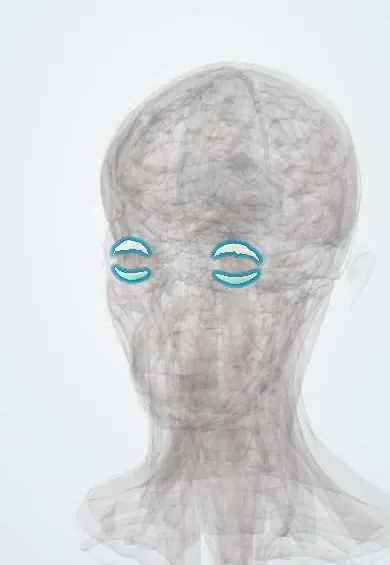
See it in 3D
Who gets it
Involutional (age-related) forms are the most common and increase after 60. In regions with trachoma, upper lid cicatricial entropion is an important cause of blindness.
Causes
- Age-related laxity of the lid and canthal tendons (involutional)
- Facial nerve palsy (paralytic ectropion)
- Scarring of the skin (cicatricial ectropion) or of the conjunctiva (cicatricial entropion, as in trachoma or chemical burns)
- Spasm of the orbicularis muscle (spastic entropion)
- Congenital forms
Risk factors
- Older age
- Facial nerve palsy
- Sun damage and skin scarring
- Trachoma and chemical burns
- Previous eyelid surgery
Pathophysiology
With age the tarsal plate and canthal tendons loosen. If the lid retractors are also weak, the lower lid rolls outward; if the orbicularis muscle overrides them, it rolls inward. Scarring of the anterior or posterior lamella pulls the lid out or in.
Classification
- Ectropion: involutional, paralytic, cicatricial, mechanical, congenital
- Entropion: involutional, cicatricial, spastic, congenital
Symptoms and signs
- Watering eye
- Redness and irritation
- Foreign-body sensation from lashes touching the eye (entropion)
- Visible outturned or inturned lid margin
- Discharge and crusting
Diagnosis
- Clinical
- Clinical diagnosis by inspection, the snap-back and lid distraction tests for laxity, asking the patient to squeeze the eyes to reveal intermittent entropion, and fluorescein staining of the cornea.
- Tests
- No laboratory tests are routinely needed.
- Imaging
- Not needed.
Differential diagnosis
- Trichiasis (misdirected lashes with a normal lid position)
- Epiblepharon in children
- Lid tumour causing mechanical ectropion
Goal of treatment
Protect the cornea and restore the normal position of the lid.
Treatment
- Conservative
- Lubricant drops and ointment to protect the eye while awaiting surgery.
- Conservative
- Temporary taping of the lower lid in involutional entropion.
- Surgical
- Lid-tightening and retractor repair procedures by oculoplastic surgery.
- Surgical
- Lid rotation procedures for trachomatous cicatricial entropion, together with community trachoma control.
Complications
- Corneal abrasion, ulcer and scarring (entropion)
- Exposure keratopathy and chronic conjunctivitis (ectropion)
- Chronic watering
Prognosis
Good after surgery; recurrence is possible with progressive laxity or scarring.
Prevention
- Treating trachoma and chemical burns early
- Protecting the cornea after facial nerve palsy
Test yourself
Think of the answer, then tap the question to see it.
Which eyelid malposition makes the lashes rub the cornea?
Entropion.
What is the most common cause of ectropion and entropion?
Age-related (involutional) laxity of the lower lid.
Which infection causes cicatricial entropion and blindness?
Trachoma.
Why it happens
In ophthalmology
- Lacrimal surgery: probing and dacryocystorhinostomy
- Eyelid and brow surgery: blepharoplasty and brow ptosis
Connections
Educational information, not medical advice. For any symptom, see a health professional.
Sources: Ectropion (StatPearls Publishing (NCBI Bookshelf), 2023); Entropion (StatPearls Publishing (NCBI Bookshelf), 2023).
Spotted a mistake?We are always improving for the community. Tell us what is wrong and our team will review it.Report a mistake
Representative model, for educational purposes only.