Conditions · Ophthalmology and ENT
Dry eye disease !
The eyes do not make enough tears or the tears evaporate too fast, causing burning, grittiness and blurred vision. Common with age, screens and some illnesses.
Updated 2026-11-01
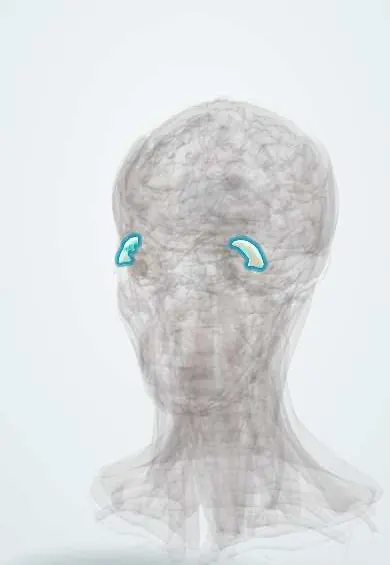
Structures involved
Tap one to see what it is and open it in 3D.
Why it happens
What it is
A chronic, multifactorial disorder of the ocular surface in which the tear film becomes unstable or insufficient, so the eye surface becomes hyperosmolar and inflamed. It causes discomfort and fluctuating vision and can damage the cornea and conjunctiva. Two main mechanisms overlap: too little tear production (aqueous deficiency) and too much evaporation, most often from meibomian gland dysfunction.
Who gets it
One of the most common reasons for eye consultations worldwide, affecting a large share of adults over 50, more often women. Prolonged screen use, air conditioning and contact lenses increase it in younger people. In Colombia, high-altitude cities with dry air and strong UV exposure add to the burden.
Causes
- Evaporative: meibomian gland dysfunction, blepharitis, rosacea, reduced blinking (screens, reading, Parkinson disease), incomplete eyelid closure (facial palsy, thyroid eye disease)
- Aqueous-deficient: ageing, Sjögren disease, other autoimmune diseases, lacrimal gland damage, reduced corneal sensation
- Medicines: anticholinergics, antihistamines, tricyclic antidepressants, diuretics, isotretinoin and preserved eye drops
- Hormonal change: menopause and androgen decline
- Surface scarring: Stevens-Johnson syndrome, graft-versus-host disease, chemical burns
- Vitamin A deficiency (xerophthalmia)
Risk factors
- Age over 50 and female sex
- Contact lens use and refractive surgery
- Long screen time, dry, windy or air-conditioned environments, and smoke
- Autoimmune disease, especially Sjögren disease and rheumatoid arthritis
- Diabetes and thyroid disease
- Medicines with anticholinergic effects and long-term preserved glaucoma drops
Pathophysiology
The tear film has a lipid layer from the meibomian glands, an aqueous layer from the lacrimal glands and a mucin layer from conjunctival goblet cells. When any layer fails, tears evaporate or are too scant, the surface becomes hyperosmolar, and epithelial cells release inflammatory mediators. Inflammation further reduces gland output and goblet cells, and damaged corneal nerves send abnormal signals, creating a self-perpetuating cycle of instability, inflammation and surface damage.
Classification
- Aqueous-deficient dry eye: Sjögren and non-Sjögren
- Evaporative dry eye: meibomian gland dysfunction, eyelid and blinking problems, contact lenses, surface disease
- Mixed (most patients)
- By severity: mild, moderate or severe according to symptoms and surface staining
Symptoms and signs
- Burning, stinging, gritty or sandy sensation
- Redness and light sensitivity
- Blurred vision that clears with blinking and worsens with reading or screen use
- Paradoxical reflex tearing
- Tired eyes and difficulty wearing contact lenses
- Symptoms worse later in the day and in dry or windy places
Diagnosis
- Clinical
- Typical symptoms, often scored with a questionnaire, plus slit-lamp examination of the eyelid margins, meibomian glands and tear meniscus. Fluorescein shows a short tear break-up time and punctate corneal staining; lissamine green stains damaged conjunctiva.
- Tests
- Schirmer test measures tear production. Tear osmolarity where available. Anti-Ro (SSA) and anti-La (SSB) antibodies and further work-up when Sjögren disease or another systemic disease is suspected.
- Imaging
- Not routinely needed; meibography can show gland loss in specialised clinics.
Differential diagnosis
- Allergic conjunctivitis (itching predominates)
- Infectious conjunctivitis
- Blepharitis alone
- Keratitis, including infectious keratitis
- Conjunctivochalasis and exposure keratopathy
- Computer vision syndrome and uncorrected refractive error
Goal of treatment
Restore a stable tear film, relieve symptoms, protect the cornea and treat any underlying systemic disease or causative medicine.
Treatment
- Lifestyle
- Take regular breaks from screens and blink fully, humidify the room, avoid smoke and direct air currents, wear protective glasses and review medicines that cause dryness.
- Conservative
- Preservative-free artificial tears and lubricant gels or ointments at night; warm compresses and eyelid hygiene for meibomian gland dysfunction.
- Medical
- Anti-inflammatory eye drops (topical immunomodulators such as ciclosporin, short courses of mild corticosteroids) for moderate to severe disease; oral tetracyclines or macrolides for meibomian gland dysfunction and rosacea; secretagogues in Sjögren disease.
- Procedure
- Punctal plugs to keep tears on the eye, and autologous serum drops or scleral lenses in severe disease.
- Surgical
- Partial eyelid closure (tarsorrhaphy) in exposure or severe surface disease.
Complications
- Punctate keratitis and corneal erosions
- Bacterial keratitis and corneal ulcer
- Corneal scarring, melting or perforation in severe cases
- Reduced quality of life, reading and work performance
- Contact lens intolerance and poorer results after eye surgery
Prognosis
Usually a chronic condition with flare-ups that can be well controlled; mild disease improves with environmental changes and lubricants. Severe disease linked to Sjögren disease, graft-versus-host disease or scarring needs long-term specialist care.
Prevention
- Screen breaks and adequate blinking
- Proper contact lens hygiene and wearing time
- Protecting the eyes from wind, dust and smoke
- Eyelid hygiene in blepharitis
- Adequate vitamin A intake in children
Test yourself
Think of the answer, then tap the question to see it.
Which test measures aqueous tear production?
The Schirmer test.
Most common cause of evaporative dry eye?
Meibomian gland dysfunction.
A woman has dry eyes, dry mouth and positive anti-Ro antibodies. Which disease?
Sjögren disease.
Why do patients with dry eye sometimes complain of watery eyes?
Surface irritation triggers reflex tearing.
Which type of artificial tears is preferred when drops are used many times a day?
Preservative-free drops.
Related conditions
- Sjögren disease
- Rheumatoid arthritis
- Systemic lupus erythematosus
- Rosacea
- Thyroid eye disease (Graves orbitopathy)
- Graves disease (hyperthyroidism)
- Bell palsy
- Vitamin A deficiency (night blindness and xerophthalmia)
- Menopause and climacteric syndrome
- Graft-versus-host disease
- Stevens–Johnson syndrome and toxic epidermal necrolysis
- Conjunctivitis
- Keratitis and corneal ulcer
- Pterygium
- Chalazion and hordeolum (stye)
Educational information, not medical advice. For any symptom, see a health professional.
Sources: Dry eye syndrome (MedlinePlus, US National Library of Medicine, 2026); Dry Eye (National Eye Institute (NEI), 2026).
Spotted a mistake?We are always improving for the community. Tell us what is wrong and our team will review it.Report a mistake
Representative model, for educational purposes only.