Conditions · Obstetrics and gynecology
Gestational diabetes mellitus !
Gestational diabetes is high blood sugar first found in pregnancy. It is usually silent, is found by screening and raises risks for mother and baby.
Updated 2026-11-01
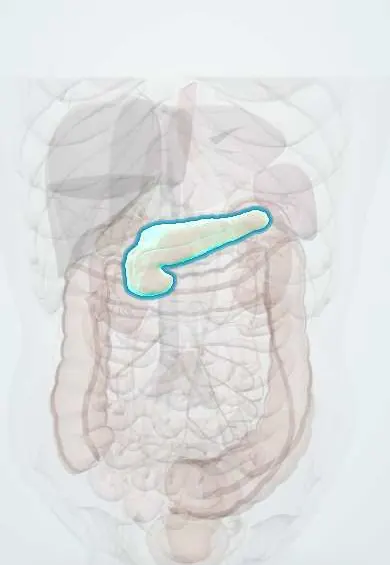
Structures involved
Tap one to see what it is and open it in 3D.
In embryology
- Placenta: structure, circulation and functions
- Amniotic fluid: polyhydramnios and oligohydramnios
- Twins: dizygotic and monozygotic, chorionicity, twin–twin transfusion
- Fetal growth and growth restriction
- Surfactant and fetal lung maturity
- Maternal diabetes and obesity as teratogens
Why it happens
- Neonatal respiratory distress syndrome: surfactant and hyaline membranes
- The placenta and pregnancy hormones
- Maternal physiological changes in pregnancy
- Islets and insulin: secretion and actions
- Insulin signalling
- Islets of Langerhans: α, β, δ cells
What it is
Hyperglycaemia first recognised in the second or third trimester in a woman without known diabetes before pregnancy. Diabetes found in the first trimester with standard diagnostic criteria is considered pre-existing (overt) diabetes rather than gestational diabetes.
Who gets it
One of the most common medical complications of pregnancy, and increasing in Latin America with rising obesity and maternal age. In the United States it affects roughly 5–9% of pregnancies each year. Hispanic and Indigenous women have a higher risk.
Causes
- Insulin resistance caused by placental hormones (human placental lactogen, progesterone, cortisol, placental growth hormone)
- Insufficient beta-cell compensation in women with reduced pancreatic reserve
Risk factors
- Overweight or obesity before pregnancy and excessive weight gain
- Gestational diabetes or a macrosomic baby in a previous pregnancy
- First-degree relative with type 2 diabetes
- Polycystic ovary syndrome
- Maternal age over 25–35 years (thresholds vary by guideline)
- Hispanic, Indigenous, Asian or African ancestry
- Prediabetes, chronic hypertension or glucosuria
Pathophysiology
From mid-pregnancy, placental hormones progressively reduce maternal insulin sensitivity to divert glucose to the fetus. Most women increase insulin secretion to compensate; when beta cells cannot, maternal glucose rises. Glucose crosses the placenta but insulin does not, so the fetal pancreas makes extra insulin, which acts as a growth factor (macrosomia) and causes neonatal hypoglycaemia after the cord is cut.
Classification
- Diet-controlled gestational diabetes (A1GDM)
- Gestational diabetes needing medication (A2GDM)
- Distinct from overt (pre-existing) diabetes diagnosed in pregnancy
Symptoms and signs
- Usually no symptoms; found by screening at 24–28 weeks
- Sometimes increased thirst and urination or fatigue, which overlap with normal pregnancy
- Recurrent vulvovaginal candidiasis or urinary tract infections
- Fundal height larger than expected or excess amniotic fluid (polyhydramnios)
Diagnosis
- Clinical
- Risk assessment at the first antenatal visit, with early testing in high-risk women to detect pre-existing diabetes, and universal screening of the rest at 24–28 weeks.
- Tests
- Fasting glucose in early pregnancy. At 24–28 weeks a 75 g oral glucose tolerance test (one-step; diagnosis if fasting ≥92, 1-hour ≥180 or 2-hour ≥153 mg/dL, one value suffices) or a two-step approach (50 g screening load followed by a 100 g diagnostic test). Colombian guidance uses the 75 g test. HbA1c is not reliable for diagnosis in mid-pregnancy.
- Imaging
- Obstetric ultrasound to follow fetal growth (macrosomia, abdominal circumference) and amniotic fluid; it does not diagnose gestational diabetes.
Differential diagnosis
- Pre-existing type 2 or type 1 diabetes first detected in pregnancy
- Monogenic diabetes (MODY)
- Physiological glucosuria of pregnancy
- Steroid-induced hyperglycaemia (for example after antenatal corticosteroids)
Goal of treatment
Keep maternal glucose in the target range to reduce fetal overgrowth, birth injury and neonatal hypoglycaemia, without causing maternal hypoglycaemia, and plan the timing and mode of delivery.
Treatment
- Lifestyle
- Medical nutrition therapy with controlled carbohydrate distribution, regular physical activity and appropriate weight gain; most women achieve control this way.
- Follow-up
- Capillary glucose self-monitoring several times a day (fasting and after meals), plus fetal growth ultrasound and fetal well-being tests in the third trimester.
- Medical
- When targets are not met, insulin is the preferred drug; metformin is an alternative in some guidelines. Glucose and insulin needs are monitored closely during labour.
- Procedure
- Delivery planning: usually at term; caesarean section may be considered when estimated fetal weight is very high because of the risk of shoulder dystocia.
- Follow-up
- After birth: early feeding and glucose checks in the newborn; an oral glucose tolerance test for the mother 4–12 weeks postpartum and lifelong periodic diabetes screening.
Drugs for this condition
Complications
- Fetal macrosomia, shoulder dystocia, brachial plexus injury and birth trauma
- Neonatal hypoglycaemia, hyperbilirubinaemia, polycythaemia and respiratory distress
- Preeclampsia and gestational hypertension
- Polyhydramnios, preterm birth and caesarean delivery
- Stillbirth when hyperglycaemia is poorly controlled
- Later type 2 diabetes in about half of the mothers, and obesity and metabolic disease in the child
Prognosis
Glucose usually returns to normal after delivery, and with good control most pregnancies end well. Recurrence in later pregnancies is common, and the woman carries a high lifelong risk of type 2 diabetes and cardiovascular disease.
Prevention
- Reaching a healthy weight before pregnancy and staying physically active
- Avoiding excessive weight gain during pregnancy
- Breastfeeding and postpartum weight loss to lower later diabetes risk
- Postpartum and periodic glucose screening after a pregnancy with gestational diabetes
Test yourself
Think of the answer, then tap the question to see it.
When is universal screening for gestational diabetes done?
At 24–28 weeks of gestation, with earlier testing for women at high risk.
What causes the insulin resistance of pregnancy?
Placental hormones, mainly human placental lactogen, plus progesterone, cortisol and placental growth hormone.
Why is the baby of a mother with poorly controlled gestational diabetes at risk of hypoglycaemia after birth?
Fetal hyperinsulinaemia persists after the maternal glucose supply stops when the cord is cut.
What is the preferred drug when diet and exercise fail in gestational diabetes?
Insulin; metformin is an alternative in some guidelines.
Which test is done after delivery and when?
A 75 g oral glucose tolerance test 4–12 weeks postpartum, then periodic lifelong diabetes screening.
Related conditions
- Type 2 diabetes mellitus
- Type 1 diabetes mellitus
- Preeclampsia
- Obesity
- Polycystic ovary syndrome
- Neonatal jaundice
Educational information, not medical advice. For any symptom, see a health professional.
Sources: Gestational diabetes (MedlinePlus (U.S. National Library of Medicine), 2024); Gestational Diabetes (Centers for Disease Control and Prevention (CDC), 2024).
Spotted a mistake?We are always improving for the community. Tell us what is wrong and our team will review it.Report a mistake
Representative model, for educational purposes only.