Conditions · Metabolism (biochemistry)
Glycine encephalopathy (nonketotic hyperglycinaemia) !
The brain cannot break down glycine, which builds up and overstimulates nerve receptors: newborns are floppy, stop breathing and have seizures.
Updated 2026-11-01
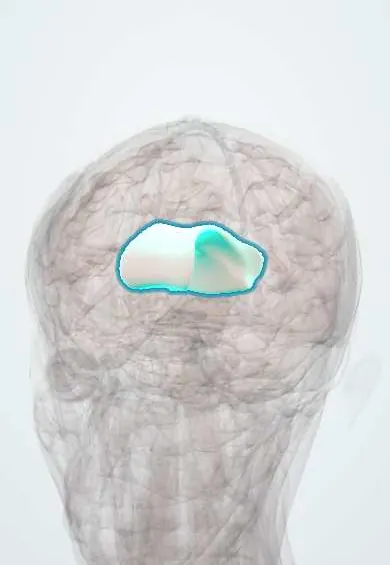
Structures involved
Tap one to see what it is and open it in 3D.
What it is
An inherited defect of the mitochondrial glycine cleavage system that causes glycine to accumulate in the brain and other tissues.
Who gets it
At least 1 in 76,000 people worldwide (about 1 in 55,000 newborns in Finland). About 80 % of cases are due to GLDC and 20 % to AMT. No Colombian figures are published.
Causes
- Autosomal recessive variants in GLDC (P protein) or AMT (T protein) of the glycine cleavage system
Risk factors
- Carrier parents; consanguinity
- Affected sibling
Pathophysiology
The glycine cleavage system (P, T, H and L proteins; needs pyridoxal phosphate, tetrahydrofolate, lipoic acid and NAD⁺) splits glycine into CO₂, NH₃ and a one-carbon unit on tetrahydrofolate. When it fails, glycine rises in plasma and even more in cerebrospinal fluid. In the brainstem and spinal cord glycine is an inhibitory transmitter, causing hypotonia, apnoea and hiccups; in the cortex it is a co-agonist of NMDA receptors, so excess glycine drives seizures and excitotoxic brain damage. No ketoacidosis occurs, which distinguishes it from the organic acidaemias.
Classification
- Severe neonatal form: lethargy, apnoea, intractable seizures, profound disability
- Attenuated form: later onset, developmental delay, milder seizures, behaviour problems
- Transient neonatal form (rare), which resolves
Symptoms and signs
- Lethargy and poor feeding in the first days of life
- Very low muscle tone
- Apnoea needing breathing support
- Persistent hiccups
- Myoclonic seizures
Diagnosis
- Clinical
- Neonatal encephalopathy with hypotonia, apnoea, hiccups and myoclonic seizures; EEG with a burst-suppression pattern.
- Tests
- Simultaneous plasma and CSF glycine with a raised CSF-to-plasma glycine ratio; normal organic acids (no ketoacidosis); GLDC and AMT gene testing. Valproate must be avoided before testing because it raises glycine.
- Imaging
- Brain MRI: thin or short corpus callosum and restricted diffusion in myelinated tracts.
Treatment
- Acute
- Breathing support and seizure control in neonatal intensive care
- Medical
- Sodium benzoate, which binds glycine and removes it in urine as hippurate, adjusted to plasma glycine levels
- Medical
- NMDA receptor blockers (dextromethorphan; ketamine in some centres) to reduce excitotoxicity
- Rehabilitation
- Physiotherapy and developmental support
- Follow-up
- Monitoring of plasma glycine, seizures, feeding and growth
Complications
- Profound intellectual disability
- Drug-resistant epilepsy
- Spasticity and feeding difficulties
- Death in infancy in severe forms
Prognosis
Poor in the severe form; better in the attenuated form, depending on the gene variants.
Test yourself
Think of the answer, then tap the question to see it.
Which enzyme system is defective in glycine encephalopathy?
The mitochondrial glycine cleavage system, usually its P protein (GLDC) or T protein (AMT).
Which laboratory ratio supports the diagnosis?
A raised CSF-to-plasma glycine ratio in simultaneously taken samples.
Why is the disease called 'nonketotic'?
To separate it from ketotic hyperglycinaemia of propionic and methylmalonic acidaemia, which cause ketoacidosis.
How does sodium benzoate lower glycine?
It is conjugated with glycine to form hippurate, which is excreted in urine.
Why does excess glycine cause both apnoea and seizures?
It is inhibitory in the brainstem and spinal cord (apnoea, hypotonia) but co-activates NMDA receptors in the cortex (seizures).
Related conditions
Educational information, not medical advice. For any symptom, see a health professional.
Sources: Nonketotic hyperglycinemia: MedlinePlus Genetics (MedlinePlus, US National Library of Medicine, 2026); GLDC gene: MedlinePlus Genetics (MedlinePlus, US National Library of Medicine, 2026); AMT gene: MedlinePlus Genetics (MedlinePlus, US National Library of Medicine, 2026); Textbook of Biochemistry for Medical Students, 6th ed. (Jaypee Brothers Medical Publishers (Vasudevan DM, Sreekumari S, Vaidyanathan K), 2011).
Spotted a mistake?We are always improving for the community. Tell us what is wrong and our team will review it.Report a mistake
Representative model, for educational purposes only.