Conditions · Hematology and oncology
Haemophilia A and B !
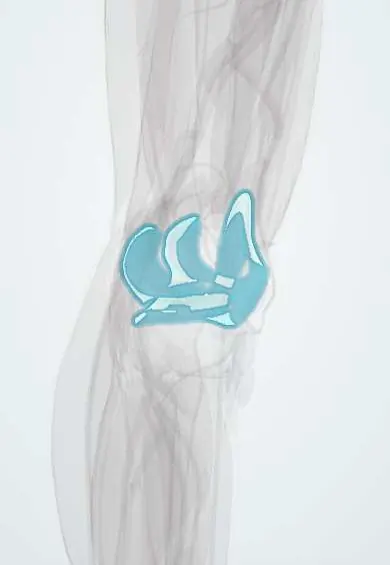
Haemophilia is an inherited lack of a clotting factor (VIII or IX), so bleeding lasts longer, especially into the joints such as the knee.
Updated 2026-11-01
Structures involved
Tap one to see what it is and open it in 3D.
In the clinical exam
Why it happens
- Hemorrhage: petechiae, purpura, ecchymosis, hematoma, and what blood loss does
- Mendelian inheritance: autosomal dominant, recessive and X-linked
- The coagulation cascade
- Coagulation tests: PT/INR, aPTT and platelets
What it is
An X-linked bleeding disorder caused by deficiency of clotting factor VIII (haemophilia A) or factor IX (haemophilia B, Christmas disease). Its hallmark is spontaneous or post-traumatic bleeding into joints and muscles.
Who gets it
Haemophilia A is about four to five times more common than haemophilia B. It affects almost only males; females are usually carriers. About a third of cases arise from a new mutation with no family history. In Colombia it is a high-cost condition followed by a national registry.
Causes
- Mutation in the F8 gene (haemophilia A) or F9 gene (haemophilia B) on the X chromosome
- X-linked recessive inheritance: affected males, carrier mothers
- Spontaneous new mutations
- Acquired haemophilia: autoantibodies against factor VIII, in older adults, postpartum or with autoimmune disease or cancer
Risk factors
- Male sex with a carrier mother
- Family history of bleeding in maternal male relatives
- Contact sports and trauma in people with the disease
- Development of inhibitors (antibodies) against replacement factor
Pathophysiology
Factors VIII and IX form the intrinsic tenase complex that amplifies thrombin generation on the platelet surface. Without them the primary platelet plug forms but is not stabilised by fibrin, so bleeding restarts and is prolonged. Repeated bleeding into a joint inflames the synovium (haemophilic synovitis), which bleeds more easily and destroys cartilage, ending in haemophilic arthropathy.
Classification
- Severe: factor activity below 1% (spontaneous joint bleeds)
- Moderate: 1–5% (bleeds after minor trauma)
- Mild: above 5% and below 40% (bleeding after surgery or major trauma)
- Haemophilia A (factor VIII) versus haemophilia B (factor IX)
Symptoms and signs
- Haemarthrosis: painful, warm, swollen joint with limited motion, most often the knee, elbow and ankle
- Muscle haematomas, including the iliopsoas
- Easy bruising and prolonged bleeding after cuts, dental work, circumcision or vaccination
- Bleeding from the gums and nose; blood in the urine
- In infants, bleeding when they start to crawl or walk
Diagnosis
- Clinical
- Male patient with recurrent joint or muscle bleeding and a family history on the maternal side. Examination of joints for swelling, range of motion and muscle wasting.
- Tests
- Prolonged aPTT with normal PT and normal platelet count and bleeding time; aPTT corrects with a mixing study unless an inhibitor is present. Specific factor VIII or IX activity confirms the type and severity. Inhibitor assay (Bethesda) and genetic testing of the patient and carriers.
- Imaging
- Ultrasound or MRI to detect haemarthrosis, synovitis and early cartilage damage; plain X-ray shows advanced arthropathy; urgent CT of the head when intracranial bleeding is suspected.
Differential diagnosis
- Von Willebrand disease (also prolongs aPTT but has mucosal bleeding and both sexes)
- Factor XI deficiency
- Vitamin K deficiency or liver disease (PT also prolonged)
- Septic arthritis or trauma when a single joint is swollen
- Non-accidental injury in a child with bruising
Goal of treatment
Prevent and quickly stop bleeding by replacing the missing factor, protect the joints to avoid arthropathy, and manage inhibitors, within a comprehensive haemophilia treatment centre.
Treatment
- Medical
- Replacement of factor VIII or IX concentrate (plasma-derived or recombinant), on demand for bleeds and as regular prophylaxis in severe disease.
- Medical
- Non-factor therapy such as a bispecific antibody that mimics factor VIII for prophylaxis in haemophilia A; bypassing agents for patients with inhibitors; gene therapy in selected adults.
- Medical
- Desmopressin in mild haemophilia A and antifibrinolytics (tranexamic acid) for mouth and nose bleeding; avoidance of NSAIDs, aspirin and intramuscular injections.
- Acute
- Acute haemarthrosis: early factor replacement, rest, ice, compression and elevation, then guided mobilisation.
- Rehabilitation
- Physiotherapy to keep joint range and muscle strength; radiosynovectomy or synovectomy for chronic synovitis.
- Surgical
- Total knee replacement for end-stage haemophilic arthropathy, with factor cover before and after surgery.
Drugs for this condition
Complications
- Haemophilic arthropathy with chronic pain, deformity and disability
- Intracranial haemorrhage
- Compartment syndrome and nerve compression from muscle bleeds
- Inhibitor development against replacement factor
- Historically, HIV and hepatitis C infection from plasma products
Prognosis
With prophylactic factor replacement, life expectancy approaches that of the general population and joint damage is much less. Without access to treatment, severe haemophilia causes early disability and death from bleeding.
Prevention
- Genetic counselling and carrier testing in affected families
- Prophylaxis to prevent joint bleeds in severe disease
- Vaccination against hepatitis B; protective activities instead of contact sports
Test yourself
Think of the answer, then tap the question to see it.
Which clotting factors are deficient in haemophilia A and haemophilia B?
Factor VIII in haemophilia A and factor IX in haemophilia B.
What is the typical coagulation pattern in haemophilia?
Prolonged aPTT with normal PT, normal platelet count and normal bleeding time.
What is the most characteristic bleeding site in severe haemophilia?
The joints (haemarthrosis), most often the knee, elbow and ankle.
What does it mean if the aPTT does not correct in a mixing study?
An inhibitor (antibody against the factor) is present, as in acquired haemophilia or after replacement therapy.
Which common drugs and procedures are avoided in haemophilia?
Aspirin and NSAIDs, and intramuscular injections, because they increase bleeding risk.
Related conditions
- Knee Osteoarthritis
- Acute compartment syndrome
- Intracerebral haemorrhage
- Viral hepatitis
- HIV infection and AIDS
Educational information, not medical advice. For any symptom, see a health professional.
Sources: Hemophilia (MedlinePlus (U.S. National Library of Medicine), 2024); About Hemophilia (Centers for Disease Control and Prevention (CDC), 2024).
Spotted a mistake?We are always improving for the community. Tell us what is wrong and our team will review it.Report a mistake
Representative model, for educational purposes only.