Conditions · Systemic conditions
HIV infection and AIDS !
HIV is a virus that slowly destroys the immune system's CD4 cells; without treatment it progresses to AIDS, with serious infections and some cancers.
Updated 2026-10-30
Structures involved
Tap one to see what it is and open it in 3D.
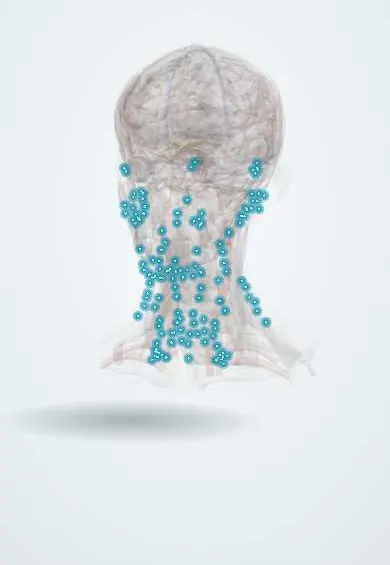
- Neck lymph nodes
- Mediastinal lymph nodes
- Tongue
- Esophagus
- Right lower lobe
- Left lower lobe
- Retina
- White matter
- Spleen
- Mesenteric lymph nodes
In biochemistry
- Central dogma of molecular biology
- Polymerase chain reaction (PCR)
- ELISA (enzyme-linked immunosorbent assay)
- Southern, Northern and Western blots
- Plasma proteins and electrophoresis
- Immunoglobulins (antibodies)
- Cytochrome P450 3A4 (CYP3A4)
- Cytochrome P450 system
Microorganisms that cause it
- Cryptococcus neoformans
- Histoplasma capsulatum
- Pneumocystis jirovecii
- Talaromyces marneffei
- Microsporidia (Enterocytozoon, Encephalitozoon)
- Toxoplasma gondii
- Cryptosporidium spp.
- Cyclospora cayetanensis and Cystoisospora belli
- Mycobacterium avium complex and other non-tuberculous mycobacteria
- Human immunodeficiency virus
In immunology
- CD4⁺ helper T cell
- CD8⁺ cytotoxic T cell
- CD markers: the table to know
- How HIV destroys CD4 T cells
- Immunodeficiency: warning signs and the infection pattern by defect
- Secondary immunodeficiency: HIV, malnutrition, drugs, asplenia
- IL-8 and the chemokines
- Live vaccines: who should not receive them
- Serology: IgM vs IgG, seroconversion, avidity
- ELISA, western blot and rapid tests
- Flow cytometry and the CD4 count
- Tuberculin skin test and IGRA
In the clinical exam
In physiology
Why it happens
- Apoptosis: the intrinsic and extrinsic pathways
- How tumours evade the immune system
- Oncogenic viruses and H. pylori: the table to know
- Lymph node and spleen under the microscope
What it is
A chronic infection by the human immunodeficiency virus, which destroys CD4 T lymphocytes; without treatment it progresses to AIDS, with opportunistic infections and certain cancers.
Who gets it
Present in every country; in Latin America it is concentrated in key populations such as men who have sex with men, transgender women and sex workers, with many people diagnosed late. A 2018 meta-analysis (53 studies, 22,603 people, 25 Latin American and Caribbean countries) estimated optimal adherence to antiretroviral therapy at only 70%.
Causes
- HIV-1 (most infections worldwide) and HIV-2
- Sexual transmission (anal, vaginal)
- Sharing needles or syringes
- Mother-to-child transmission in pregnancy, delivery or breastfeeding
- Blood or blood products (rare where blood is screened); needlestick injury
Risk factors
- Condomless sex, multiple partners
- Other sexually transmitted infections
- Injecting drug use
- Partner with HIV who is not virally suppressed
- No access to testing or pre-exposure prophylaxis
Pathophysiology
HIV binds CD4 and a co-receptor, copies its RNA into DNA with reverse transcriptase and integrates into the host genome. Ongoing replication, mainly in lymphoid tissue and gut, depletes CD4 cells and causes chronic immune activation. As CD4 counts fall, the risk of opportunistic infections and cancers rises.
Classification
- Acute (primary) HIV infection
- Chronic asymptomatic infection
- Symptomatic infection
- AIDS: CD4 count below 200 cells/µL or an AIDS-defining illness (commonly used definition)
Symptoms and signs
- Acute infection: fever, sore throat, rash, swollen lymph nodes, flu-like illness
- Long silent phase without symptoms
- Persistent generalized lymphadenopathy
- Weight loss, night sweats, chronic diarrhea
- Oral thrush or hairy leukoplakia
- Recurrent or severe infections, shingles
Diagnosis
- Clinical
- Testing is offered routinely and whenever there is a risk exposure, a sexually transmitted infection, tuberculosis or an indicator illness.
- Tests
- Fourth-generation antigen/antibody test with confirmation by national algorithm; rapid tests for screening. Baseline CD4 count, HIV viral load, resistance testing, and screening for hepatitis B and C, syphilis and tuberculosis.
- Imaging
- Guided by complications: chest X-ray for pneumonia or tuberculosis, brain CT or MRI for neurological signs.
Differential diagnosis
- Infectious mononucleosis (in acute HIV)
- Tuberculosis
- Lymphoma
- Other causes of immunodeficiency
- Secondary syphilis
Goal of treatment
Suppress the virus to undetectable levels for life, restore CD4 counts and immune function, prevent opportunistic infections, and stop transmission.
Treatment
- Medical
- Antiretroviral therapy (ART) for everyone diagnosed, started early: a combination of drug classes (nucleoside reverse transcriptase inhibitors with an integrase inhibitor, or alternatives).
- Medical
- Prophylaxis against opportunistic infections, such as trimethoprim-sulfamethoxazole when the CD4 count is low, and preventive treatment for latent tuberculosis.
- Follow-up
- Regular viral load and CD4 counts to confirm suppression, check adherence and detect resistance.
- Lifestyle
- Adherence support, vaccinations, and care for mental health and substance use.
Drugs for this condition
- Sulfamethoxazole + trimethoprim (co-trimoxazole)
- Sulfadiazine
- Abacavir
- Lamivudine
- Tenofovir disoproxil
- Zidovudine
- Emtricitabine
- Tenofovir alafenamide
- Efavirenz
- Nevirapine
- Rilpivirine
- Doravirine
- Darunavir
- Ritonavir
- Atazanavir
- Lopinavir/ritonavir
- Dolutegravir
- Raltegravir
- Bictegravir
- Cabotegravir
- Maraviroc
- Enfuvirtide
- Dolutegravir + lamivudine + tenofovir disoproxil (TLD)
- Dronabinol
Complications
- Pneumocystis pneumonia
- Tuberculosis (pulmonary and extrapulmonary)
- Cerebral toxoplasmosis and cryptococcal meningitis
- Cytomegalovirus retinitis
- Oral and esophageal candidiasis
- Kaposi sarcoma and lymphomas
- Immune reconstitution inflammatory syndrome after starting ART
Prognosis
With early, sustained ART, life expectancy approaches that of the general population. A person with an undetectable viral load does not transmit HIV sexually (U=U). Untreated, most progress to AIDS over years.
Prevention
- Condoms
- Pre-exposure (PrEP) and post-exposure (PEP) prophylaxis
- Treatment of people with HIV to an undetectable viral load
- Testing in pregnancy and prevention of mother-to-child transmission
- Sterile injecting equipment and screened blood
Test yourself
Think of the answer, then tap the question to see it.
What do the CD4 count and the viral load each tell the clinician?
The CD4 count measures immune status and the risk of opportunistic infections; the viral load measures HIV replication and whether ART is working.
Which CD4 count threshold is commonly used to define AIDS?
A CD4 count below 200 cells/µL, or the presence of an AIDS-defining illness, regardless of the count.
What does «U=U» mean?
Undetectable = untransmittable: a person with HIV who keeps an undetectable viral load on ART does not transmit HIV through sex.
Which opportunistic infection typically causes dry cough, breathlessness and hypoxemia with low CD4?
Pneumocystis jirovecii pneumonia.
Why is tuberculosis screening essential in people with HIV?
HIV greatly increases the risk of active tuberculosis, which is a leading cause of death in people with HIV; latent TB can be treated preventively.
Related conditions
- Tuberculosis
- Viral hepatitis
- Adrenal insufficiency
- Bacterial meningitis
- Cervical lymphadenopathy
- Human papillomavirus (HPV) infection
- Vulvovaginal candidiasis
- Trichomoniasis
Educational information, not medical advice. For any symptom, see a health professional.
Sources: HIV and AIDS (StatPearls (NCBI Bookshelf), 2026); Adherence to antiretroviral therapy for HIV/AIDS in Latin America and the Caribbean: Systematic review and meta-analysis (Journal of the International AIDS Society, 2018) · adapted, CC BY 4.0.
Spotted a mistake?We are always improving for the community. Tell us what is wrong and our team will review it.Report a mistake
Representative model, for educational purposes only.