Conditions · Hematology and oncology
Heparin-induced thrombocytopenia !
Heparin-induced thrombocytopenia is an immune reaction to heparin that lowers platelets yet causes dangerous clots in veins and arteries.
Updated 2026-11-01
Structures involved
Tap one to see what it is and open it in 3D.
In the clinical exam
Why it happens
- Thrombosis and Virchow's triad
- Hypercoagulable states: inherited and acquired
- Injury by therapeutic drugs: the classic examples
- Primary hemostasis and platelets
What it is
A prothrombotic, immune-mediated adverse drug reaction (type II HIT) in which antibodies against complexes of heparin and platelet factor 4 activate platelets. Platelet counts fall, but the main danger is venous and arterial thrombosis.
Who gets it
Occurs in a small percentage of patients exposed to heparin, more often with unfractionated heparin than with low-molecular-weight heparin, and more after cardiac and orthopaedic surgery than in medical patients. A milder non-immune fall in platelets in the first days (type I) is common and harmless.
Causes
- IgG antibodies against platelet factor 4 (PF4)–heparin complexes
- Exposure to unfractionated heparin (highest risk) or low-molecular-weight heparin, including heparin flushes and heparin-coated catheters
Risk factors
- Unfractionated rather than low-molecular-weight heparin
- Cardiac or orthopaedic surgery
- Heparin for more than 4 days
- Female sex
- Recent heparin exposure in the past 100 days (rapid-onset HIT)
Pathophysiology
Heparin binds PF4 released from platelets and exposes new antigens; IgG antibodies form immune complexes that bind platelet Fc receptors. Platelets activate, aggregate and release more PF4, generating thrombin and procoagulant microparticles. Platelets are consumed, yet the net state is strongly prothrombotic.
Classification
- Type I: early, mild, non-immune fall in platelets; heparin can continue
- Type II (true HIT): immune, typically days 5–10, with thrombotic risk
- Rapid-onset HIT within 24 hours in patients with recent exposure; delayed-onset HIT after heparin is stopped
Symptoms and signs
- Fall in platelet count of more than 50% from baseline, typically 5–10 days after starting heparin
- Painful swollen leg (deep vein thrombosis)
- Breathlessness or chest pain (pulmonary embolism)
- Cold, pale, painful limb (arterial thrombosis)
- Painful red or necrotic skin lesions at heparin injection sites
- Fever, chills or hypotension within minutes of an intravenous heparin bolus (acute systemic reaction)
Diagnosis
- Clinical
- The 4Ts score estimates pre-test probability: degree of Thrombocytopenia, Timing of the fall, Thrombosis or other sequelae, and absence of oTher causes. A low score makes HIT unlikely.
- Tests
- Daily or regular platelet counts during heparin. Anti-PF4/heparin immunoassay (ELISA) is sensitive; a functional assay such as serotonin release confirms it. Platelets rarely fall below 20 × 10^9/L and bleeding is uncommon.
- Imaging
- Compression ultrasound of the legs to look for asymptomatic deep vein thrombosis; CT angiography or arterial imaging according to symptoms.
Differential diagnosis
- Sepsis or DIC
- Haemodilution or consumption after surgery or bypass
- Other drug-induced immune thrombocytopenia
- Thrombotic thrombocytopenic purpura
- Immune thrombocytopenia
- Antiphospholipid syndrome
Goal of treatment
Stop all heparin and start a non-heparin anticoagulant immediately on suspicion, to prevent new or extending thrombosis, then complete anticoagulation once platelets recover.
Treatment
- Acute
- Stop every form of heparin, including flushes and coated catheters, and document heparin allergy in the record.
- Medical
- Start a non-heparin anticoagulant: direct thrombin inhibitors (argatroban, bivalirudin), fondaparinux or, in stable patients, direct oral anticoagulants.
- Medical
- Warfarin is not started until platelets recover, and then overlaps with a non-heparin anticoagulant, because early warfarin can cause venous limb gangrene.
- Follow-up
- Nursing priority: platelet counts during heparin therapy, checks of limbs, skin at injection sites and breathing; platelet transfusion generally avoided.
Drugs for this condition
Complications
- Deep vein thrombosis and pulmonary embolism
- Arterial thrombosis: limb ischaemia, stroke, myocardial infarction
- Venous limb gangrene and amputation
- Skin necrosis
- Adrenal haemorrhagic infarction
Prognosis
With early recognition and a non-heparin anticoagulant, thrombosis risk falls markedly, though amputation and death still occur. Antibodies usually disappear within weeks to months, but heparin is generally avoided in the future except in special circumstances.
Prevention
- Using low-molecular-weight heparin rather than unfractionated heparin when appropriate
- Monitoring platelet counts in higher-risk patients on heparin
- Recording previous HIT so heparin is not given again
Test yourself
Think of the answer, then tap the question to see it.
Against which antigen are the antibodies in heparin-induced thrombocytopenia directed?
Complexes of platelet factor 4 (PF4) and heparin.
When does type II HIT typically appear after starting heparin?
About 5 to 10 days after starting heparin, or sooner with exposure in the previous 100 days.
Is the main clinical risk of HIT bleeding or thrombosis?
Thrombosis, venous and arterial, despite the low platelet count.
What is the immediate management when HIT is suspected?
Stop all heparin and start a non-heparin anticoagulant such as a direct thrombin inhibitor or fondaparinux.
Why is warfarin avoided in the acute phase of HIT?
It lowers protein C quickly and can cause venous limb gangrene and skin necrosis.
Related conditions
Educational information, not medical advice. For any symptom, see a health professional.
Sources: Thrombocytopenia (National Heart, Lung, and Blood Institute (NHLBI), 2024).
Spotted a mistake?We are always improving for the community. Tell us what is wrong and our team will review it.Report a mistake
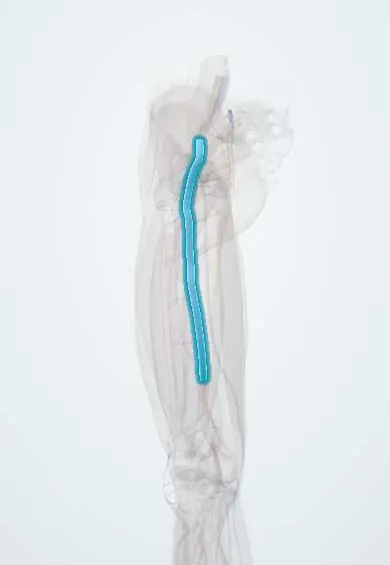
Representative model, for educational purposes only.