Acute limb ischaemia !
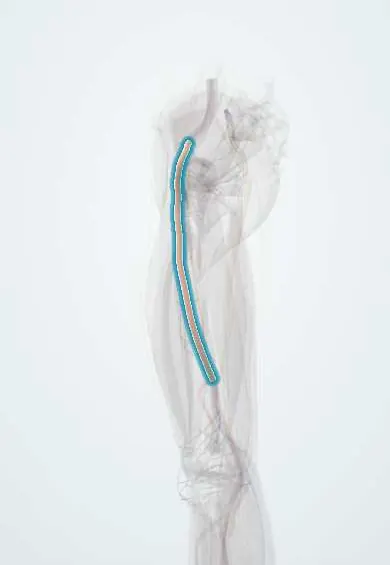
Acute limb ischaemia is a sudden loss of blood flow to a limb, usually from a clot in an artery; it is a vascular emergency that threatens the limb.
Updated 2026-10-29
Structures involved
Tap one to see what it is and open it in 3D.
- Femoral artery
- Popliteal artery
- External iliac artery
- Posterior tibial artery
- Dorsalis pedis artery
- Deep femoral artery
- Anterior tibial artery
- Fibular artery
- Tibialis anterior
- Common fibular nerve
In the clinical exam
- Peripheral pulses and the ankle–brachial index
- Acute limb ischemia and chronic arterial insufficiency
In physiology
Why it happens
- Systemic (arterial) thromboembolism
- Hypoxia, ischemia and reperfusion injury
- Arterial vs venous thrombi; mural thrombi and lines of Zahn
- Potassium balance
- Creatine kinase (CK) and CK-MB as lab tests
What it is
A sudden fall in blood flow to a limb that threatens its survival, usually from an embolus or a thrombus in an artery. It is a vascular emergency.
Who gets it
Mostly older adults with atrial fibrillation, heart disease or peripheral artery disease. In Colombia, the burden of cardiovascular risk factors and, in some areas, Chagas cardiomyopathy contribute to cardiac emboli.
Causes
- Embolism: usually from the heart (atrial fibrillation, mural thrombus after myocardial infarction, valve disease) or an aneurysm
- Thrombosis in situ on an atherosclerotic plaque
- Thrombosis of a bypass graft or stent
- Popliteal artery aneurysm thrombosis
- Arterial trauma or dissection
Risk factors
- Atrial fibrillation
- Recent myocardial infarction or heart failure
- Peripheral artery disease
- Previous arterial bypass or stent
- Smoking, diabetes and dyslipidaemia
- Hypercoagulable states
Pathophysiology
Without collaterals, nerves and muscle tolerate ischaemia poorly and damage can become irreversible within hours. Emboli lodge at branch points such as the common femoral bifurcation and strike a limb with no collaterals, so they cause more severe ischaemia. Thrombosis on chronic disease is often less abrupt because collaterals already exist.
Classification
- Rutherford categories: I viable, IIa marginally threatened, IIb immediately threatened, III irreversible
- Embolic versus thrombotic
- Acute (under about 2 weeks) versus acute-on-chronic
Symptoms and signs
- The 6 Ps: pain, pallor, pulselessness, poikilothermia (a cold limb), paraesthesia and paralysis
- Sudden severe pain in a limb, often out of proportion to findings
- Loss of previously present pulses
Diagnosis
- Clinical
- History of onset, cardiac rhythm and prior claudication; pulses, capillary refill, sensation and motor function in both limbs, plus handheld Doppler signals.
- Tests
- ECG for atrial fibrillation or infarction; blood count, clotting, renal function, potassium and creatine kinase.
- Imaging
- CT angiography or catheter angiography when it will not delay treatment of a threatened limb; echocardiography later for a cardiac source.
Differential diagnosis
- Acute compartment syndrome
- Deep vein thrombosis with phlegmasia
- Acute aortic dissection
- Spinal cord or nerve lesion
- Low-output state with peripheral vasoconstriction
Goal of treatment
Restore blood flow quickly to save the limb, prevent further clots and treat the cause while managing reperfusion injury.
Treatment
- Acute
- Immediate anticoagulation with intravenous unfractionated heparin, analgesia and urgent vascular surgery assessment.
- Surgical
- Embolectomy with a balloon catheter, especially for emboli; bypass for thrombosis on chronic disease.
- Procedure
- Catheter-directed thrombolysis or mechanical thrombectomy in selected viable or marginally threatened limbs.
- Surgical
- Fasciotomy for compartment syndrome after revascularisation; amputation for an irreversible limb.
- Medical
- Long-term anticoagulants or antiplatelet drugs and statins depending on the cause.
Complications
- Limb loss (amputation)
- Reperfusion injury and compartment syndrome
- Rhabdomyolysis, hyperkalaemia and acute kidney injury
- Death, often from cardiac disease
- Recurrent embolism
Prognosis
Outcome depends on time to revascularisation and severity; amputation and death rates remain significant, mostly because patients are old and have heart disease.
Prevention
- Anticoagulation in atrial fibrillation when indicated
- Control of cardiovascular risk factors and smoking cessation
- Surveillance of bypass grafts
Test yourself
Think of the answer, then tap the question to see it.
What are the 6 Ps of acute limb ischaemia?
Pain, pallor, pulselessness, poikilothermia, paraesthesia and paralysis.
What is the most common source of an embolus causing acute limb ischaemia?
The heart, especially atrial fibrillation.
Why is embolic ischaemia often more severe than thrombotic ischaemia?
An embolus blocks a previously healthy artery without collaterals, while thrombosis on chronic disease has collaterals.
Which findings show an immediately threatened limb?
Sensory loss beyond the toes or any muscle weakness (Rutherford IIb), needing urgent revascularisation.
Which complication is watched for after revascularising an ischaemic leg?
Compartment syndrome from reperfusion swelling, along with hyperkalaemia and rhabdomyolysis.
Related conditions
- Peripheral artery disease
- Atrial fibrillation
- Acute compartment syndrome
- Atherosclerosis and dyslipidaemia
- Popliteal Artery Injury
- Myocardial Infarction (Heart Attack)
- Deep vein thrombosis
Educational information, not medical advice. For any symptom, see a health professional.
Sources: Peripheral Arterial Disease (StatPearls (NCBI Bookshelf), 2026).
Spotted a mistake?We are always improving for the community. Tell us what is wrong and our team will review it.Report a mistake
Representative model, for educational purposes only.