Conditions · Metabolism: fatty acids and ketones
Jamaican vomiting sickness (ackee poisoning) !
Poisoning from eating unripe ackee fruit: its toxin blocks fat use and causes vomiting and severe hypoglycaemia.
Updated 2026-11-01
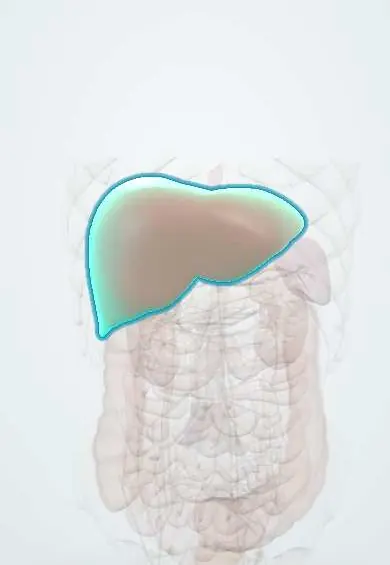
Structures involved
Tap one to see what it is and open it in 3D.
In biochemistry
What it is
A toxic hypoglycaemic syndrome caused by hypoglycin A in the unripe aril of Blighia sapida (ackee, called seso vegetal in Colombia). Its metabolite inhibits β-oxidation and gluconeogenesis.
Who gets it
Classic in Jamaica and other Caribbean and West African countries, with seasonal outbreaks mostly in children; in Jamaica about 1 case per 100,000 people per year was estimated, higher under age 15. The tree grows in warm areas of Colombia. A similar toxin in lychee has been linked to outbreaks of childhood encephalopathy in India.
Causes
- Eating unripe or badly prepared ackee aril, or its cooking water
- Hypoglycin A (and methylenecyclopropylglycine in lychee)
Risk factors
- Children and malnourished people
- Overnight fasting or skipping the evening meal
- Eating green, forced-open or fallen fruit
Pathophysiology
In the liver hypoglycin A becomes MCPA-CoA (methylenecyclopropylacetyl-CoA), which irreversibly inactivates short- and medium-chain acyl-CoA dehydrogenases. β-Oxidation stops: there is no acetyl-CoA to activate pyruvate carboxylase and no NADH or ATP for gluconeogenesis, and no ketones form. Once glycogen runs out, profound hypoglycaemia without ketosis appears, with dicarboxylic acids in urine, much like MCAD deficiency.
Symptoms and signs
- Severe vomiting a few hours after eating the fruit
- Drowsiness and weakness
- Sweating
- Seizures
- Coma
Diagnosis
- Clinical
- History of eating the fruit with vomiting, hypoglycaemia and neurological change, often in several children of the same community.
- Tests
- Very low glucose with low ketones; transaminases; urine organic acids with dicarboxylic acids and glycine conjugates; urine hypoglycin metabolites in specialist laboratories.
- Imaging
- Not needed for diagnosis; brain CT or MRI is used in coma to rule out other causes.
Treatment
- Acute
- Immediate intravenous glucose, continued until blood glucose is stable
- Acute
- Seizure control and intensive care life support if in coma
- Follow-up
- Serial monitoring of glucose, transaminases and kidney function
Complications
- Brain damage from hypoglycaemia
- Liver failure
- Death, especially in children
Prognosis
With early glucose most patients recover; mortality rises when treatment is delayed.
Prevention
- Eat only the aril of ripe fruit that opens naturally on the tree, discard the cooking water and do not give the fruit to fasting children.
Test yourself
Think of the answer, then tap the question to see it.
Which ackee toxin causes Jamaican vomiting sickness?
Hypoglycin A, which the liver converts into MCPA-CoA.
Which enzymes does MCPA-CoA inhibit?
Short- and medium-chain acyl-CoA dehydrogenases, the first step of β-oxidation.
Why is the hypoglycaemia in this poisoning ketone-free?
With β-oxidation blocked, the acetyl-CoA needed to make ketone bodies is not produced.
Which inborn error does this poisoning resemble?
MCAD deficiency: hypoketotic hypoglycaemia and urinary dicarboxylic acids.
Related conditions
- Medium-chain acyl-CoA dehydrogenase (MCAD) deficiency
- Epilepsy and seizures
- Acute (viral) gastroenteritis
Educational information, not medical advice. For any symptom, see a health professional.
Sources: Toxic Hypoglycemic Syndrome -- Jamaica, 1989-1991 (CDC, Morbidity and Mortality Weekly Report, 1992); Probable Toxic Cause for Suspected Lychee-Linked Viral Encephalitis (Emerging Infectious Diseases (CDC), 2015); Hypoglycin A (CID 45039541) (PubChem, NCBI, 2026) · Public domain; Mitochondrial Fatty Acid Beta-Oxidation (Reactome, 2026).
Spotted a mistake?We are always improving for the community. Tell us what is wrong and our team will review it.Report a mistake
Representative model, for educational purposes only.