Conditions · Metabolism (biochemistry)
Krabbe disease (globoid cell leukodystrophy) !
In Krabbe disease the myelin of the brain and nerves is destroyed quickly; in babies it causes irritability, stiffness and loss of skills.
Updated 2026-11-01
Structures involved
Tap one to see what it is and open it in 3D.
In biochemistry
- Sphingolipids and sphingolipidoses
- Lysosomal storage diseases
- Ceramide
- Galactosylceramide (galactocerebroside)
- Arylsulfatase A (ARSA)
- Galactocerebrosidase (GALC)
What it is
An autosomal recessive lysosomal leukodystrophy caused by galactocerebrosidase deficiency (GALC gene), with buildup of psychosine, which is toxic to myelin-forming cells.
Who gets it
In the United States it affects about 1 in 100,000 people; some isolated communities in Israel have a much higher frequency. The early infantile form is the most common.
Causes
- Biallelic variants of the GALC gene (autosomal recessive)
- Rarely, saposin A deficiency
Risk factors
- Carrier parents or an affected sibling
Pathophysiology
Galactocerebrosidase breaks down myelin galactosylceramide and psychosine (galactosylsphingosine). Without it, psychosine builds up and kills oligodendrocytes and Schwann cells: myelin is lost in the central nervous system and in peripheral nerves. Macrophages loaded with galactosylceramide fuse into the multinucleated globoid cells typical of the white matter.
Classification
- Early infantile: onset before 6 months, the most common and severe
- Late infantile and juvenile: onset between 6 months and adolescence
- Adult: slowly progressive weakness, spasticity and visual loss
Symptoms and signs
- Irritability and inconsolable crying
- Muscle stiffness and extensor posturing
- Fevers without infection
- Feeding difficulty and vomiting
- Loss of motor skills
- Loss of vision and hearing
Diagnosis
- Clinical
- An infant with extreme irritability, stiffness, regression and peripheral neuropathy; in later forms, spastic paraparesis and visual loss.
- Tests
- Low galactocerebrosidase activity in leukocytes or dried blood spots; high psychosine in dried blood spots; GALC gene testing; high cerebrospinal fluid protein; slowed nerve conduction.
- Imaging
- Brain MRI with symmetric demyelination of periventricular white matter and corticospinal tracts; CT may show hyperdense thalami; thickened optic nerves in some cases.
Treatment
- Procedure
- Haematopoietic stem cell transplant in presymptomatic infants (for example, found by newborn screening or through an affected sibling); once symptoms are established the benefit is small.
- Medical
- Control of seizures, spasticity, reflux and irritability. Gene therapy is under investigation.
- Rehabilitation
- Physiotherapy and nutritional support, sometimes with a gastrostomy.
- Conservative
- Palliative care, family support and genetic counselling.
Complications
- Aspiration pneumonia
- Blindness and deafness
- Contractures
- Respiratory failure
Prognosis
The early infantile form usually causes death before age 2. Later forms progress more slowly.
Prevention
- Genetic counselling and prenatal diagnosis in families with an affected child
- Newborn screening, available in some countries, to identify presymptomatic babies
Test yourself
Think of the answer, then tap the question to see it.
Which enzyme is missing in Krabbe disease?
Galactocerebrosidase (GALC gene).
Which toxic molecule destroys oligodendrocytes in Krabbe disease?
Psychosine (galactosylsphingosine), which is not broken down without GALC.
Which cells give globoid cell leukodystrophy its name?
Multinucleated macrophages loaded with galactosylceramide in the white matter.
When is stem cell transplant useful in Krabbe disease?
Before symptoms appear; once they are established the benefit is small.
Related conditions
Educational information, not medical advice. For any symptom, see a health professional.
Sources: Krabbe disease: MedlinePlus Genetics (MedlinePlus, US National Library of Medicine, 2026); GALC gene: MedlinePlus Genetics (MedlinePlus, US National Library of Medicine, 2026); Textbook of Biochemistry for Medical Students, 6th ed. (Jaypee Brothers Medical Publishers (Vasudevan DM, Sreekumari S, Vaidyanathan K), 2011).
Spotted a mistake?We are always improving for the community. Tell us what is wrong and our team will review it.Report a mistake
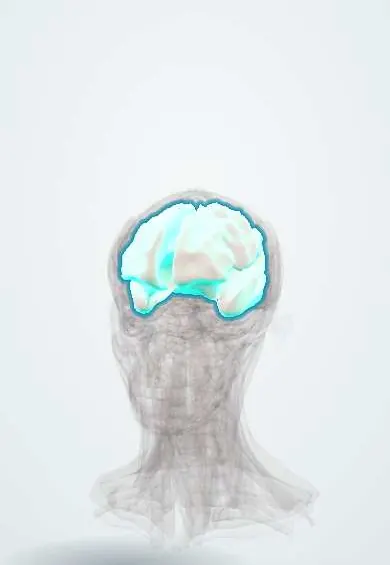
Representative model, for educational purposes only.